




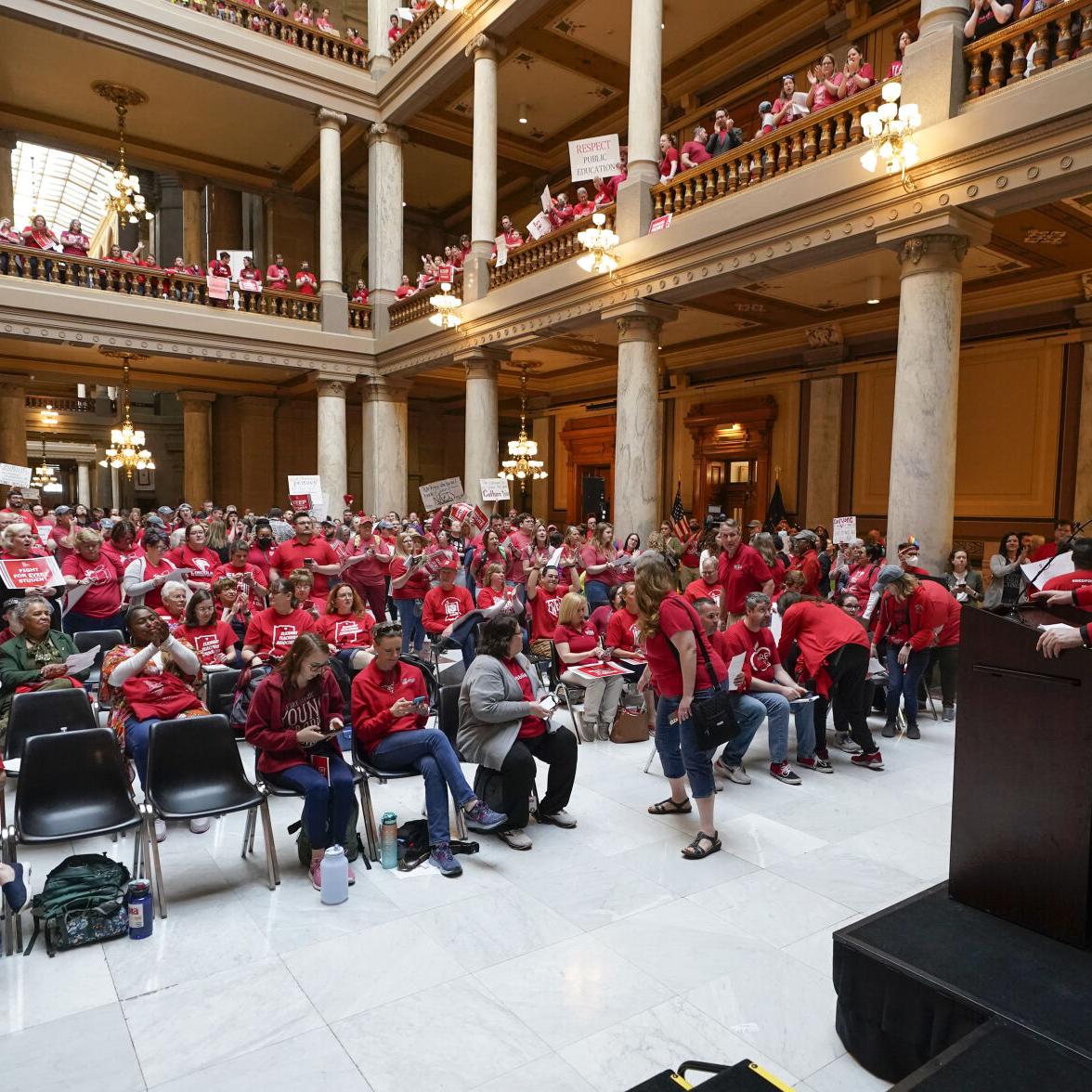


CLARK COUNTY, Ind. (WDRB) -- Some Indiana teachers took a trip to the state capitol in protest of some proposed bills, calling on state lawmakers to take action to improve education.
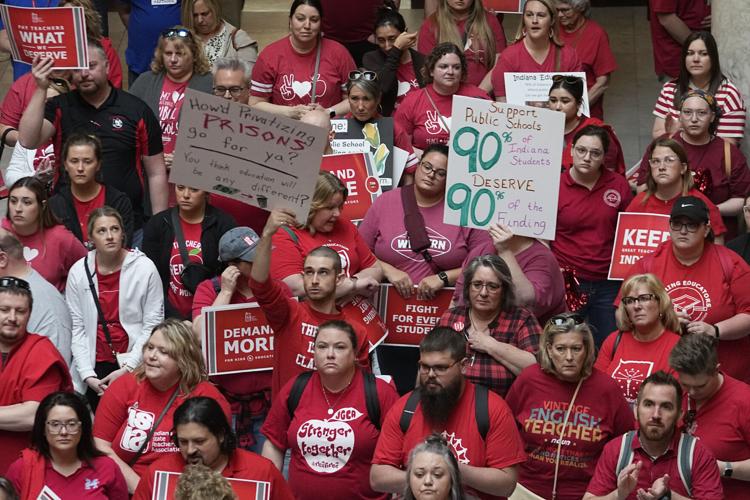
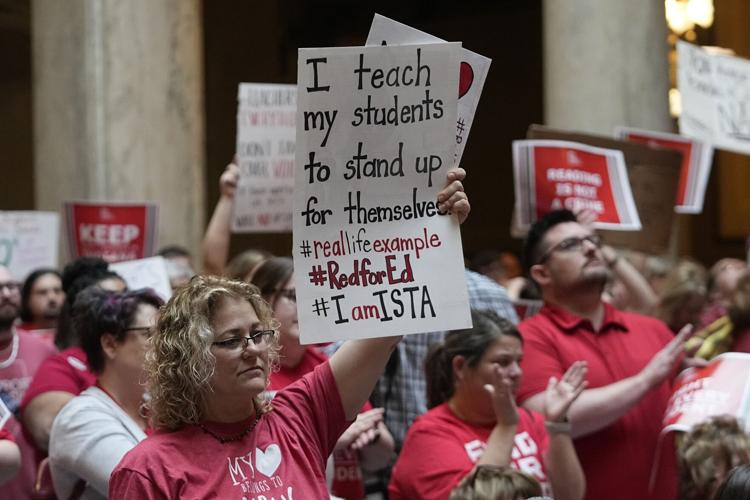
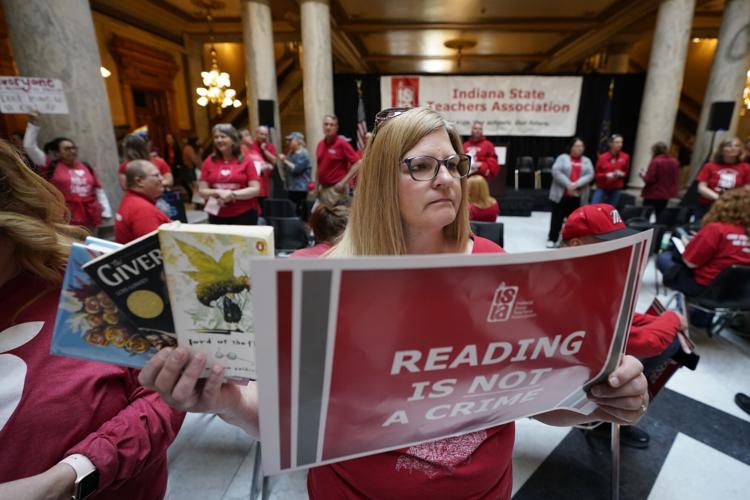
Several hundred teachers attended a Statehouse rally on Thursday for increased school funding.
Pam McCoy, who works for Greater Clark County Schools, has been a teacher for 25 years.
"A lot of these bills are just, we feel like, a slap in the face to teachers," McCoy said.
She traveled to the state capitol over concerns about what the next 25 years could look like for teachers. She was one of a few teachers from southern Indiana to go to the rally.
"It's not looking good for us, especially in public schools," she said.
McCoy, and other teachers protesting, are concerned over part of House Bill 1001, the state's proposed two-year budget, backed by House Republicans. Part of the bill would expand the state's private school voucher program.
But the major expansion proposed for Indiana’s private school voucher program could be axed under the state budget plan advanced Thursday by state Senate Republicans.
"Teachers feel like they're trying to get rid of public schools," McCoy said.
The bill would raise the income limit, allowing more families to use vouchers to attend private school. Some Senate Republicans are not all in on the bill, and will have to negotiate with House Republicans who believe it takes away from public schools.
The Senate GOP plan also drops a House push to speed up planned cuts to the state’s personal income tax rates that were approved last year.
Senate Republicans proposed increasing general K-12 school funding by about 4.6% in each of the next two years. That $1.1 billion boost is less than the House endorsed in February, but House Republicans would direct more than $500 million to the voucher program expansion, or nearly one-third of their total proposed school funding increase.
Senate Appropriations Committee Chairman Ryan Mishler said the Senate proposal would keep the current family income limits to qualify for state money toward private school tuition.
The House plan centers on raising the family income limit from the current 300% of income eligibility for the federal free or reduced-price meals program to a 400% cap. That would boost the income limit for a family of four from the current $154,000 to $220,000. It would also continue a major program expansion that Republican lawmakers started in 2021 by raising that family size’s maximum income for a full voucher payment from the $48,000 cap previously in place.
The broader eligibility provisions were projected to grow the voucher program from the current 53,500 students to some 95,000 students in two years— and nearly double the state money spent on the program.
That higher cost is the Senate’s top concern, said Mishler, a Republican from Mishawaka.
“I don’t think there’s an issue whether we have vouchers or not, I mean we’re fine with that,” Mishler said. “I think we just have to figure out is it the 300% or the 400%, what should the eligibility be?”
The state’s teachers' unions and other public school organizations have opposed the voucher expansion, arguing that it drains money from traditional public schools and hurts efforts to boost Indiana’s lagging teacher pay.
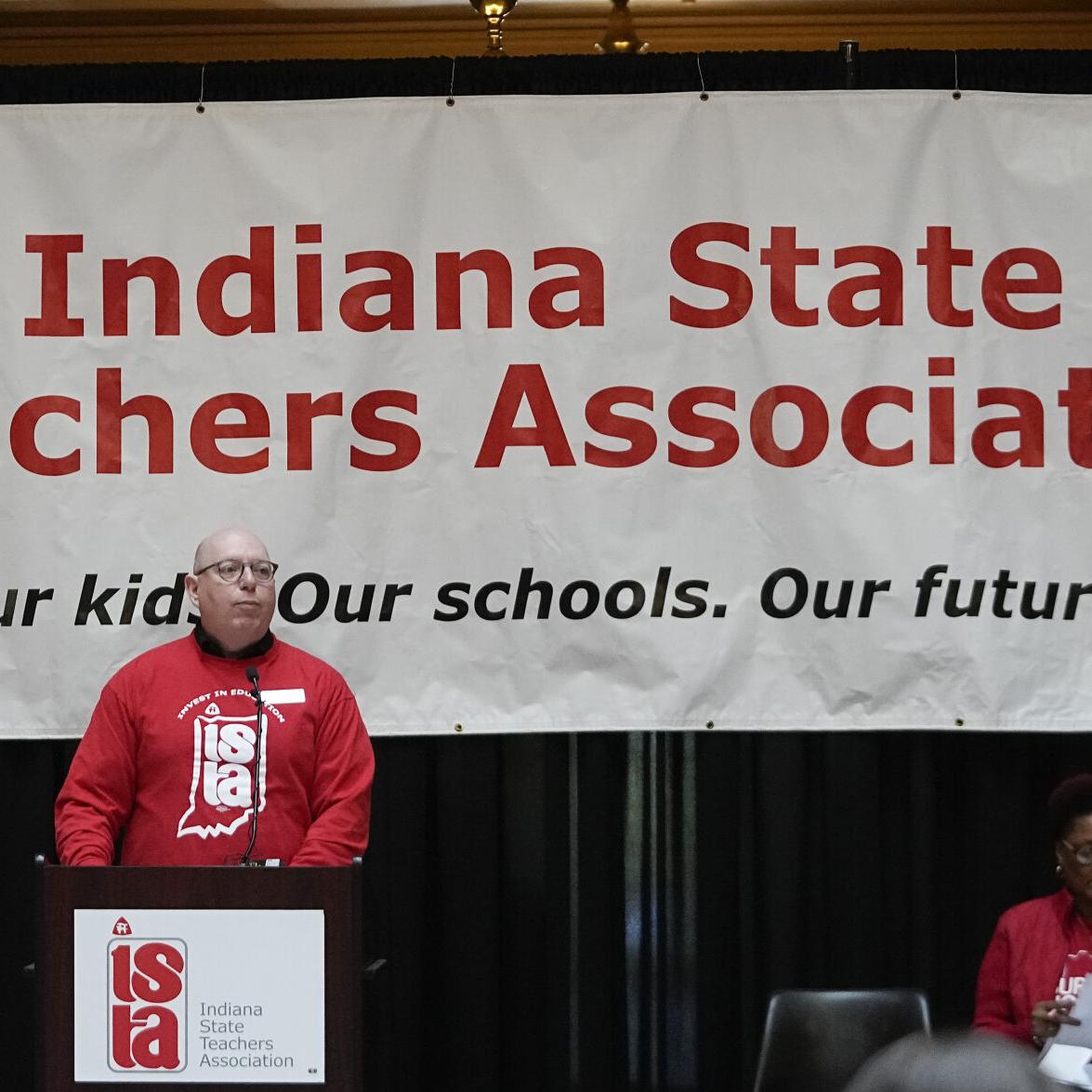
“Ninety-plus percent of all Hoosier families send their students to our traditional public schools and we have to make sure that they’re funded properly,” Indiana State Teachers Association President Keith Gambill said. “With the cost-of-living changes that have occurred the past couple of years, we’re going to have people going backwards if we’re not careful.”
Teachers are also concerned about Senate Bill 486.
"What we're talking about here is giving the locals more flexibility," said Rep. Jake Teshka, R-District 7.
Right now, the state regulates when and what is discussed during contract negotiations between the teachers union and school districts. Instead, the bill would leave those decisions up to school superintendents.
"We have faith in our school leaders," said Teshka. "This whole bill is about de-regulation, it's about flexibility."
However, McCoy and other teachers see it as losing their voices at the negotiating table.
"We're going to lose a lot of our voice, as far as discussion, collective bargaining," said McCoy.
The House is expected to take up SB 468 on Monday. As for HB 1001, the budget bill, lawmakers have until the end of April to vote.
Copyright 2023 WDRB Media and The Associated Press. All Rights Reserved.


