


(WARNING: Some of the videos below contain mild profanity)
CHARLESTOWN, Ind. (WDRB) — A group of 23 people sat cross-legged in a big circle on the floor of Wildlife in Need's animal encounter room Saturday. The collection of smiling parents and children were anxious with excitement. Some readied their smart phones for pictures.
In moments, a door opened, and the room erupted in laughter and cheers. Tim Stark, the owner of the controversial southern Indiana zoo, emerged with three visitors clinging to his arms: a trio of diapered spider monkeys.
"Are we ready to have some fun?" the boisterous Stark asked.
Stark placed the curious and seemingly friendly monkeys on the floor, where they were given grapes as rewards as they jumped from customer to customer.
Visitors are attracted to Wildlife in Need for these up-close encounters with exotics animals. The Allen family drove all the way from Muhlenburg County, Kentucky, for the fun.
"My son got peed on by Chief over here, the lion, and holding the animals was awesome," Charles Allen said.
However, animal advocates, along with the state and federal government, say Wildlife in Need has a bad reputation of animal abuse and neglect.
A 183-page report written by the United States Department of Agriculture (USDA) says Stark, over the years, has harassed federal inspectors, failed to provide proper veterinary care to some sick or dying animals, and even beat a young leopard to death with a baseball bat.
The zoo's license will soon be pulled — barring a successful appeal by Stark — and even Indiana Attorney General Curtis Hill is suing Stark because of his history of documented animal abuse and neglect. Both actions could cause the closure of Wildlife in Need and the removal of Stark's exotic animals to court-approved sanctuaries.
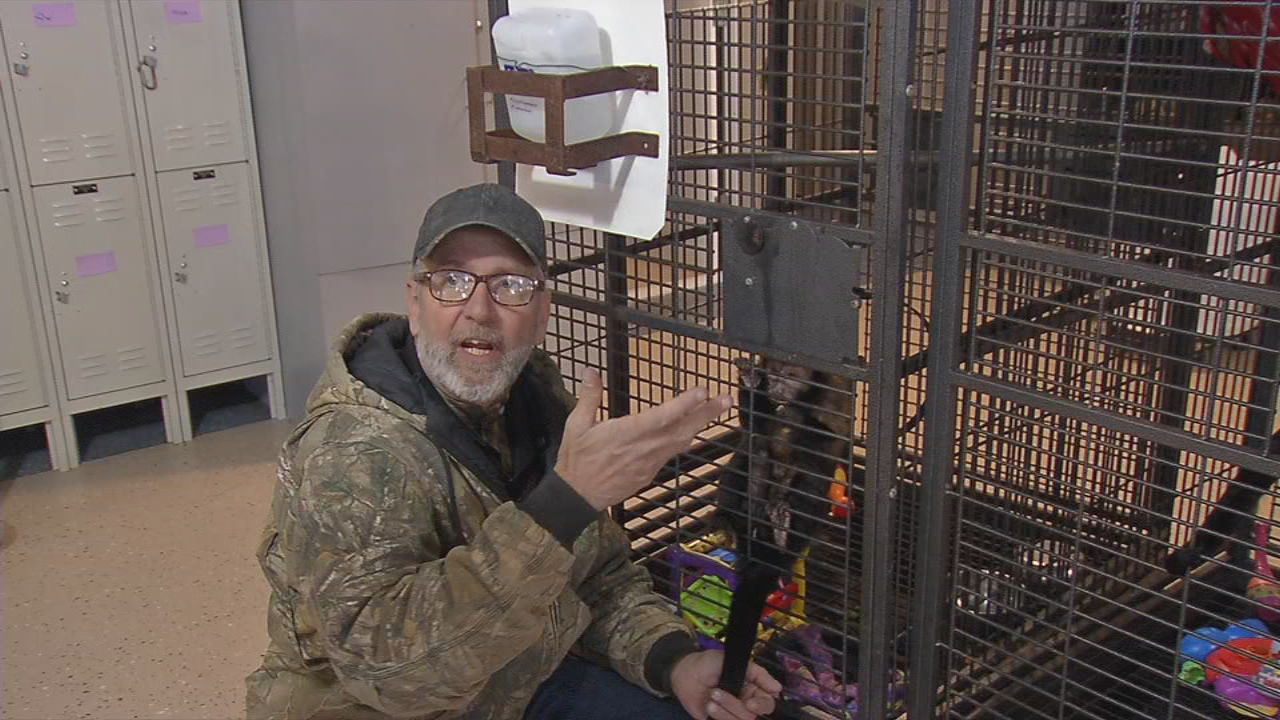
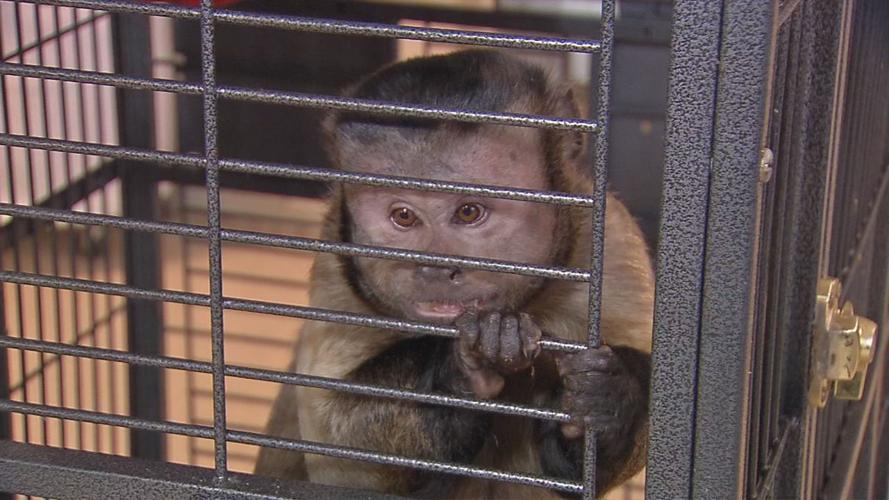
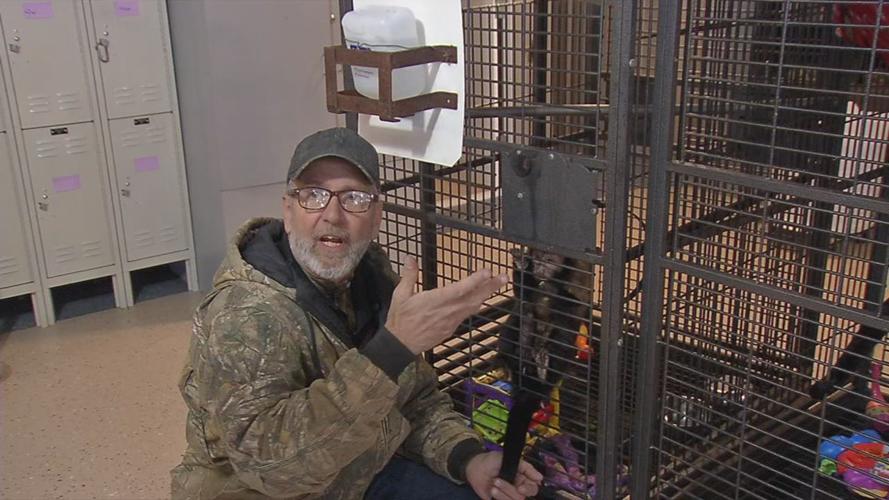
Stark shows one of his monkey cages. (WDRB Photo)
According to the lawsuit:
- Animals such as primates have been forced to live in dog cages and bird cages
- Stark has had numerous tigers declawed when there was no medical need to do so and has stated "declawing them just makes it easier to play with them."
- In 2017, Stark punched a sloth in the face when the animal did not want to come out for pictures with guests
- In spring 2017, Stark housed a sick camel in a muddy enclosure where the animal died
- In April 2018, Stark put an ostrich in an emu enclosure. According to the suit, "the emus killed the ostrich and the ostrich's body was left to rot inside the emu enclosure for multiple days."
- At an animal show in spring 2018, Stark was bit by a teething tiger cub while playing with it. "Stark threw the cub on the ground, kicked it, and repeatedly stomped on it," the suit reads.
- In July 2019, Stark attempted to transport about 100 animals to Oklahoma where he'd planned to launch a for-profit zoo. "Stark placed approximately 100 animals in a 28-foot enclosed trailer with no water, no air conditioning, and no air circulation," the lawsuit says. "By the time Stark arrived in Oklahoma, over 30 animals had died in the trailer and several others sustained heat-related injuries."
The attorney general also argues that Wildlife in Need, a non-profit, has strayed from its original mission of animal rescue and rehabilitation.
Behind the scenes observations
After the wildlife show Saturday, Stark gave WDRB News an extensive tour of his 17-acre property.
"I'm supposedly this animal abuser," Stark said. "Well, you're getting ready to see different. You know, if I'm an animal abuser, they're going to run and hide."
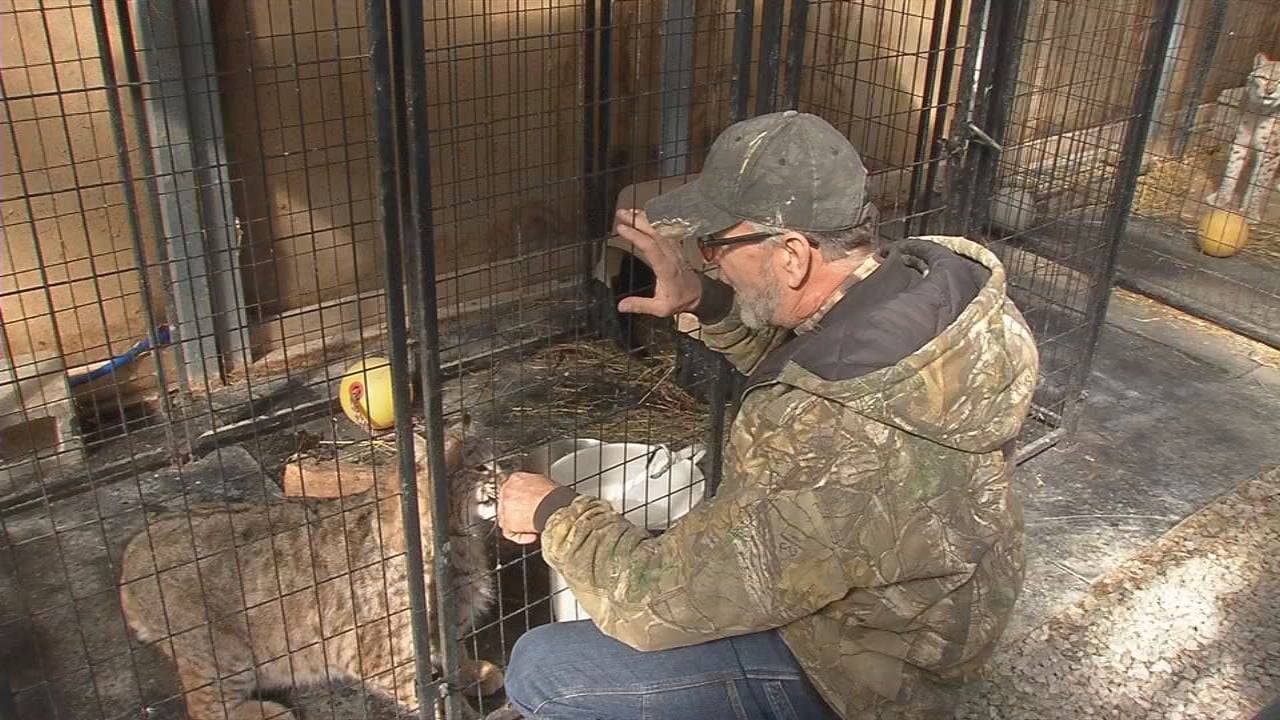
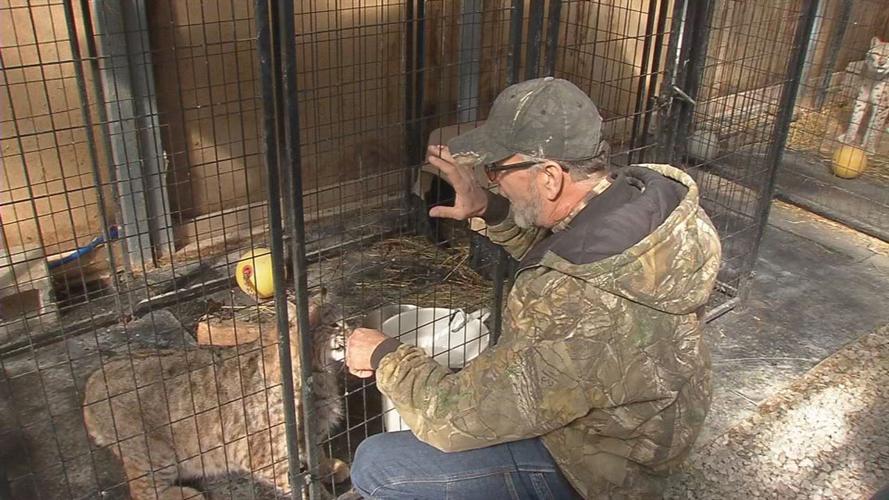
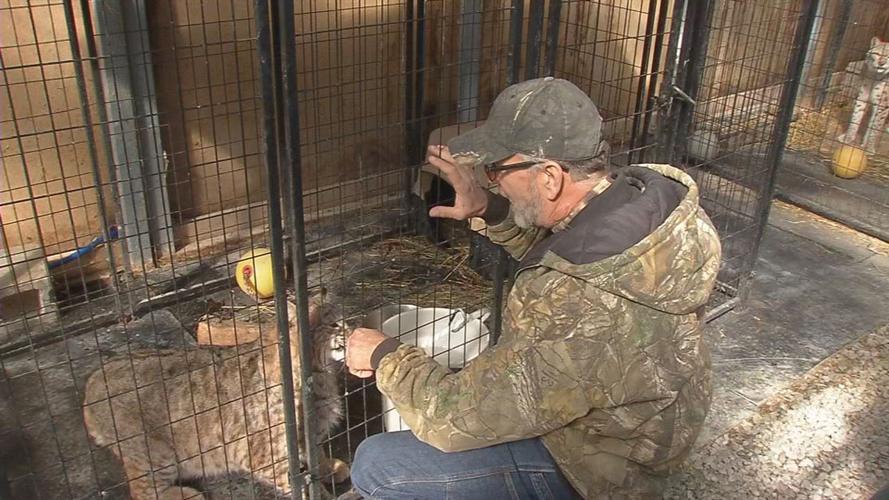
Tim Stark pets a bobcat at Wildlife in Need. (WDRB Photo)
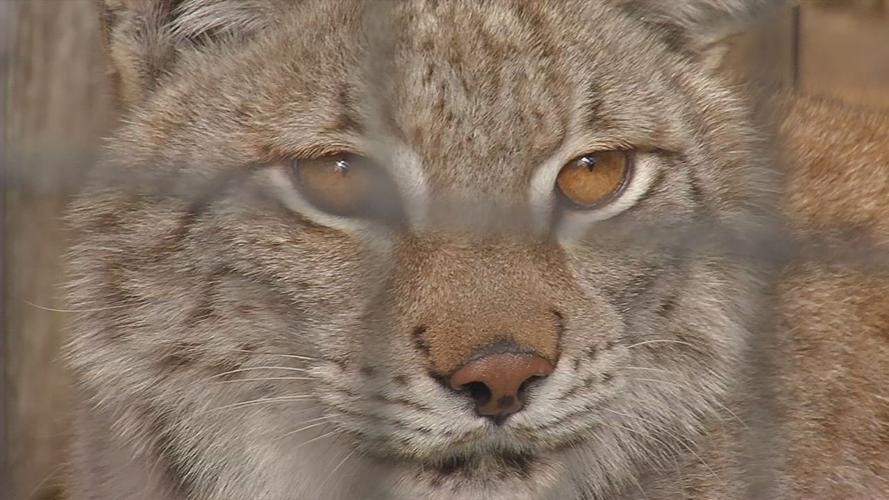
The tour began in a barn not far from the entrance that stays closed to the public. Inside, Stark houses a few lynxes and a bobcat in medium-sized kennels on a paneled floor.
"I don't 'trust him' trust him. You know, but he's just lovable," Stark said as he petted the large bobcat through its cage.

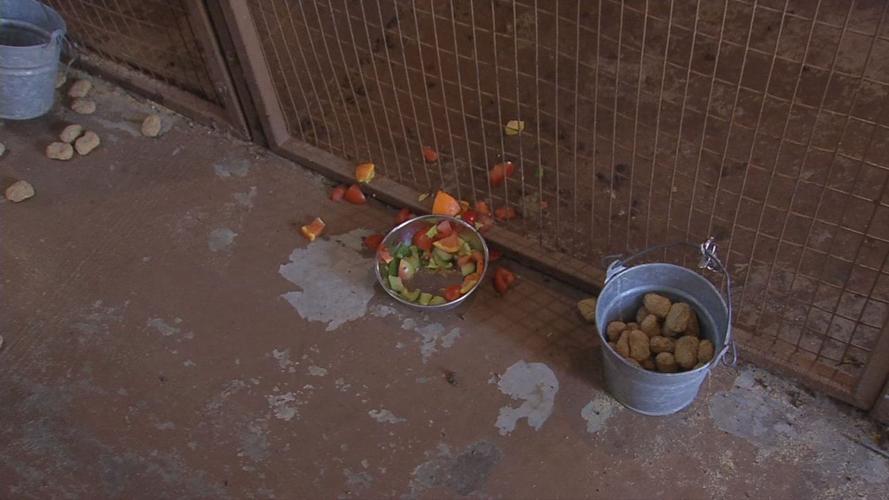
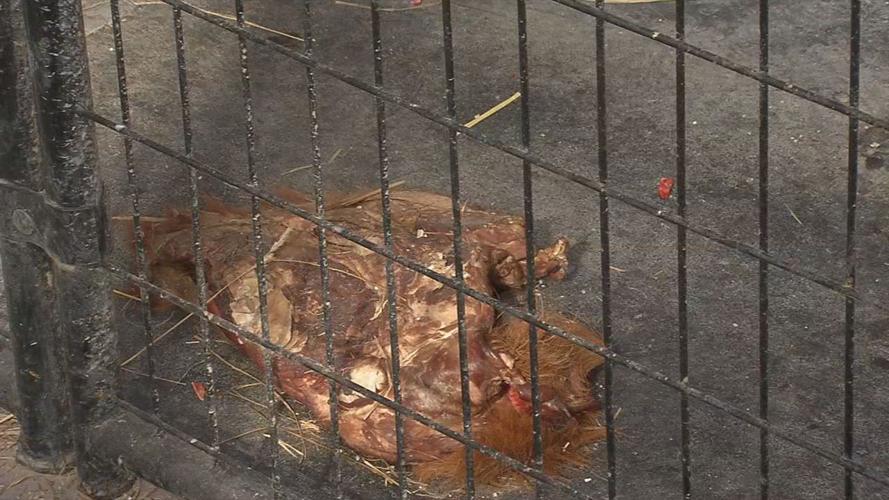
Meat Stark served the lynxes. (WDRB Photo)
Large chunks of meat were strewn around the cages. Stark said they were remnants of a cow.
"Would you say (these cats are) happy?" WDRB News asked Stark.
"Oh, happy as hell," he answered.
Next, at WDRB's request, he showed the contents of a nearby walk-in freezer. It contained packaged meat and produce. Outside, two deer carcasses were lying on the ground. They'll be used as food for some of the zoo's carnivores, Stark said.
"Those were just brought in last night, you know, by the highway department," he said. "The highway department drops them off to us."
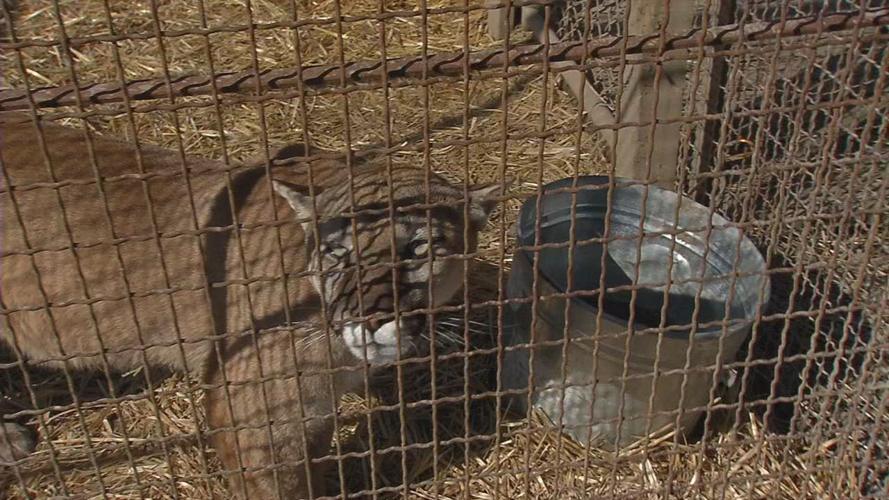
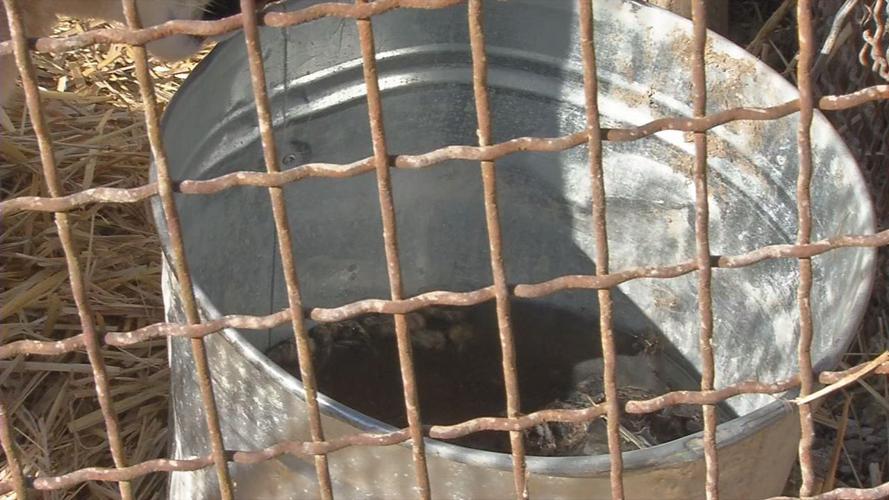
Minutes later, we spotted some dirty water in an aged cage inhabited by two mountain lions.

A cougar's dirty water bowl. (WDRB Photo)
"Stewart just changed that last night," Stark remarked. "I told him, I said, 'I got news crews coming. Make sure the water.' But see, we don't care. We don't care."
Other water bowls we saw contained clean water, including those in a nearby exhibit that contained a collection of serval and caracal cats, which are native to Africa.
Each species seemed to have a well-maintained enclosure.
Next, Stark showed us a nearby indoor area, where a number of monkeys were housed in bird cages, including a recently injured lemur that Stark says has been stitched up by a veterinarian and is now healing. He said the small enclosures are temporary during winter months.
The indoor space is also where many of the animals' food prep occurs, Stark said.
Stark says his bear exhibit, currently under renovation, would still pass federal inspection. (WDRB Video)
Outside, Stark strolled past a large bear enclosure that's currently being renovated. The exhibit was mostly void of vegetation, and Stark said work has been delayed after recent rains turned much of the enclosure into a muddy mess. However, he said the exhibit would pass any USDA inspection, in his opinion, and said his two brown bears are doing well.
Nearby, Stark also showed off a row of concrete monkey cages. Some didn't include toys or any bedding, however, all had fresh food and water.
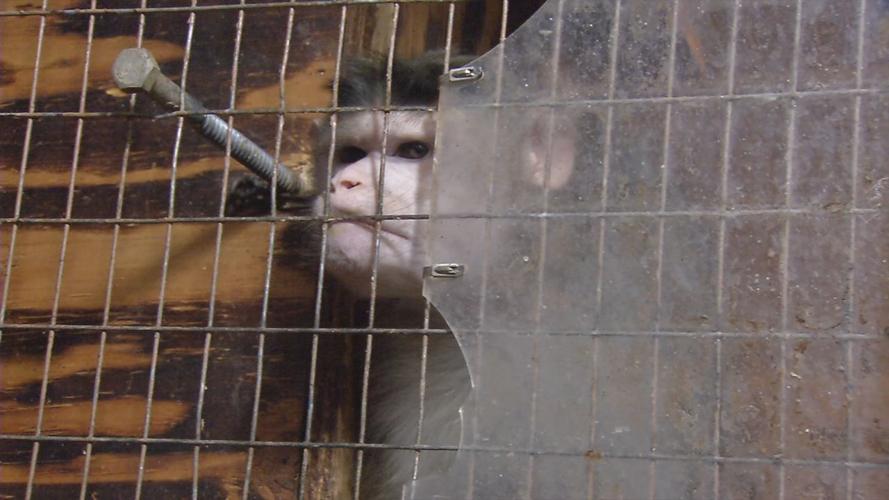
In the indoor living quarters — which Stark said were somewhat dirty because they hadn't yet been cleaned that day — in one cage we spotted a shard of broken Plexiglas. Another monkey in another cage chewed on a metal bolt.
"These guys are so smart it ain't funny," Stark said. "He just sit there and plays with it."
Most monkeys seemed happy and greeted Stark through their cages.
In another corner of the zoo, a black leopard had a different reaction to company. It hissed and growled at Stark and our WDRB News crew.
"A lot of time, leopards, this is the way they talk and act," Stark said. "I mean, this is just the way they are."
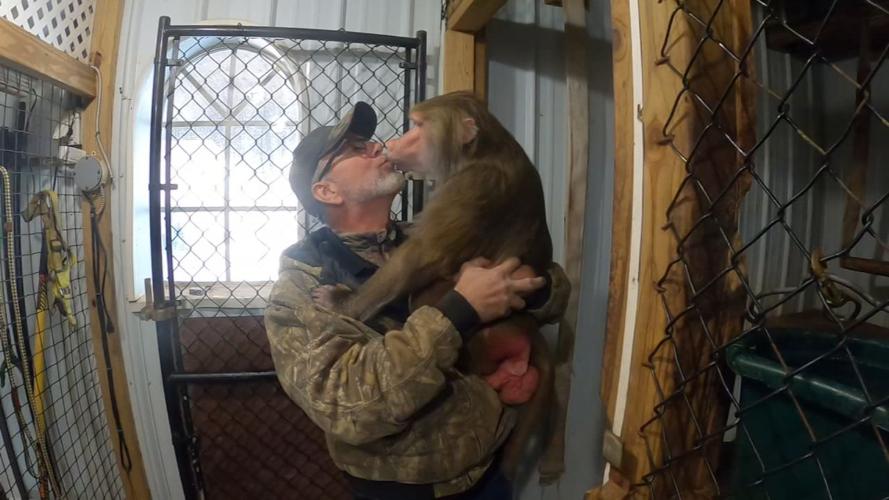
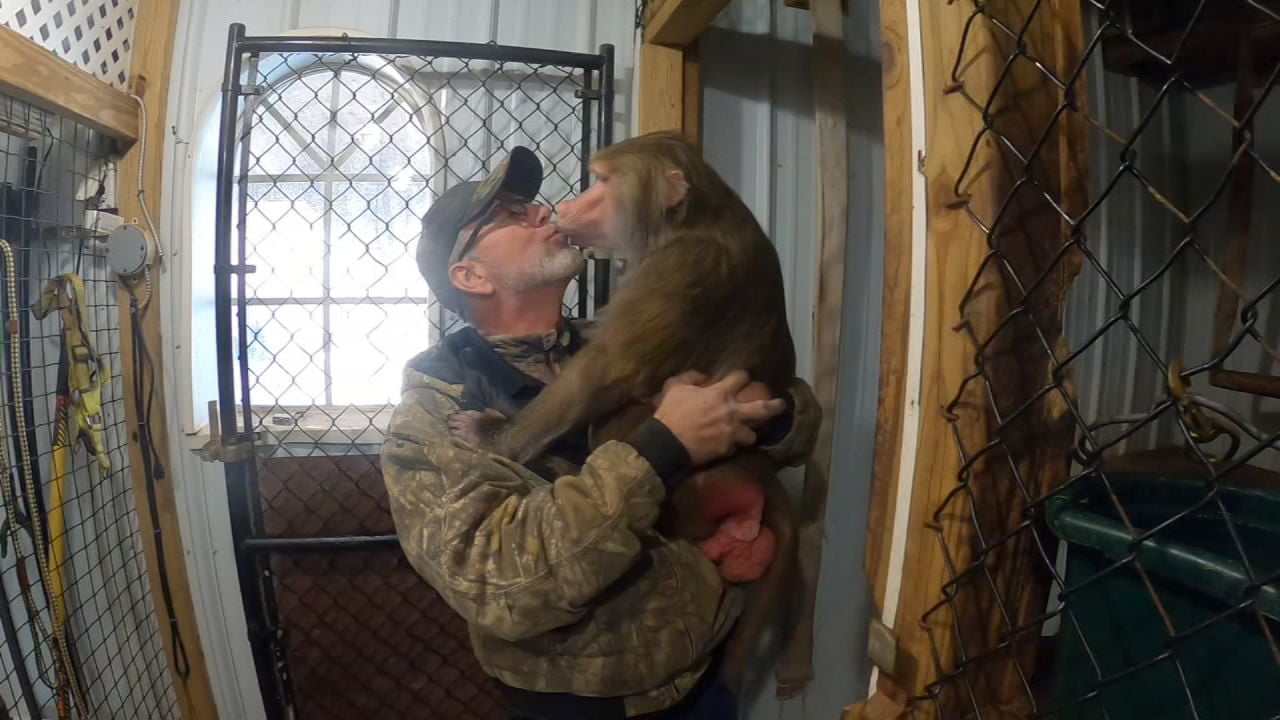
Nearby, a large baboon paced in a tiny indoor cage, but Stark said the primate's enclosure would soon be upgraded to a larger outdoor cage once winter passes. He opened an adjacent cage and embraced a somewhat smaller baboon.
"I mean, I can do anything I want to do with this monkey," he said after kissing the baboon he held in his arms. "See, they got cheek pouches. It's educational."
Back outside, he pointed out a large wolf enclosure at the base of a hill. Right now, two wolves are caged off in a small pen from the rest. Stark said a female wolf is pregnant and should deliver pups soon, so she's fenced off for her safety. The pups will be used in "playtime" encounters with customers. Even though the pregnant wolf had been penned off in the small cage for more than a month, Stark said the set-up was humane.
A red river hog paced back and forth in a cage next to the wolves. Even though some animal advocates say that behavior can be linked to stress, Stark said it means the hog is hungry and is seeking attention.
As he led WDRB News back toward the entrance, he made a pit-stop in his home where the animals' medical supplies are stored. In previous federal inspections, investigators found medical supplies were lacking or expired. Stark showed off a room full of supplies but mentioned that some — like a crate plastic syringes — were past their expiration dates but still effective.
Back outside, WDRB News noticed two vultures in a medium-sized cage. One appeared to have a severely broken wing.
Stark explained both birds — native to Indiana — were admitted in January as rescues. He said he's bound to give them a 180-day waiting period before euthanizing the birds.
"These two vultures, both their wings were so mutilated I couldn't repair them, and I tried and especially the turkey vulture," he said.
However, he said neither bird seems to be in pain.
At a final barn, we observed multiple cages full of ruffed lemurs, more spider monkeys, a pregnant wallaby, exotic birds like toucans and macaws, desert cats, and genet cats. Stark says the animals will be moved to exhibits outside in warmer months. While some of the enclosures were small and somewhat dirty, the monkeys had expansive enclosures with straw bedding. Stark said he allows a spider monkey from this exhibit to sleep in his personal bed each night, and he considers it an enriching activity for both the animal and himself.
In an adjoining room, Stark also houses roughly nine Asian small-clawed otters. The otters were placed in concrete stalls bare of bedding and water — with the exception of a bowl for drinking. Some climbed the chain-linked fences that lined their enclosures.
"I don't give them a lot of water in here, because we have no way of draining it," Stark said.
He said the otters will soon be moved outdoors when weather allows. He said he's also planning a better enclosure that would include more water features for the otters.
Finally, Stark ended the tour at his big cat enclosures. There, lions and tigers lounged in their roomy enclosures that are lined with gravel and seemed relatively clean. While WDRB News didn't observe it, he said the big cats sometimes pace. However, he said it isn't an indication of mental damage; instead, he said the pacing is a way the cats show they want attention.
Nearby, a volunteer sat beside a lion cage and read a book to the big cats. Stark said it's an indication of how much the animals are loved.
A zoo in transition
Stark maintains he's not an abuser and is running a zoo that makes him proud. However, he admits that some of the enclosures aren't the best, but he says working hard to change that.
"Somebody tell me when they've seen me on a beach drinking a f*****g margarita. You know, because I don't do vacation. I live a stay-cation," he said.
Later, he continued, "There's always been things that need to change. You probably live in a house you'd love to be able to change. You'd love to be able to build a bigger house or build on big room additions or this or that. Why haven't you gotten it done? Probably finances. You know, same here."
Even though WDRB News' tour was scheduled days in advance, Stark said no out-of-the-ordinary prep or clean-up work was done prior to the visit.
He estimates he has about 167 animals in all, and he said WDRB News saw about 98% of them on the tour. WDRB News asked to see a young sickened wallaby that's being "quarantined" in Stark's home. However, Stark denied that request and wouldn't give the name of the wallaby's veterinarian either.
Meanwhile, Attorney General Hill has filed a motion for an injunction, which would prevent Stark from removing or disposing of any of the animals during the course of the state's lawsuit against Wildlife in Need. Hill also requested immediate access to the site so state inspectors can see if any animals need care. A judge will hear that motion during a Friday hearing.
Stark says he's open to giving the state a tour of his property at any time.
Related Stories:
- In profane interview, owner says under-fire southern Indiana zoo will stay open
- Punched sloth and stomped tiger: Charlestown zoo owner responds to abuse alleged in new suit
- Animal advocate asks for boycott of Indiana zoo where animals die 'all the time'
Copyright 2020 WDRB Media. All Rights Reserved.


