
LOUISVILLE, Ky. (WDRB) — We are approaching March, the time of year when résumés get polished, seeds get assigned, and narratives get stamped in permanent ink.
It is also, whether anyone wants to admit it or not, evaluation season for coaches.
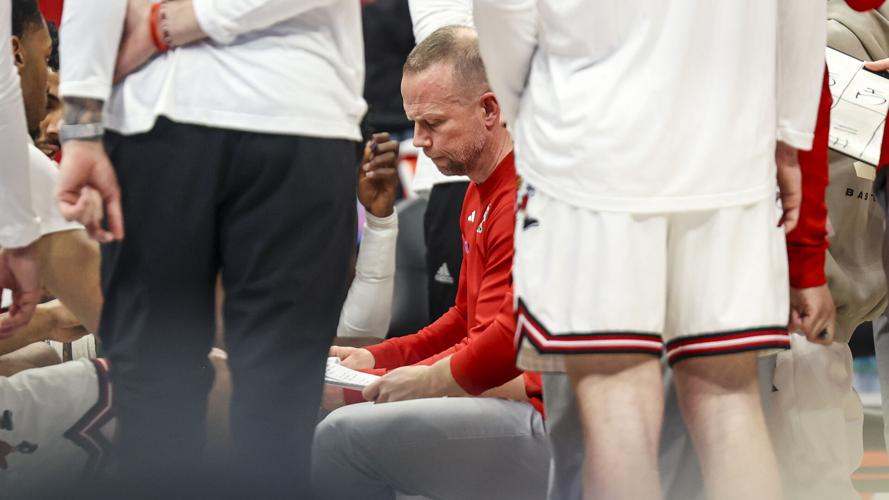
Pat Kelsey arrived with a burst of oxygen this program desperately needed. In one season, he won ACC Coach of the Year, finished second in the league, restored relevance, restored hope, restored noise to a building that had forgotten what sustained noise sounded like.
He passed every test except the one everyone remembers: a first-round NCAA Tournament exit.
Louisville | Kentucky | Indiana | Eric Crawford
Year two was supposed to be the step from restoration to contention. Louisville opened in the top 10, talked like a contender, looked like one in stretches and now finds itself clinging to the edge of the Top 25 with more questions than answers.
None of this is failure. But it is going to be scrutiny. There's going to be no avoiding that.
The number that explains Kelsey's Louisville program isn't in the win-loss record. It isn't in the efficiency metrics or the rebounding percentages or the turnover margin.
It lives in the gap between two numbers that shouldn't coexist: 1-11 against Quad 1A opponents and 46-4 against everyone else.

Louisville's team defensive rating is more than 17 points higher when Ryan Conwell is on the court, than when he is not.
That gap isn't a slump. It isn't bad luck or a brutal schedule or the randomness that basketball occasionally produces. It is a pattern so consistent it has become the defining fact of this program's identity: a team that dominates when it is supposed to but cannot cross the threshold when it matters most.
A second number makes the portrait even more precise: When trailing with five minutes to play — against anyone, in any game — Louisville is 0-8 this season, 0-15 under Kelsey overall.
Not 3-15. Not 1-8.
Zero. Zero.
That's not an elite-competition problem. That's a closing problem. The games Louisville wins, it leads. The games it trails late, it loses. Every time. Together those two facts tell you almost everything you need to know about what March is almost certain to expose.
Kelsey last week talked about the importance of defense and said 70% of Louisville's practice time is spent on it. "Defense is the key to our destiny," he said.
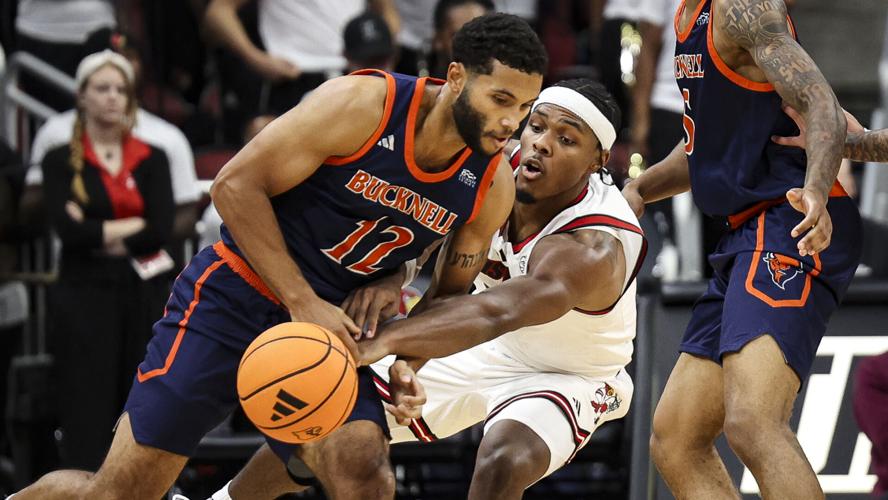
Louisville is ranked No. 28 nationally in defensive efficiency. But that number flatters the team, because the efficiency doesn't travel. It evaporates against the best competition, as it did again Monday night against North Carolina — 22-34 inside the arc, 17 layups or dunks, a 21-2 run that effectively decided the game.
The deeper issue is personnel, and the numbers make it uncomfortable to ignore.
A year ago, Louisville had Chuckie Hepburn, one of the top defensive players in the nation, pressuring the ball, Hadley as a steady defensive presence, and Terrence Edwards, a senior who saw the need and made himself a solid defender through sheer will. This year, that culture of defensive accountability hasn't taken hold across the roster the same way, and Kelsey doesn't have the schematic options to paper over it. He's not a zone coach. He turned to Peyton Siva to install a full-court press and said so with notable candor earlier this month.
"I'm not a press guy," Kelsey said. "... I told the players I don't know anything about pressing. But I do know effort and I know speed of recovery."
That's honest. It's also a coach acknowledging he's working outside his comfort zone, because the alternatives are limited. Which means the burden falls back on individuals to improve, and it's getting late for that.
So the offense can't have lapses. On Monday night, it had a significant one: 15 consecutive missed shots while UNC went on its run. By the end, Louisville's offense had essentially become a two-man game, Conwell and Brown carrying everything while the movement around them stalled.
Radio analyst Bob Valvano noted the off-ball movement wasn't good. Kelsey agreed.
"When everybody's getting involved, we're harder to guard," Kelsey said. "Versus when we're one- or two-dimensional. And we were probably too much like that tonight."
It happened against Duke too. It tends to happen against teams with length and discipline. The offense becomes predictable at precisely the moments when it can least afford to be.
By the end of February, teams are generally who they are going to be.
This team has shooters. A postseason hot streak is not a fantasy. But if it doesn't materialize, the questions after Year two will be pointed: Is this structure capable of postseason success? What needs to change for the next step to be real?
Kelsey has shown a genuine willingness to examine and adapt. But the evidence of two seasons now suggests shooting alone isn't enough to solve what ails this program in the games that define legacies. The gap between 46-4 and 1-11 is not going to close itself.
March is coming. It’s time to rev the engine. And Louisville is still looking for its keys.
Copyright 2026 WDRB Media. All Rights Reserved.


