
This is Chapter 1 in an occasional series examining the money, power and politics reshaping college athletics, from Congress and the courts to conference commissioners and the increasingly corporate structures behind modern college sports. Previously: Prologue -- The Gathering. Next: Chapter 2 -- The New Reality.
LOUISVILLE, Ky. (WDRB) — There's been a lot of talk lately in college sports about something called antitrust protection.
Commissioners mention it. Athletic directors lobby for it. The U.S. Senate may soon be debating it as part of an expected college sports bill.
To understand why it suddenly matters so much, you first have to understand what antitrust law actually does.
At its core, antitrust law exists to protect competition. More specifically, it exists to stop powerful institutions from collectively agreeing to rig the marketplace in their favor, limiting wages, restricting movement or controlling economic opportunity in ways courts consider unfair.
Historically, those laws targeted monopolies and giant corporations fixing prices or squeezing out competitors. But over the last decade, courts have increasingly applied those same principles to college athletics. And in doing so, they have slowly dismantled much of the NCAA's traditional authority to govern its own sport.
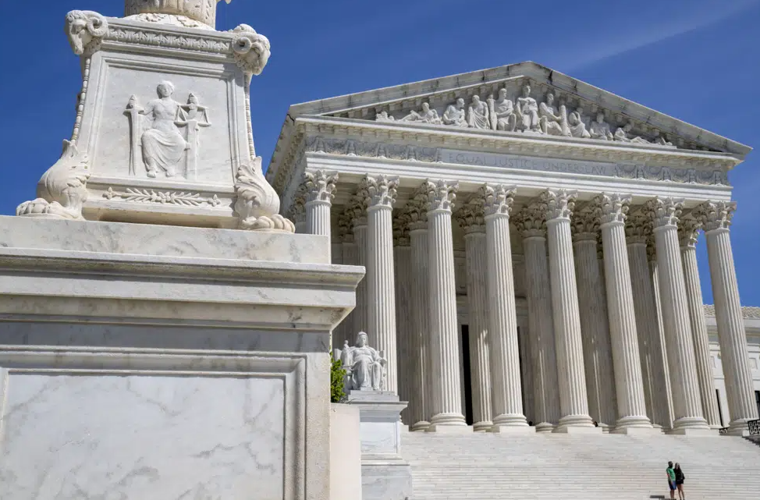
The legal pressure built for years before exploding into public view in 2021, when the U.S. Supreme Court ruled unanimously against the NCAA in the Alston case, striking down restrictions on education-related benefits for college athletes.
Then came the line that changed everything.
In a concurring opinion, Supreme Court Justice Brett Kavanaugh wrote that many NCAA business practices "would be flatly illegal in almost any other industry in America."
Inside college athletics, that read like a warning shot. Because if antitrust law continues applying to college sports the same way it applies to traditional industries, then almost every major NCAA rule becomes vulnerable to legal challenge. And increasingly, that's exactly what has happened.

The transfer portal expanded. NIL restrictions weakened. Eligibility lawsuits multiplied. The House v. NCAA settlement ultimately forced schools into direct revenue-sharing with athletes, beginning at roughly $20 million annually per school.
But even that structure immediately created confusion.
The roughly $20 million figure was agreed upon as a new spending framework for athlete compensation. But legally, it was never a hard cap. The settlement required schools to share a designated amount of revenue with athletes. It did not prohibit additional outside NIL compensation. And some schools spent beyond the $20 million amount.
That distinction quickly became significant. Outside NIL money continued flowing through collectives, booster groups and affiliated business arrangements, while some administrators concluded certain schools were operating far beyond the intended spirit of the new system.
That frustration surfaced publicly at recent conference meetings, where Louisville athletics director Josh Heird summarized the situation bluntly: "The cap's not the cap."
That quote helps explain why college sports leaders are now asking Congress for antitrust protection.
Not to stop athletes from making money. That fight is over. College sports is not going back to the old model.
What the NCAA, conferences and athletic directors increasingly want is the legal authority to collectively agree on rules — transfer limits, roster sizes, eligibility structures, NIL enforcement and revenue-sharing systems without every agreement immediately ending up in federal court. Think of it as asking Congress for a carve-out similar to the one Major League Baseball has operated under since 1922, an exemption that allows a sport to set and enforce its own structures without every rule being challenged as an illegal restraint of trade.
In simple terms, they want the power to regulate the marketplace that replaced the old NCAA system.
Supporters argue some level of legal protection is necessary if college sports is going to maintain any coherent national structure at all. Without it, they fear every significant rule will eventually be challenged in court. Critics see something much different: billion-dollar college sports entities asking Congress for permission to collectively limit athlete compensation and mobility, after decades of exploding coaching salaries, massive television contracts and facility spending.
After decades of trying to stop professionalism in college athletics, the NCAA has left itself in no position to regulate it. That's a problem. Now the association is facing questions over governance, enforcement and economic control, in fact, who gets to make the rules, who enforces them, and whether those rules can survive in court.
Congress has spent years circling those questions without delivering a solution. Earlier this year, the NCAA-backed SCORE Act stalled in the House before reaching a vote. Opposition from members of the Congressional Black Caucus — tied in part to broader concerns involving voting-rights issues and political policies in several Southeastern states — helped derail the bill despite support from many college sports leaders. Now a new bipartisan Senate proposal backed by Sens. Ted Cruz and Maria Cantwell is expected to emerge soon, a sign that the push for a national framework hasn't slowed even as the political path remains uncertain.
And looming behind the entire debate is a larger possibility increasingly hinted at by conference commissioners themselves: if Congress cannot stabilize the system nationally, the richest conferences may eventually stop waiting.
The SEC and Big Ten already generate television revenue far beyond most of college athletics. Increasingly, they sound less like NCAA members and more like economic superpowers considering whether they still need centralized NCAA governance at all.
Antitrust protection from Congress is one possible path forward. Self-governance by the wealthiest leagues may be the other.
The question of whether athletes should be paid has largely been answered already. The question now is who controls the marketplace that emerged afterward.
It is nowhere close to being settled.
Copyright 2026 WDRB Media. All Rights Reserved.


