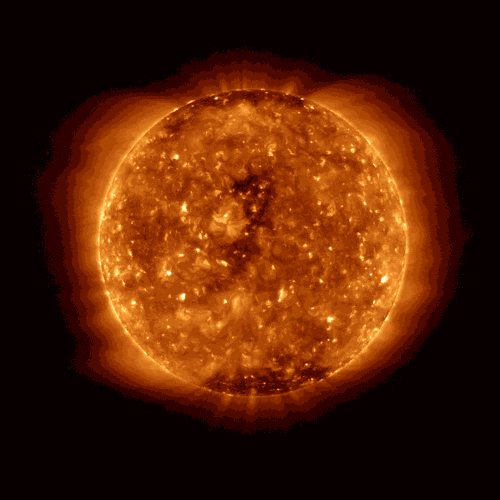
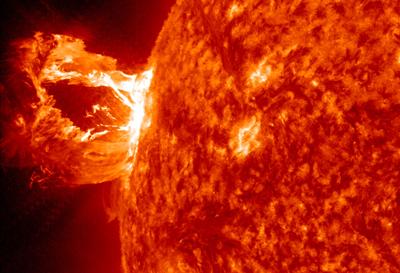
Did you know the sun's behavior has a big effect on our planet? Earlier this year NASA announced Solar Cycle 25 had begun; it actually started in December 2019. A new solar cycle begins when activity on the sun is at its lowest, so it's not something scientists declare in the moment. You have to look back on past activity to see that minimum which usually happens about every 11 years. That's why NASA and NOAA announced in September 2020 that the new solar cycle started in December 2019. The image below from NOAA shows what the sun looked like during that solar minimum.

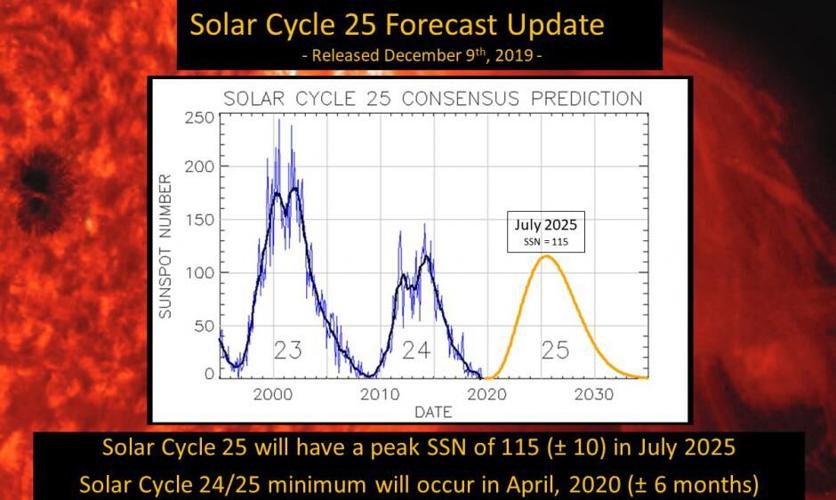
Sun Cycle 24 (2008-2019) was the weakest cycle in 100 years and the fourth lowest intensity cycle since we started tracking these in 1755! Scientists expect we will see peak activity from Sun Cycle 25 in July 2025, but this cycle is also forecast to be a weak one. The image below from the Space Weather Prediction Center - an office of NOAA - shows how Sun Cycle 25 will compare with cycles 24 and 23.
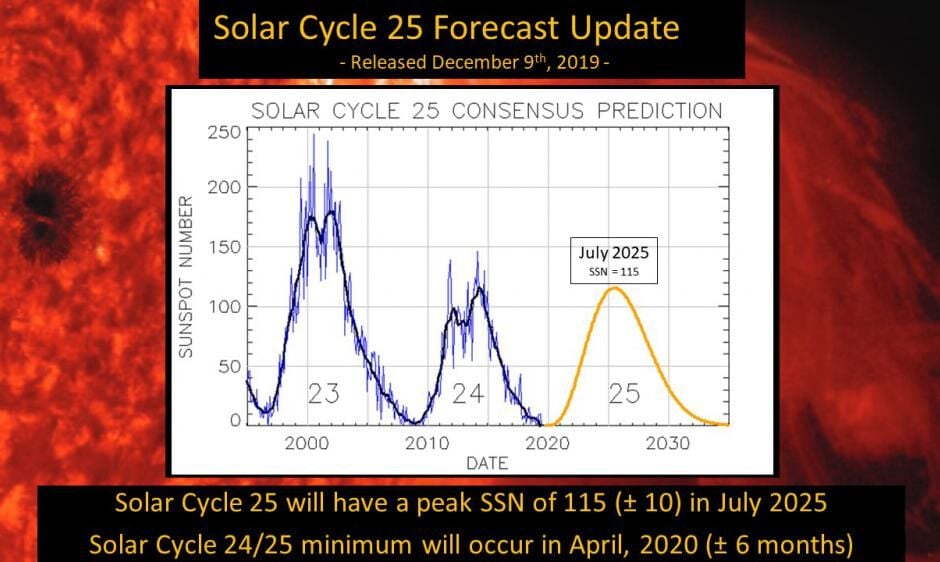
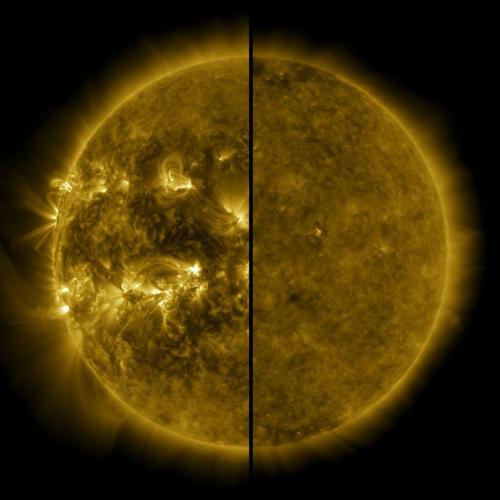
Interestingly cycles 21, 22, 23, and 24 have all shown less activity than the cycle before them. Scientists expect, while cycle 25 will be relatively weak, it should end that trend by showing slightly more activity than cycle 24. The image below shows the sun in April 2014 on the left and December 2019 on the right at maximum and minimum solar activity. (Image Courtesy of NASA/SDO and the AIA, EVE, and HMI science teams)

That activity is determined by number of sunspots. While sunspots are a good predictor and way to measure these solar cycles, they are not the only thing to watch for. In September of this year, the Space Weather Prediction Center issued Watches and Alerts for a geomagnetic storm based on solar wind data.
Why does this matter?
Solar activity and the resulting space weather can affect life here on Earth. Radio blackouts and satellite disruptions can be forewarned as can those geomagnetic storms referenced above by studying the solar activity and understanding where we are in the solar cycle.
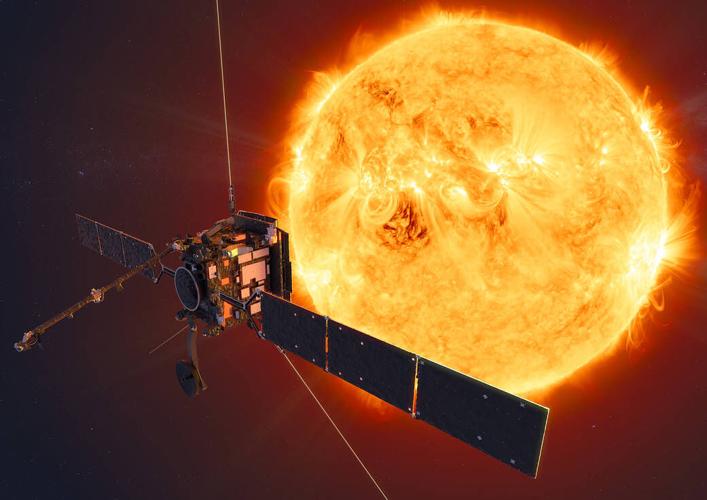
In February 2020 the Solar Orbiter launched. It's a seven year mission by NASA and the European Space Agency to get closer pictures and measurements of the sun than ever before. It has already made one lap around the sun. Scientists hope the information they learn about the sun during Solar Cycle 25 will help them be able to better predict what the sun will do in Solar Cycle 26 and beyond. Since the Solar Orbiter was launched so close to the minimum solar activity in December 2019, scientists should be able to get a pretty good look at the entire solar cycle from minimum to maximum. NASA’s Parker Solar Probe is also orbiting the sun closer than any craft before it has, so having both resources will help us see the star even better than before. The image below (Credit: ESA/ATG medialab) is an artist's impression of what the orbiter would look like in space.


