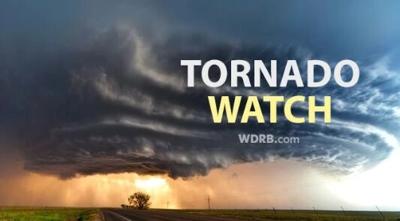
It's time to talk about tornadoes. We've all seen the Wizard of Oz, the movie Twister, what a sight! Now to create a tornado, it's really not that easy. I know in school we learn "hot air meets cold air and then voila, you have a tornado." There's so much more that goes into it to get this whirlwind. You need wind shear. This is one of the main ingredients, and there's two types of wind shear: something called speed shear, and that's a change in wind speed as you go throughout various levels of the atmosphere. The other kind of shear is directional shear where down here at the surface you get winds coming at you maybe from the southeast or the south, then as you climb up vertically in the atmosphere, the winds start to turn with height. The winds shift around to the west, and you get this rapidly rotating column of air. Then when we pick up strong updrafts, that wind feeding into the storm, UH-OH, LOOK OUT! If flips, it turns, it comes down to the ground, and when winds are strong enough, this is what you don't want to see - a tornado warning is issued. We have bad news. We don't go through a severe weather season here in Kentuckiana without some tornado warnings. Tornado on the ground. Watch that rotation. And then you're talking about winds that can range anywhere from 75 to 200 miles per hour. When severe thunderstorm warnings and tornado warnings are issued, we always want you to stick with the WDRB Weather team. We're there to keep you safe.
WDRB Weather Explainer Blog - Tornado Watches and Warnings
Jude Redfield
WDRB Meteorologist