
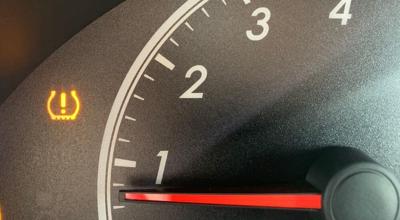
It's that time of year again folks. You may have headed out the door early in the morning the past couple of days and saw that your low tire pressure light was lit up on your dashboard. Flat tire? Probably not. Leak? Also not the main culprit. A lot of the time, weather is to blame for your low tire pressure light coming on when there is a decrease in temperature, but why?
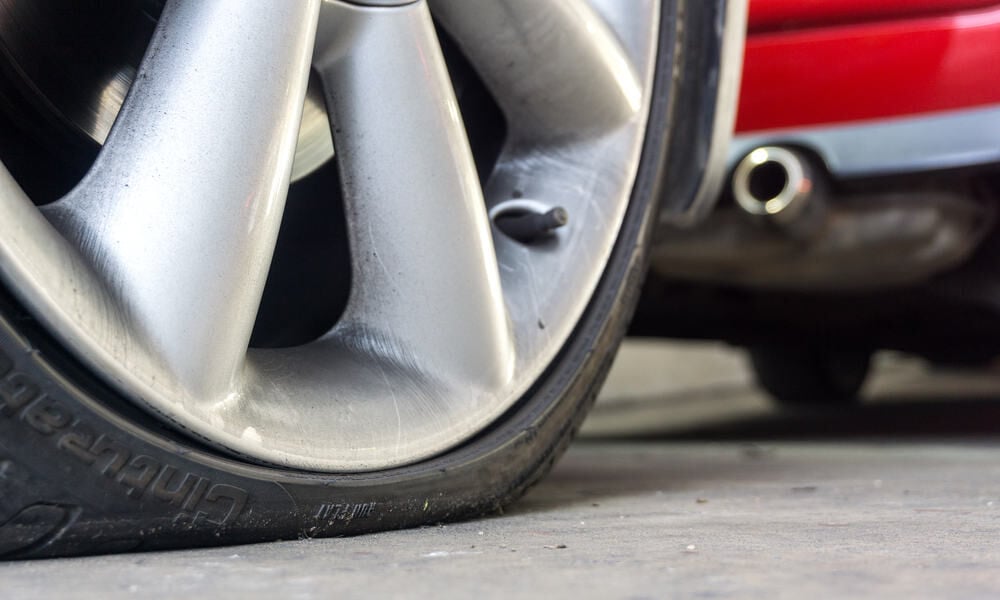
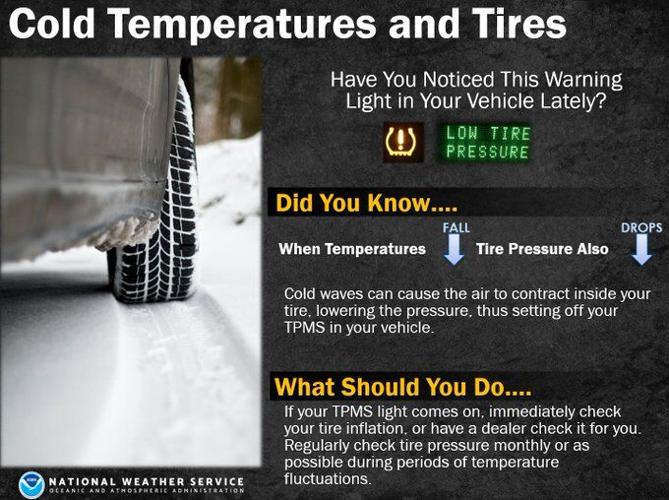
Tire pressure can decrease about 1 PSI (pounds per square inch) for every 10 degrees the temperature drops. It's not due to air leaking out, but instead it's the air inside the tire condensing, taking up less space when it's cold. This is temporary, because driving will heat up the tire and increase the tire's pressure.
A lot of the reasoning behind why this happens is because of the molecules inside the tire. Cooler air molecules can take up less space inside your tire and exert less force on tire walls. As temperature drops, molecules slow down. When it’s hot, molecules will move faster and increase tire pressure.
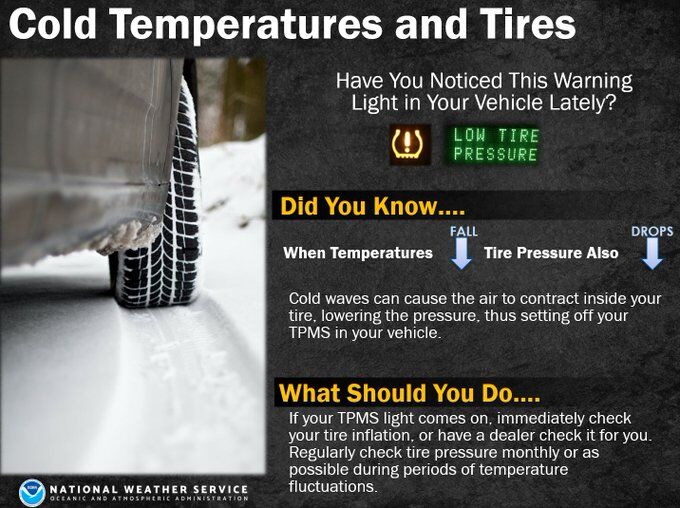
Image Courtesy: NWS
A great example most of you probably noticed was just this past Friday as a strong cold front came through our area. Our temperatures dropped from around 80 degrees, all the way into the mid 40s in the city, and in the low 40s further outside of Louisville. When you do the math, that means our temperature over the span of the afternoon through the overnight hours dropped about 35 degrees, meaning the PSI in your tires dropped around 3.5 PSI.
Even if you don't think it is a tire leak and just the cold weather, it can still make way for dangerous conditions on the roadways, so checking your tire pressure often is always recommended.