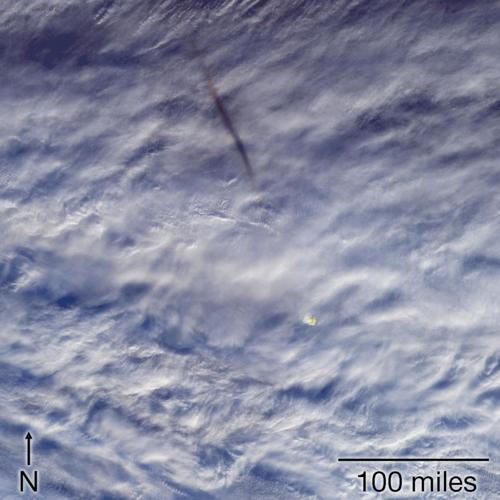
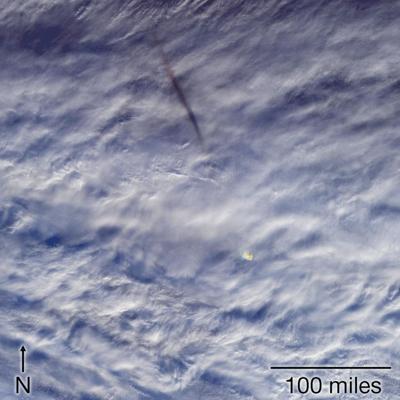
We are getting a new look at a "fireball" that fell toward Earth in December. According to NASA it exploded about 16 miles above the Bering Sea (west of Alaska) and, "the explosion unleashed an estimated 173 kilotons of energy, or more than 10 times the energy of the atomic bomb blast over Hiroshima during World War II."
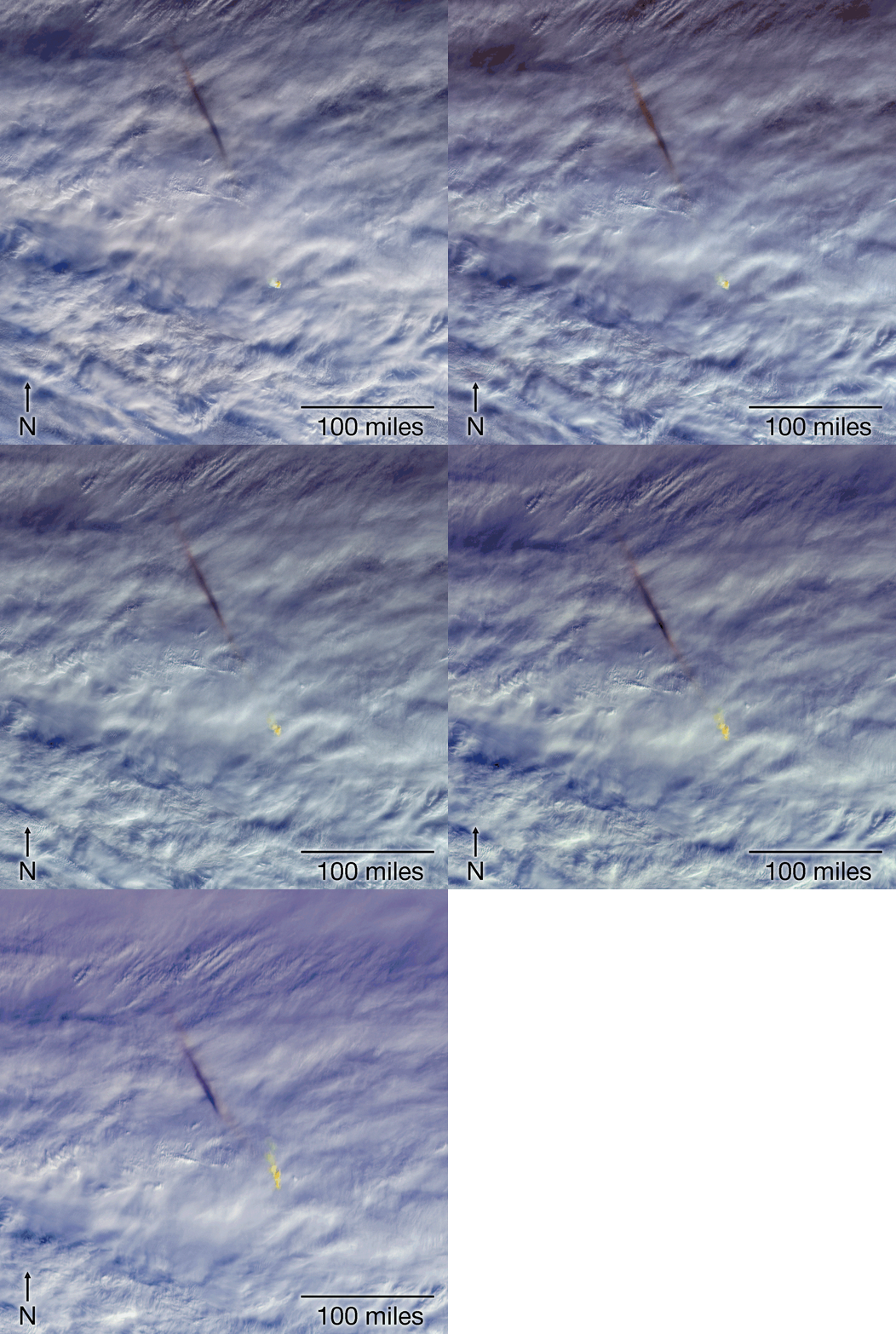
Image Credit: NASA/GSFC/LaRC/JPL-Caltech, MISR Team
The brown streak is a shadow in the cloud from the tail of the meteor (thanks to the low sun angle at the time) and the yellow/orange puff is the cloud left behind from the explosion. NASA says, "the Dec. 18 fireball was the most powerful meteor to be observed since 2013; however, given its altitude and the remote area over which it occurred, the object posed no threat to anyone on the ground."

In fact two different NASA instruments captured this. Five of nine cameras on the Multi-angle Imaging SpectroRadiometer (MISR) collected the images making the gif at the top of this post on December 18th, and the image directly above is from the Moderate Resolution Imaging SpectroRadiometer (MODIS). Both instruments are mounted on the Terra satellite which is roughly the size of a small school bus!


