SELLERSBURG, Ind. (WDRB) -- Body cameras have been distributed to nearly one-third of front-line Indiana state troopers almost a year after the governor announced the step as part of the state’s response to racial injustice concerns, state police officials said Thursday.
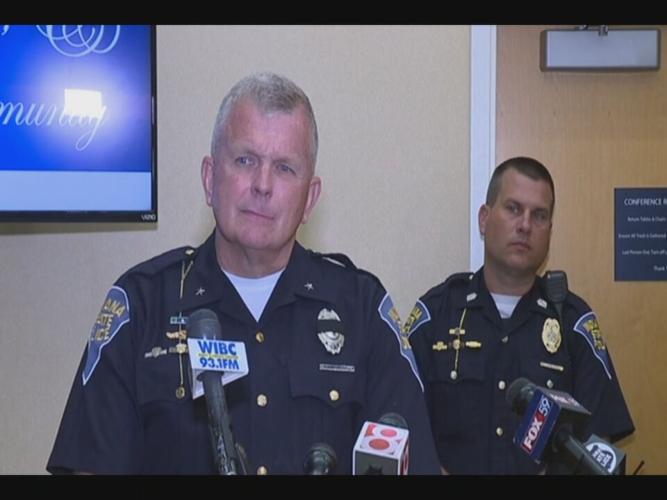
In a press conference, ISP Superintendent Doug Carter said the three-camera system includes one body-worn camera and two cameras that will be added inside troopers' cars.
Carter said a lot of time and consideration went into making the decisions on this project.
"There's been a tremendous amount of stress for a lot of people to do this correctly," he said.
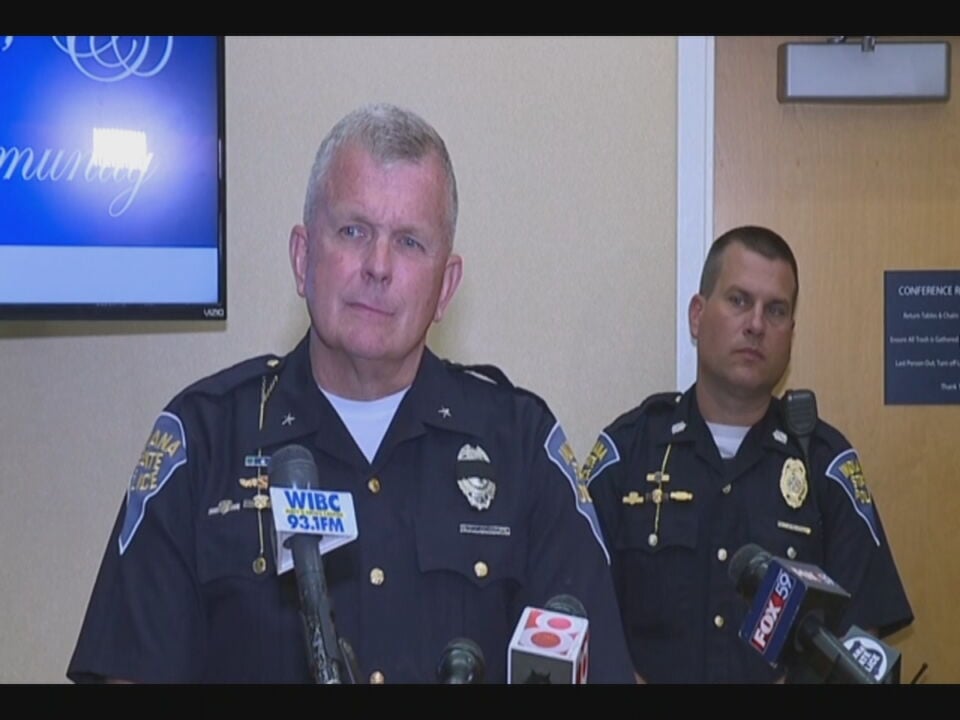
Indiana State Police Superintendent Doug Carter speaks at a press conference on Thursday, July 8.
The process of getting cameras to troopers began in early June and is expected to take until late August to complete.
"At the end of this project we'll have around 900 cameras out there across the state. Currently we're at 235 or 240 or so," said Carter.
Some of those cameras are already in use in southern Indiana at posts in Versailles and Sellersburg.
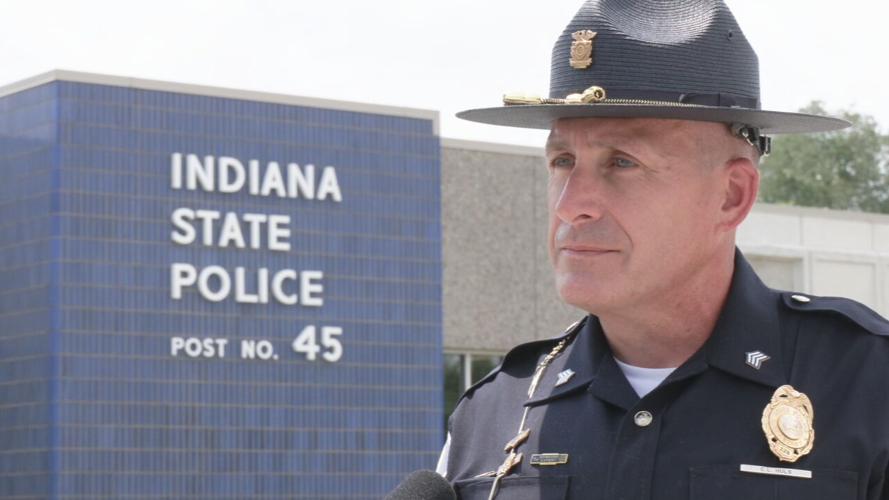
"We have two troopers currently with the cameras, but next week there will be another bunch that goes through the training and receives the equipment," said Sgt. Carey Huls with ISP Post 45 in Sellersburg.

Sgt. Carey Huls, Indiana State Police Post 45
Huls said by the end of August, around 47 troopers at Post 45 will have the body and vehicle cameras.
"Most officers are very happy with it. A lot of times officers want the cameras and have requested the cameras," he said.
Indiana Governor Eric Holcomb first announced plans to get body cameras on troopers in August 2020.
"When you call 911 you expect a response, and we need to make sure our officers are trained and equipped appropriately to do so," Holcomb said. "That's on us. For that reason, I will mandate the use of body cameras for every front-line state trooper by spring of 2021."
Carter said that deadline was met.
He says the cameras can be turned on manually, but will also come on automatically in situations such a when a trooper removes a pistol from a holster, when the vehicle's emergency lights come on, if a trooper is involved in a crash and other circumstances.
As for storage of the footage, Carter said that depends on the situation.
"Generally for one year," he said, "Criminal -- up to five years, and other that will be kept for perpetuity."
Carter said the cameras will be used as a tool, but are not the entirety of what happens in any given situation.
"The camera doesn't think. It doesn't sense, it doesn't feel, it has not been trained" he said.
"I think what this will do is bring some validity to who we are, what we do, and why."
The cameras will be used by troopers and sergeants assigned to patrol duties, Capitol police Officers, and specific Special Operations units.
The cost for the project is around $15 million dollars to be paid over a period of five years, according to ISP.
Related Stories:
Copyright 2021 WDRB Media. All Rights Reserved.


