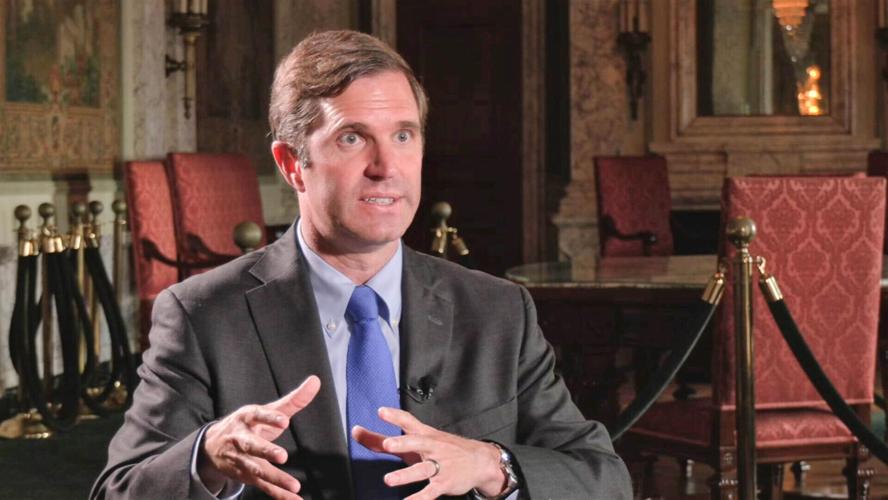
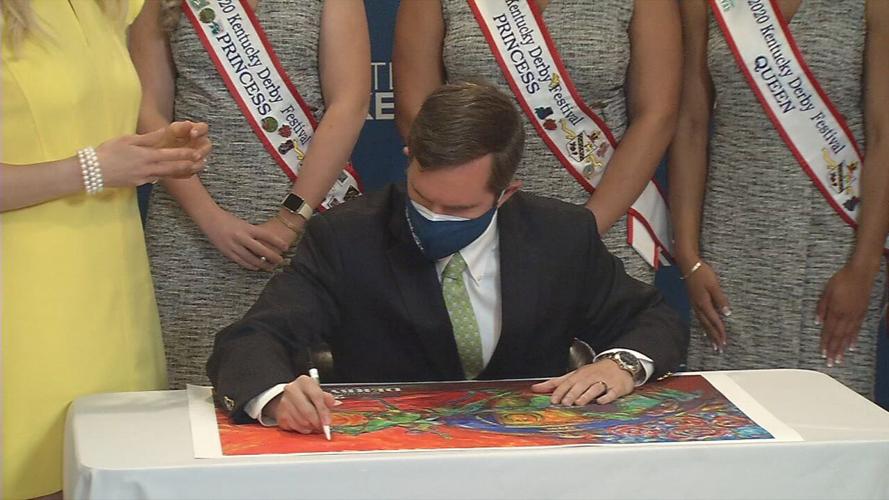
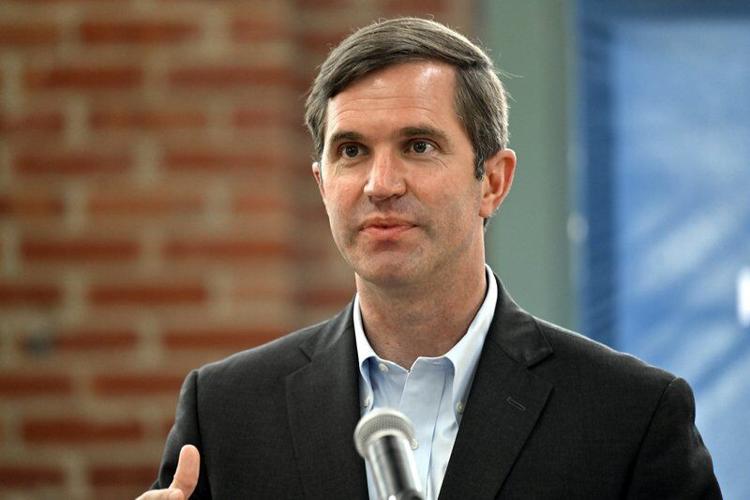



LOUISVILLE, Ky. (WDRB) -- Kentucky Gov. Andy Beshear on Thursday issued an executive order that allows college athletes in Kentucky to profit from their name, image and likeness, beginning next week. He is the first governor in the U.S. to make such a move by executive order.
The move comes ahead of expected temporary rules from the NCAA to afford athletes nationwide the same rights, hoping to level the playing field as six states put laws into effect on NIL rights on July 1.
While a governor's authority to issue such an order could be up for challenge, Beshear's move came in consultation with legislative leaders from both parties and multiple leaders at major state universities, many of whom praised the action in a release from Beshear's office.
This order and other NIL actions open the door to college athletes being paid for endorsements, sponsorships, appearances, autographs, social media activities and more.
“This action ensures we are not at a competitive disadvantage in recruiting, and also that our student athletes have the same rights and opportunities as those in other states. For any individual athlete, their name, image and likeness are their own and no one else’s," Beshear said in a news release Thursday.
The NCAA has been slow to act on the issue, tabling action in January in the hope that Congress would pass legislation. That possibility has grown more remote as the sides bicker over the scope of the legislation. Republicans favor a more limited bill. Democrats want it to contain protections for health and safety of athletes, and other measures.
Regardless, the era of NIL payments is upon us, and it creates a challenge for university athletic departments to keep up with the changing rules, monitor athlete activity and know their own exposure in a highly litigious environment. Beshear's move on Thursday drew praise from athletics directors at both the University of Louisville and the University of Kentucky for providing at least interim guidance.
"Bringing the state of Kentucky into competitive balance with other states across the country and, more specifically, the Atlantic Coast Conference is critical," Louisville AD Vince Tyra said. "The collaboration with legislative leadership in Frankfort is welcome and needed in leveling the playing field for our institutions and, more important, for our student athletes.”
Kentucky AD Mitch Barnhart said the move provides UK coaches needed flexibility as they embark on an uncertain landscape with NIL.
“We are appreciative of that support as it is a bridge until such time as state and/or federal laws are enacted," Barnhart said. "The landscape of college sports is now in the midst of dramatic and historic change – perhaps the biggest set of shifts and changes since scholarships were first awarded decades ago. What won’t change is our core and most important principle – the well-being and development of our student athletes, while they are at UK and, as importantly, in preparing them for success in life, on whatever path they choose. We are extremely well-positioned to help our student athletes navigate this new and complex terrain. Much of what we need to do to support students in terms of NIL – through The Kentucky Road initiative – has been in place for some time. We have a strong foundation, which we will now work to build on.”
"TRIAL AND ERROR"
Tyra, who serves on the Atlantic Coast Conference Name, Image and Likeness committee, said, “It’s going to be trial and error and it’s going to be ugly.”
His school put a program in place last fall to advice and assist athletes on NIL issues. The Opendorse app, through a program called Elevate, helps match athletes with online earning opportunities, and provides education on how to proceed in the new landscape.
Earlier this month, UK announced an enhanced suite of athletic benefits tailored toward NIL opportunities, called The Kentucky Road. It provides brand protection, enhancement and engagement, financial education and athlete benefits.
Still, Tyra told WDRB this week, the challenge for all athletics departments will be education and monitoring.
“We’ve done as much preparation as we can related to, one, advising the student-athletes,” Tyra said. “We’ve created kind of a law clinic on campus with the law school, so we have professors and law students who will be able to assist our student-athletes, and just students. We’ve talked about the Opendorse social media app that we use, to make it available to the student-athletes under the program Elevate. But you can’t just say, ‘Here it is.’ You have to teach them how to use it, where there’s value, engagement rate. Because if not, they’ll just get on there and pound out a bunch of tweets or posts and all that, and that’s not creating value for them either. So there’s a lot of education and guidance that goes with this.
“One thing I want to make sure we can avail them of is guidance on taxes,” Tyra continued. “If you’re going to make money in this, you’re going to have to pay taxes, and how do we advise them on that? Getting agents and all those things, how to make sure you disclose everything you earn? When it does go into place, you’ve got to disclose it, and if not, we’ve got to understand what’s in play, whether it’s an NCAA rule or an institutional rule that is being applied. Somebody makes an appearance and shows up at Eric Crawford’s house for a birthday party for some fee and they forget to disclose it -- that’s our starting player in Saturday’s game, what do we have there? What’s the stick?”
Michael McCann, legal analyst for Sportico.com, and an attorney who is a Professor Law at New Hampshire University, says athletic department compliance departments are in for some headaches.
“This is sort of like the student who waits until the night before to study for the test. It’s kind of hard to figure things out at the last minute,” he said. “Keep in mind, the Ed Obannon case (which challenged the NCAA use of name, image and likeness for former student-athletes) was filed a dozen years ago. It seems odd that we’re waiting until the very last minute to figure these things out.”
LEGISLATIVE LEADERS REACT
While leadership in Kentucky's General Assembly was at times at odds with the governor's use of executive actions during the COVID-19 pandemic, there was support on both sides of the aisle for the action he announced on Thursday.
Though it did not pass NIL legislation in the most recent session, leaders say they intend to deal with the topic in the 2022 regular session.
“This has long been an issue of fairness for student-athletes, but last week’s Supreme Court ruling also places our universities at a competitive disadvantage as other states move forward,” House Speaker David Osborne added. “These temporary steps address the immediate need, while we continue working with universities and other stakeholders to craft comprehensive legislation for the 2022 regular session.”
“We’ve been working for two years in the legislature with Democrats and Republicans to give our student athletes control over their name, image and likeness,” said Senate Minority Floor Leader Morgan McGarvey. “We can’t fall behind. I’m glad the Governor is stepping up to make sure Kentucky’s student athletes have the same opportunities here that they would in other states, and Sen. Max Wise, Sen. Whitney Westerfield and I remain committed to making sure protections like those in the Governor’s executive order become part of our law as soon as possible.”
“This is a landmark day for college athletics in Kentucky, and I am proud to stand with Gov. Beshear, Senate Minority Floor Leader Morgan McGarvey and many others in supporting this executive order,” said House Minority Floor Leader Joni Jenkins. “This change will make sure Kentucky’s student athletes are fairly rewarded for their hard work while making sure they are not treated any differently than their counterparts in other states. The goal going forward is to make sure this executive order becomes law next year, because it’s time we take this permanent step.”
Copyright 2021 WDRB Media. All Rights Reserved.


