(InvestigateTV/WDRB) — Flock Safety will be making updates to its automatic license plate reader database system as part of what the company says is a "continuation" of the company’s "commitment to both safety and privacy" — a move that comes after months of mounting public scrutiny and criticism.
"Today we’re announcing the changes that came from listening. A new standard for privacy, security, and accountability in public safety technology," Flock Founder and CEO Garrett Langley said in a social media post Wednesday.
I've learned a lot in nine years of building @Flock_Safety. Some of it from our customers, and some of it from the communities they serve.
— Garrett Langley (@glangley) August 13, 2026
Today we’re announcing the changes that came from listening. A new standard for privacy, security, and accountability in public safety…
In a post on the company’s website, and video posted to YouTube, Langley outlined the system modifications that make up that "new standard."
The changes include:
- Default storage time for license plate reader data will be reduced from 30 days to seven days, with exceptions available for long-term investigations, though agencies can still set their own retention periods independently
- Law enforcement agency customers will be required to use Flock’s "Audit Assistance" feature that flags potential misuse using artificial intelligence
- Users the system suspects are misusing the search function will have their access automatically suspended until an administrator reviews their activity
- Law enforcement agency searches will require a case number or code. Exceptions may be allowed during emergencies, but will be flagged for administrator review
- Jurisdictions will be able to choose what kinds of searches for which other agencies in the network can utilize their cameras and data
According to the blog post, multi-factor authentication became mandatory logging into the system earlier this month, and Flock is also engaging the services of an independent cyber security firm to evaluate its equipment and data systems, with a commitment to publish the results of that evaluation in September.
"These changes reflect years of work and deliberation," Langley says in the posted video, "and they’re not the end of that work because we’re not perfect. Far from it. But we will keep listening. We’ll keep improving and building a better standard for public safety technology."
Changes occur amid growing backlash
Flock’s update comes just days after InvestigateTV published an investigation into the dozens of cases of law enforcement allegedly misusing the company’s technology and a little over a week after an earlier report was featured on a prominent late night series.
Some of those accused allegedly utilized Flock’s database for personal searches — many charged not only with abusing their positions, but with stalking or harassment.
An investigation found more than 70 cases across the country allege police misused flock cameras.
Critics have also raised concerns about racial and political profiling, non-law enforcement access to cameras and other data-privacy vulnerabilities created by the sheer volume of data being collected by the company’s nearly 100,000 automated license plate readers.
Because in most jurisdictions there is no requirement for a warrant in order for police to search a tag or track someone’s movements over time, some have questioned the constitutional legitimacy of the technology — including Kentucky Congressman Thomas Massie, who has pledged to introduce a bill that would defund agencies that use Flock cameras, and Tennessee Congressman Tim Burchett, who wants them banned entirely.
In Flock’s YouTube video about the changes, Langley asserts that his company’s technology provides evidence in "over a million" criminal investigations each year.
The company claims that in July its cameras helped detect more than 1,000 missing people and more than 20,000 stolen cars.
Still, Langley says in the video he and his team recognize the concerns, and that the updates are designed to address them.
"Tools this powerful must come with guardrails this strong. This is the standard we are holding ourselves to from this day forward and is the standard we invite our industry, our legislators, and the communities we serve to hold us to."
Critics remain skeptical
In a published response to Wednesday’s announced updates, Chad Marlow, senior policy counsel at the American Civil Liberties Union, said the organization isn’t convinced.

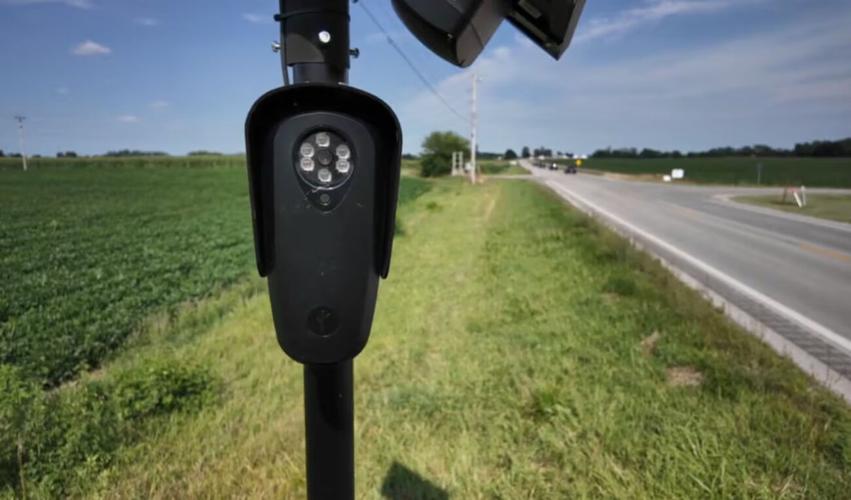
Even when a community only has a handful of Flock Cameras, law enforcement agencies have access to the nationwide database, which collects data from tens of thousands of cameras. (InvestigateTV)
"While one proposed change to Flock’s operations might constitute a positive development, most of the other changes seem to be following Flock’s playbook of treating legitimate privacy concerns as mere public relations problems. Several of the proposed changes Flock is touting are merely retreads of previous inadequate safety measures," the published response reads.
The one proposed change referenced is the reduction of the default storage period of license plate data from 30 days to 7 days.
According to the post, that the change "might" be positive comes from the caveat that agencies can set their own retention periods that are different than the default and that some data can be retained by agencies for longer as part of "Evidence Mode," which was outlined in Flock’s announcement as a means for detectives to retain evidence for longer periods.
Oversight
In his social media post, Langley also called on state lawmakers to "go further" by requiring law enforcement agencies to conduct audits and to increase the penalties for misuse.
Some states, such as Washington, Oregon, Kentucky and Connecticut, have passed legislation in the last year regarding automatic license plate readers that require some kind of auditing, but in many other states oversight isn’t outlined, and misuse isn’t necessarily a criminal offense.
"Mandate real auditing on every law enforcement data system. Raise the penalties for misuse. And if your state wants help building it, we’ll do it for free," Langley’s post reads.
Copyright 2026 Gray Media Group, Inc. All Rights Reserved.


