


LOUISVILLE, Ky. (WDRB) -- The approval of a closely watched Alzheimer’s drug by the FDA gives new hope to patients struggling with the diagnosis.
The Food and Drug Administration endorsed the IV drug, Leqembi or Lecanemab, for patients with mild dementia and other symptoms caused by early Alzheimer’s disease. It’s the first medicine that’s been convincingly shown to modestly slow the cognitive decline caused by Alzheimer’s.
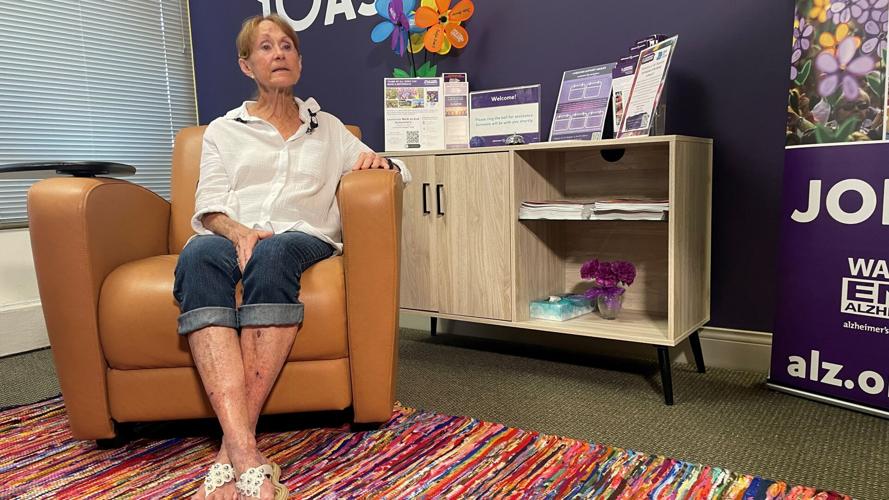
That's good news to those dealing with the disease including Judy Miller of Louisville. She was diagnosed with early on-set Alzheimer's in October.
"My big thing now is just doing the best I can to live in this moment," she said.
The drug Leqembi has shown to help people like Miller, who are in the early stages of the disease. She's thankful for the hope and time the treatment could give her.
"Oh my God, I made it in time. You know... that gives me goosebumps because I made it in time," Miller said.
With Medicaid and Medicare on board to cover the treatment, private insurance companies could soon follow. That would expand access that's greatly needed, according to Shannon White with the Alzheimer's Association Greater Kentucky and southern Indiana Chapter.
Currently, the organization said more than 100,000 people in Kentucky and southern Indiana are living with Alzheimer's.
"We are thrilled that there is now approval, and hopefully people in early stages of cognitive decline, mild cognitive impairment or MCI will be able to get these treatments and really have more time with their families," White said.
It's a landmark decision makes Leqembi more accessible for about 1 million patients. Without insurance, the drug cost more than $26,500 for a year’s supply of IVs every two weeks.
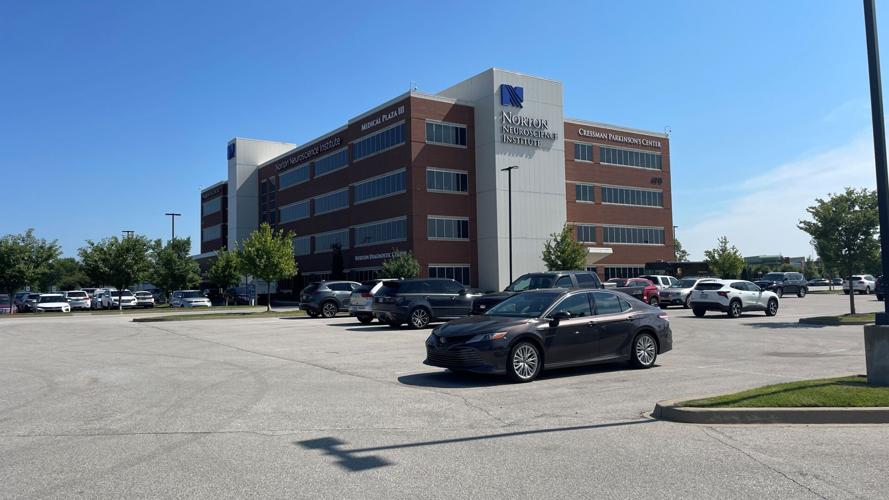
"It is truly the first time we have a treatment that we think modifies the course of the disease," said Dr. Gregory Cooper of Norton Healthcare's Neuroscience Institute.
Cooper said it's not a total cure, but studies show over the course of 18 months, the medication slowed the disease progression.
"I hope to find out, two or three years from now, that over time it doesn't slow this down by thirty percent - but maybe by 40 percent, 50 percent," Cooper said.
The University of Kentucky's Sanders-Brown Center has been doing clinical trials involving the drug for several years.
"This is the first medicine ever that actually changes the disease in the brain, removes a component of the disease and can extend quality of life for patients who are in the early stages of Alzheimer's disease, said Dr. Greg Jicha, Director of Clinical Trials at UK's Sanders-Brown Center on Aging.
Whether it's several more months or even mere days, Miller said any extra time she can get with her children and grandchildren is worthwhile.
"It's for them. I want to stay alive as long as I can.... There's a great amount of hope out there. It's making a huge difference," Miller added.
Japanese drugmaker Eisai received conditional approval from the FDA in January based on early results suggesting Leqembi worked by targeting the amyloid or "sticky" brain plaque linked to the disease.
The FDA confirmed those results by reviewing data from a larger, 1,800-patient study in which the drug slowed memory and thinking decline by about 5.3 months in those who got the treatment for 18 months, compared to those who got a placebo.
Norton Healthcare said in a statement that "With FDA-approved treatments now available, it is more important than ever that patients and their families have informed discussions with their health care providers about the potential risks and benefits of treatments."
The drug’s prescribing information will carry the most serious type of warning, indicating that Leqembi can cause brain swelling and bleeding, side effects that can be dangerous in rare cases. The label notes that those problems are seen with other plaque-targeting Alzheimer’s drugs.
Norton Healthcare also said the FDA recommended genetic testing. The FDA didn't mandate testing, but people with two copies of a well-known Alzheimer's risk gene may be at a higher risk of brain swelling or bleeding.
The process of converting a drug to full FDA approval usually attracts little attention. But Alzheimer’s patients and advocates have been lobbying the federal government for months after Medicare officials announced last year they wouldn’t pay for routine use of drugs like Leqembi until they receive FDA’s full approval.
The vast majority of Americans with Alzheimer’s get their health coverage through Medicare. And private insurers have followed its lead by withholding coverage for Leqembi and a similar drug, Aduhelm, until they receive FDA’s full endorsement. An FDA decision on full approval for Aduhelm is still years away.
Medicare administrator, Chiquita Brooks-LaSure, said in a statement Thursday the program will begin paying for the drug now that it has full FDA approval. But the government is also setting extra requirements, including enrollment in a federal registry to track the drug’s real-world safety and effectiveness.
Some Medicare patients could be responsible for paying the standard 20% of the cost of Leqembi, though the amount will vary depending on their plans and other coverage details.
The Alzheimer's Network for Treatment and Diagnostics (ALZ-NET) is run by the Alzheimer's Association. It gathers real world data on how patients respond to FDA-approved therapies. It is encouraging people who notice memory changes in themselves or in loved ones to speak to a doctor and get an evaluation. It said the new therapy makes early detection and diagnosis even more critical to get the most benefit from early interventions. For more information on diagnosis or to find a local health care provider, go to alz.org or call the 24/7 Helpline at 800-272-3900.
Hospitals and medical clinics have cautioned that it may take time to get people started on the drug.
Doctors need to confirm that patients have the brain plaque targeted by Leqembi before prescribing it. Nurses need to be trained to administer the drug and patients must be monitored with repeated brain scans to check for swelling or bleeding. The imaging and administration services carry extra costs for hospitals beyond the drug itself.
Dr. Cooper suggests, if you feel you could be a candidate for this treatment, or are experiencing memory changes, you should speak with you primary care doctor.
Copyright 2023 WDRB Media. The Associated Press contributed to this report. All Rights Reserved.


