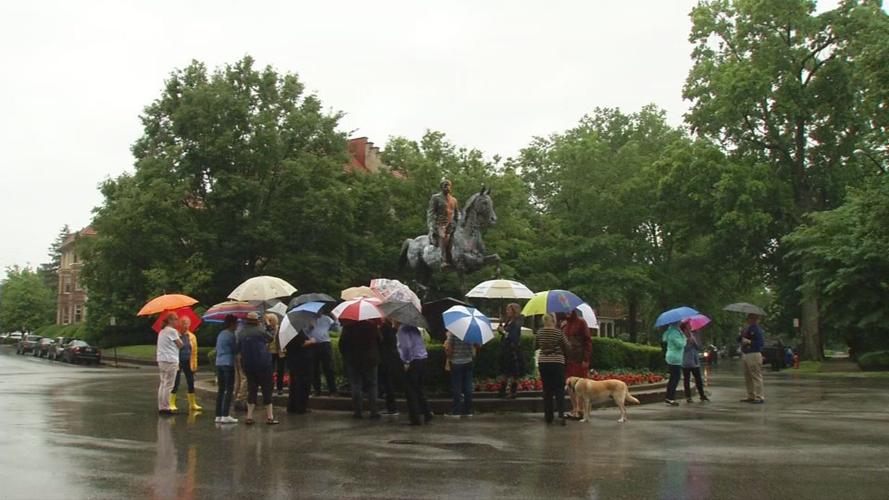
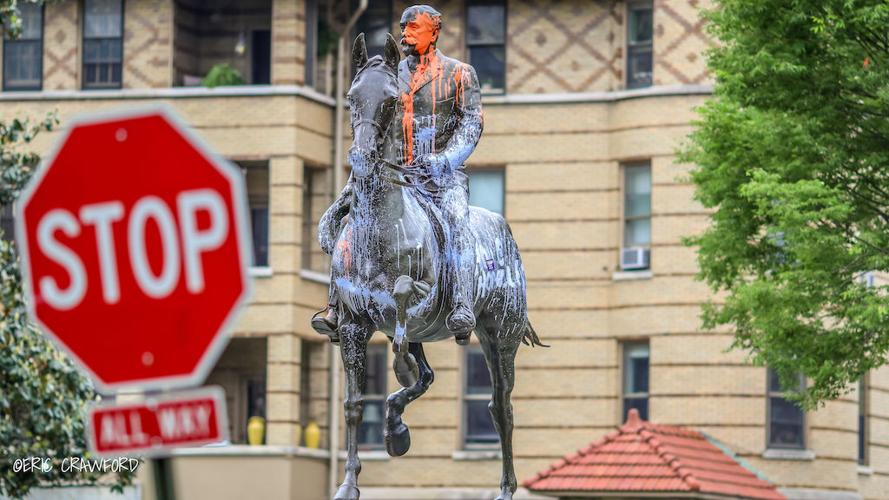



LOUISVILLE, Ky. (WDRB) -- The John B. Castleman statue is set to be removed from Cherokee Triangle soon, but now a new group called Friends of Louisville Public Art is trying to stop that from happening.
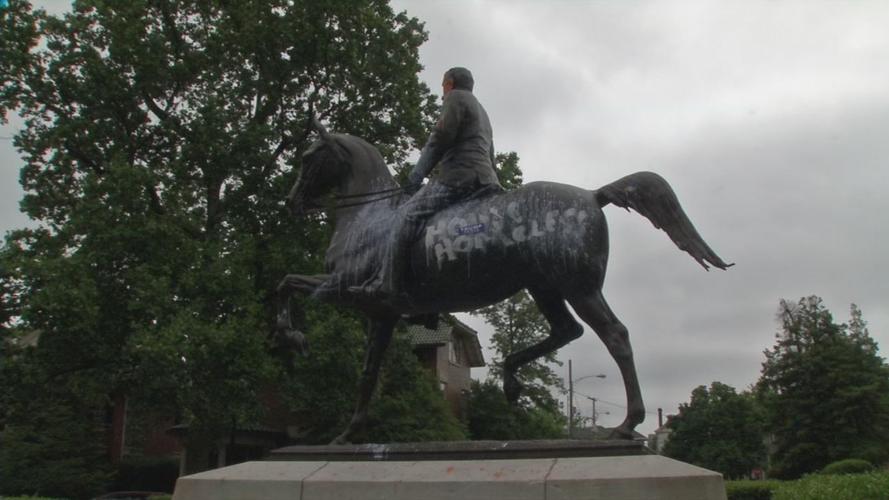
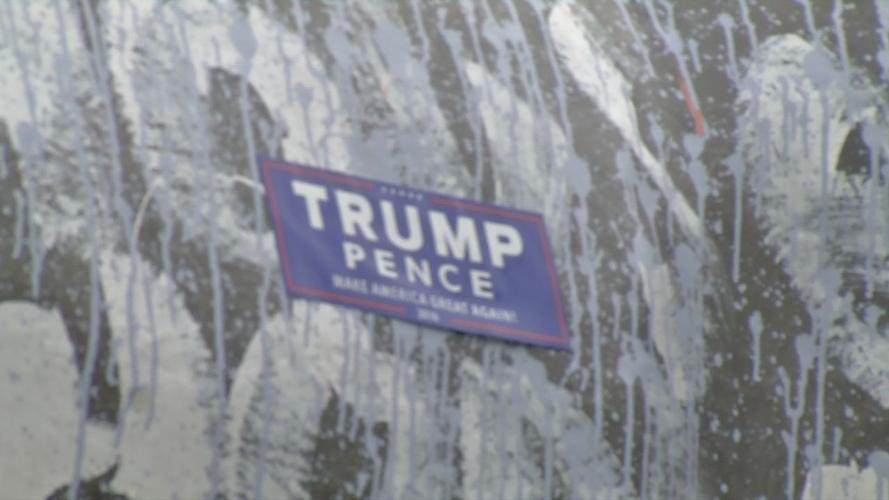
The statue of Castleman riding a horse, dressed in civilian clothes, has been vandalized several times over the years, including this past May. The monument in the Highlands has been the center of controversy because its critics argue that Castleman is closely associated with the Confederacy and white supremacy.
A newly formed group called Friends of Louisville Public Art said even though Castleman was a Confederate soldier, parts of his story seem to be forgotten. The group said the anger directed at the monument is a result of misinformation. It said people forget that Castleman called on all white soldiers to salute black officers at a time when it was controversial to do so.
"I think people forget about his road to redemption," said Bobby Fiske, a member of Friends of Louisville Public Art.
"[The city] is saying he segregated the parks, which he did not," added Steve Wise, another member of Friends of Louisville Public Art. "They're saying he was a general in the Confederate army. He was not. They've said all sorts of things about him."
Castleman also helped establish the city's park system, including Cherokee Park.
Jean Porter, the director of communications for Fischer's office, released a statement in response to the lawsuit:
"The Mayor is disappointed to see the process slowed by appeal, but is confident that the Landmarks Commission acted appropriately and made the right decision in supporting the decision to move the statue. The Mayor stands by that decision. Louisville must not maintain statues that serve as validating symbols for racist or bigoted ideology. As this process moves to the courts, we refer more specific questions to the Jefferson County Attorney."
Fischer announced the removal of the Castleman and George Prentice statues last year, saying they served as racist symbols. The Prentice statue was removed from its spot in front of the downtown library in December 2018.
On May 9, Louisville's Landmark Commission voted to remove the Castleman statue, but Friends of Louisville Public Art, Cherokee Triangle residents and their attorney have filed a lawsuit appealing that decision. The Landmark Commission's vote followed a January vote by the Cherokee Triangle Review Commission that ended in a tie, meaning the statue could not be removed. That's when the city appealed to the Landmarks Commission, which gave the green light on May 9 for the statue's removal.
Attorney Steve Porter is representing those in opposition to the statue removal and said it should've ended at the tie. The appeal also mentions that the city can't deny the historical contribution of the statue.
Porter filed the lawsuit in Jefferson Circuit Court on June 10 and said the commission's decision to remove the statue from the park Castleman helped create was "arbitrary and erroneous" and cited several "flaws" in the process.
The lawsuit says officers and employees who voted during the process should have recused themselves and that recommendations from the Public Art and Monuments Advisory Committee were not considered by the Landmarks Commission. According to the suit, the statue was referred to as a "landmark" in a Louisville Metro publication and has been considered an icon in the neighborhood for 106 years.
"It is a contributing element, and a contributing element can not be removed by the standards they used in their staff report," Porter said.
Porter describes Friends of Louisville Public Art as "a mix of local organizations, Cherokee Triangle residents and historians who believe this man has been unfairly depicted in our city’s history by a few persons."
In a statement released in late May, the group said its mission is to "promulgate correct historical data for public art, assist in the restoration of public art and provide appropriate input into the status of future public art decisions."
Louisville Metro, the Cherokee Triangle review committee and the Landmarks Commission have 20 days to respond to the appeal.
Copyright 2019 WDRB Media. All rights reserved.


