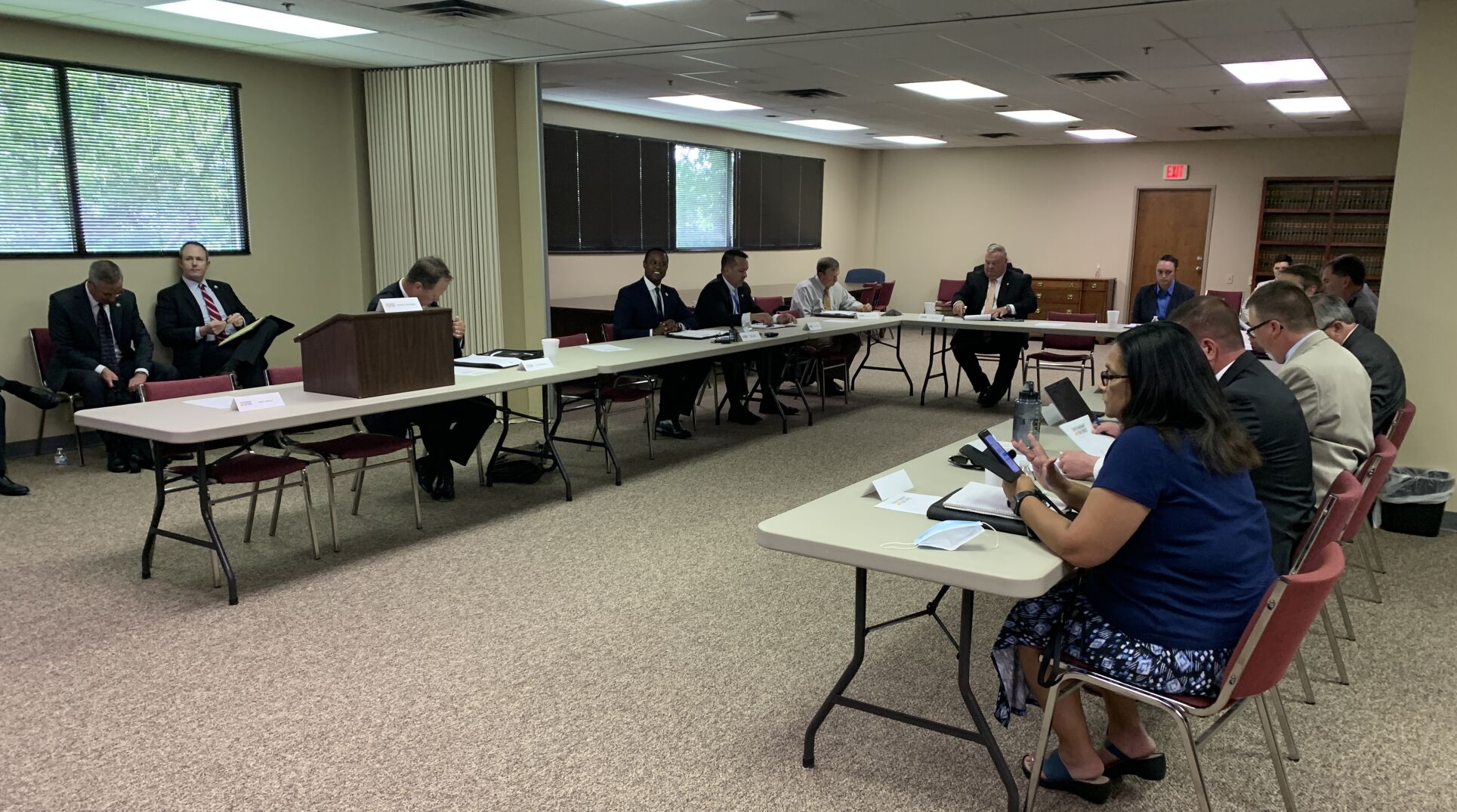
FRANKFORT, Ky. (WDRB) -- The Kentucky attorney general's search warrant task force, formed after the death of Breonna Taylor, is now making its recommendations.
Attorney General Daniel Cameron's team is made up of police, judges, attorneys, lawmakers, educations and private citizens working to come to a consensus.
"There will never be a perfect solution to anything we ultimately come with, because we all have different perspectives," Cameron said.
Members presented their key recommendations Monday, some of which included: search warrant accreditation and training for law enforcement, prosecutorial review of search warrants and to create an e-file system for search warrants.
An e-file system will, in turn, help create a database for search warrants to track and review them over time.
"I think without having the appropriate data, we can't fully address what the problem or issues are," said Chief Joseph Monroe with the Kentucky Chiefs of Police Association.
Certain topics, like whether or not to recommend a specific timeframe in which search warrants should be executed, were debated. The recommendation from some was based on the fact the FBI has a policy of not executing search warrants between 10 p.m. and 6 a.m. unless under special circumstance.
The Bullitt County sheriff and other law enforcement representatives argued they have their own protocols in place for assessing when a search warrant should be executed. Others in favor argued they simply wanted the hours listed as a best practices recommendation, not as a mandatory measure.
"Try to stay in this lane, but we understand sometimes you’ll have to go in the emergency lane and go around," Jefferson County Circuit Court Judge Charles Cunningham said.
Ultimately, the group came to a compromise to include a recommendation that law enforcement seriously consider the timeframe in which a warrant is executed without specifying a particular time. The exact wording to be determined at a later time.
Some members believe these measures don't go far enough and wouldn't have prevented Taylor's death, whose case inspired the creation of the task force.
"If we had done this five years ago, would anything have been different?" said Damon Preston, a public advocate. "Listening to the recommendations, I don't know that a single recommendation that's being made would make the outcome any different, and that troubles me."
Others see these measures as a good first step in what should be a longer process.
"I would certainly like to see us come back at some point — whether it's next fall or whatever — and just kind of review where we are with the recommendations that were made," said Rep. Ed Massey, chair of the House Judiciary Committee. "Do they need to be evaluated? Adapted?"
The next task force meeting will be held Dec. 9. Members will vote on final recommendations then.
Copyright 2021 WDRB Media. All Rights Reserved.


