

LOUISVILLE, Ky. (WDRB) -- Parkinson's disease is the second-most common neurogenerative disease, impacting millions around the world, according to the Parkinson's Foundation.
However, many patients aren't seeing the right type of specialists.
According to a new study, 40% of Parkinson's patients did not see a neurologist. And only 9% of patients saw a movement specialist.
Dr. Jason Crowell, a neurologist and movement disorders specialist with Norton Healthcare's Cressman Parkinson's Center, said he primarily sees Parkinson's patients, diagnosing and managing the disease. Crowell said he often prescribes physical therapy as a part of his patient's treatment plan because he said it can significantly help increase a patient's mobility, especially when combined with certain medications.

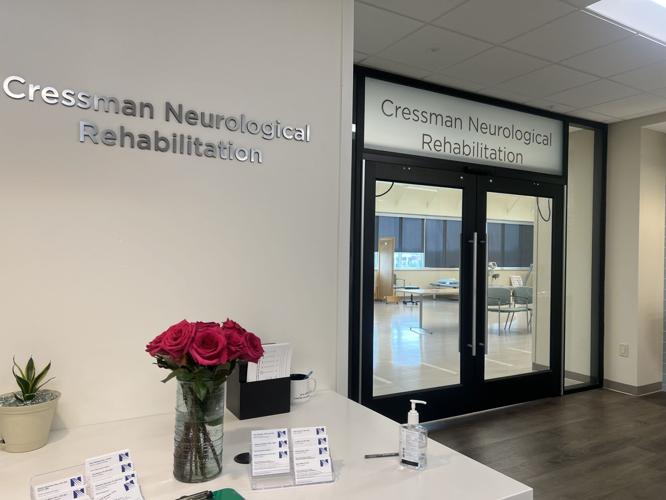
Cressman Neurological Rehabilitation helps patients with a variety of conditions and diseases, like Parkinson's. (WDRB Image)
"Parkinson's is like trying to run the car with no gas in the tank," he said. "They're trying to go but they just can't move. If you can find that combination of medicine and therapy, people really kind of respond and be able to flourish in terms of their mobility."
Crowell said Parkinson's is often misunderstood and is commonly mistaken for other, more aggressive diseases.
"Parkinson's is a very slowly progressive disease," he said. "So, a lot of times, I can actually alleviate concerns, because people might think it's going to affect them in one way. And sometimes I can say, 'Well, actually, here's what you can expect.'"
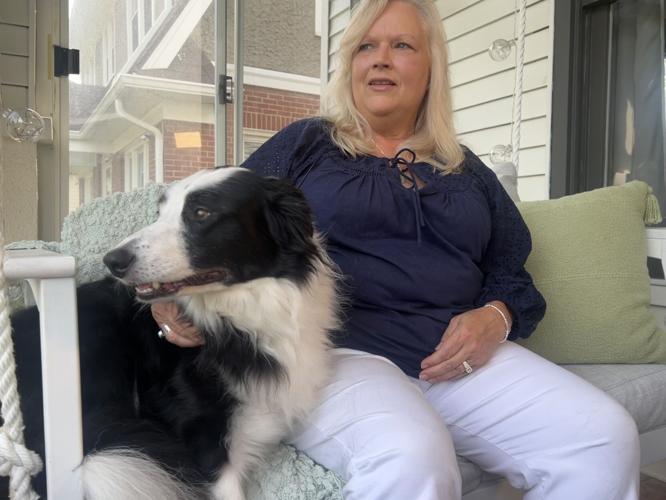
Dianne Steinert's diagnosis came at the age of 58.
"It's not the diagnosis I wanted to hear, but it was an answer," Steinert said. "Somebody saying the words, 'You have Parkinson's disease' is really a feeling that's hard to explain. I remember trying not to cry."
Steinert said her symptoms began two years before she was diagnosed. The first thing she noticed was what's called "frozen shoulder."
"You don't have mobility," she said. "You can't reach behind your back or extend your arm all the way back. Basic motions you never think of. You just can't get that arm to manipulate to move. Looking back, that was probably the beginning."
Around that same time, Steinert said her pinky finger on her left hand started to shake. Sometimes, Steinert said she also notices she has more saliva after her neck muscles tighten and she doesn't swallow as frequently throughout the day.
One of the most notable issues was her difficulty walking and she started to stumble frequently.
During a visit to see Crowell, Steinert remembers catching herself before she fell.
"He had me do my little walking down the hallway," Steinert said. "As I did, I kind of caught my foot and stumbled a little bit."
That's when Crowell decided to add physical therapy at Cressman Neurological Rehabilitation Center.
Steinert said doing physical rehab multiple days a week helped her understand how to cope with living with her disease.

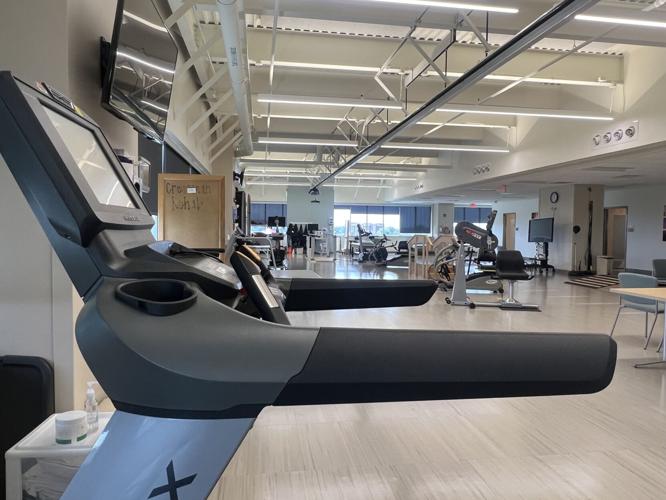
Norton Healthcare's Cressman Neurological Rehabilitation helps patients with various conditions and diseases regain mobility. (WDRB Image)
"I knew I had trouble walking but I didn't realize what I needed to do," she said. "Because my Parkinson's is on the left side, my left stride isn't as long as my right. But I didn't know that. On their treadmills there, it will tell you how long your strides are, so you know to keep that stride up and you can look at the monitor. It makes you much more aware and to do things with amplitude."
Steinert said she is snow more mindful of exaggerating her steps on her left side which has helped make daily walks with her dog and exercising with her daughter a little easier.
"It definitely changed my life for the better," she said. "I couldn't thank Dr. Crowell enough. Because the fear of going, I thought, 'Oh my gosh, what are they going to tell me?' This was the best thing he ever could've done for me was to send me to physical therapy and specialized physical therapy."
According to the Parkinson's Foundation, more than 13,400 Kentuckians and more than 19,500 Hoosiers are currently living with Parkinson's. Across the U.S., an estimated 1 million people are living with Parkinson's disease with roughly 90,000 people diagnosed every year.
Copyright 2023 WDRB Media. All Rights Reserved.


