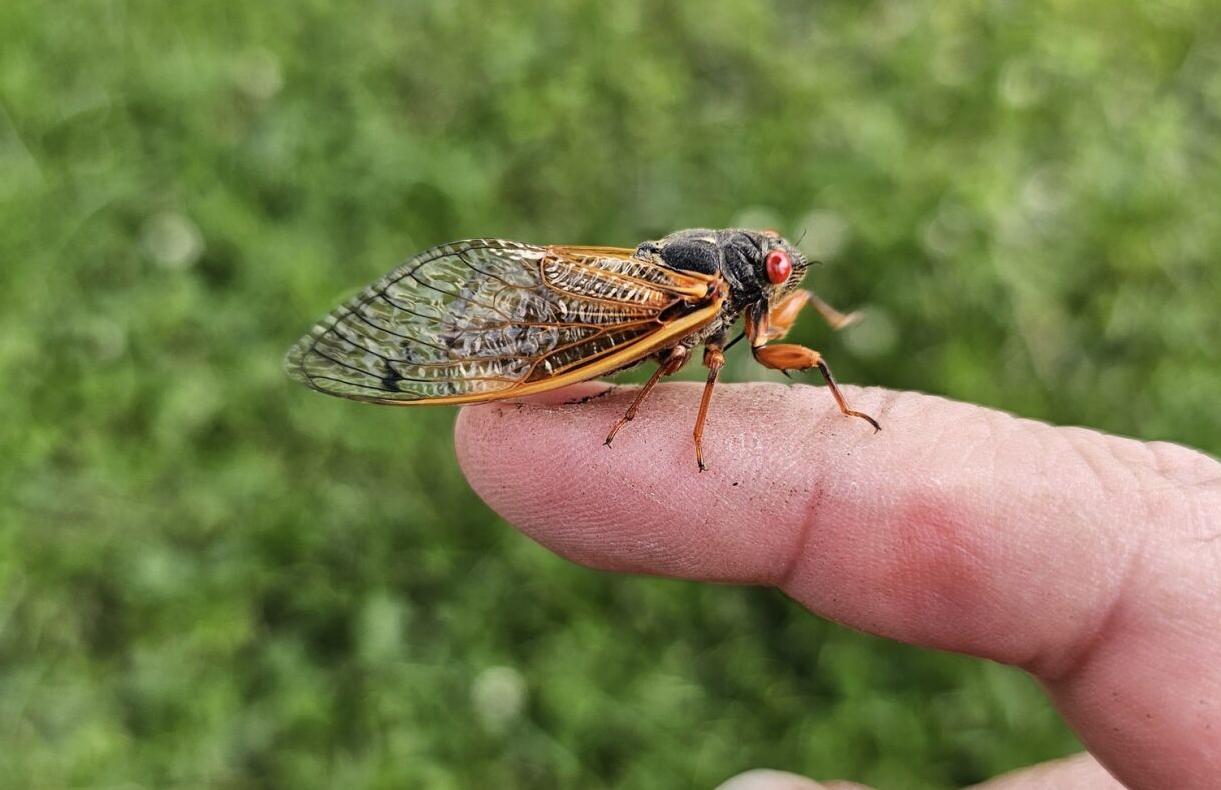


LOUISVILLE, Ky. (WDRB) -- Brood XIV, one of the largest broods of 17-year periodical cicadas, is emerging from the soil in massive numbers with their signature buzzing chorus. The insects will blanket trees, fences and sidewalks throughout Kentucky and parts of Indiana.
The emergence — last seen in 2008 — includes several species of cicadas that have spent the last 17 years developing underground as nymphs, feeding on sap from tree roots. Now, as ground temperatures rise above 64 degrees, they're surfacing to molt, mate and restart the cycle for another generation.
Brood XIV cicadas are expected to be most concentrated in central and eastern Kentucky as well as southern Indiana. The emergence is also being reported in parts of Tennessee, Ohio and Georgia.
Below is a Q&A from Friday with Steve Yanoviak, a biology professor at the University of Louisville:
Q: "Dr. Steve Yanoviak joins us this morning to answer some questions about those cicadas. Here's some questions that people commonly ask about cicadas ... 'Why do they come out?' And there's a simple explanation to this, from what I understand."
Yanoviak: "Yeah, cicadas have this fascinating life cycle where they spend a very large portion of their life underground, actually feeding on tree roots, sucking sap from tree roots, essentially. Tree sap is not very nutritious. It takes a lot of it to produce a new insect. And so it takes them a long time to develop. They spend all that time underground, and now, this time of the year, they come out, and their sole purpose in life right now is to find a mate and make more cicadas."
Q: "How do they make the sound?"
Yanoviak: "The sound is made by a special apparatus called a tymbal inside the the abdomen of the insect. And so it's almost like a little accordion piece that vibrates. And they can do that with muscle activity. It's pretty phenomenal how much sound they can make, how loud it can be."
Q: "Do they have unique sounds or make different sounds?"
Yanoviak: "So different species, they all follow basically the same general pattern or sound, the buzz sound that we're all familiar with. But there's a lot of variation among species and the sound that they make. Some of them are so loud it's it's almost disorienting if you get between them. This has happened to me in tropical rainforests before, where some of these very large cicadas will be on either side of a trail, and if you stand between them when they're buzzing, you almost can't think straight just because it's wild and so, so mesmerizing, actually."
Q: "I called it a sexy Symphony earlier."
Yanoviak "It is, because the whole purpose is to try to find a mate."
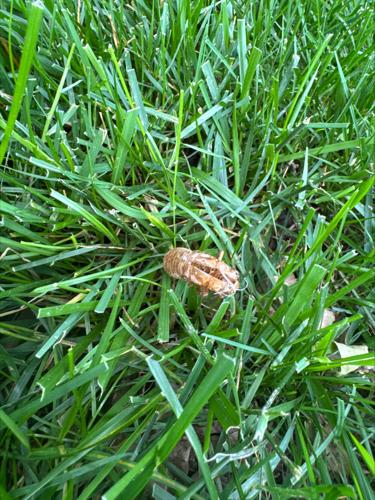
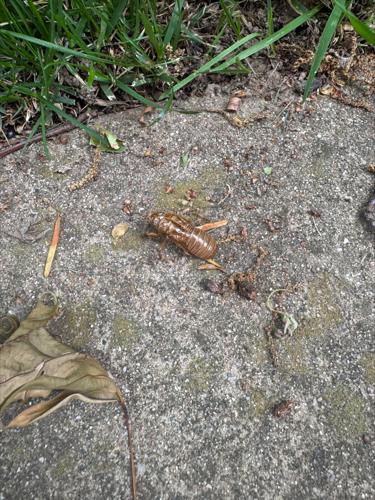
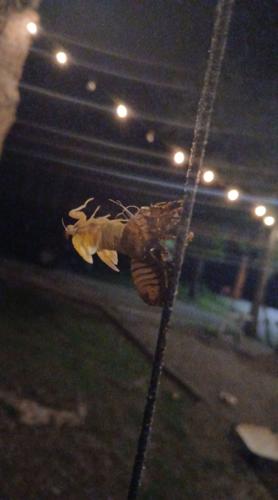
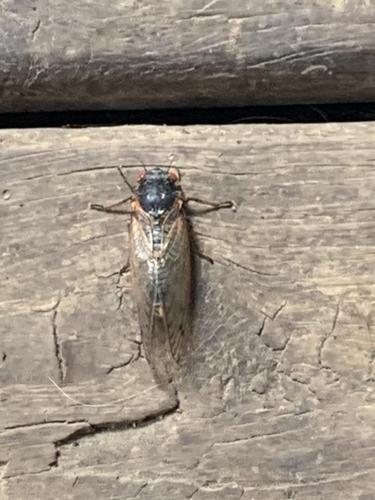
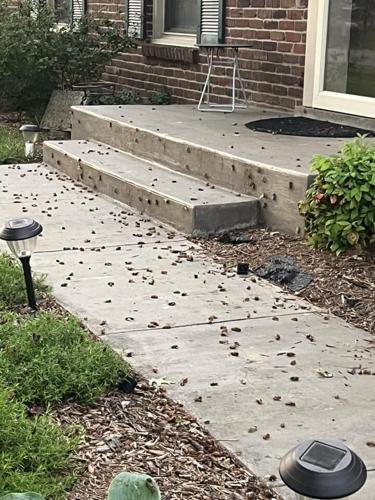
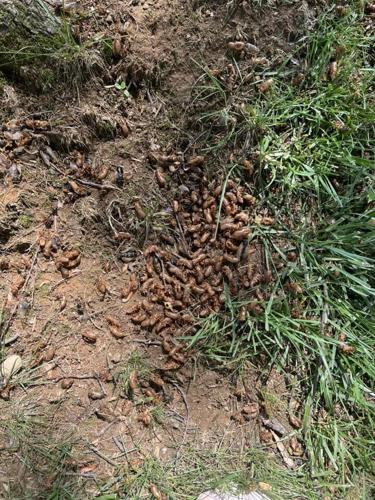


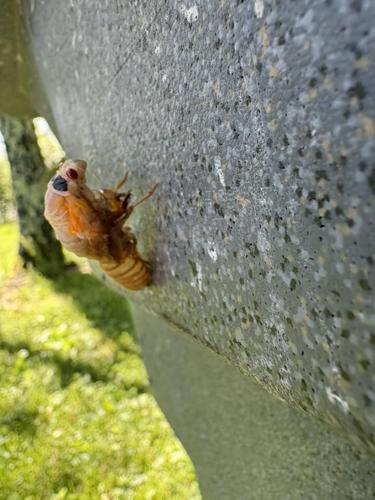
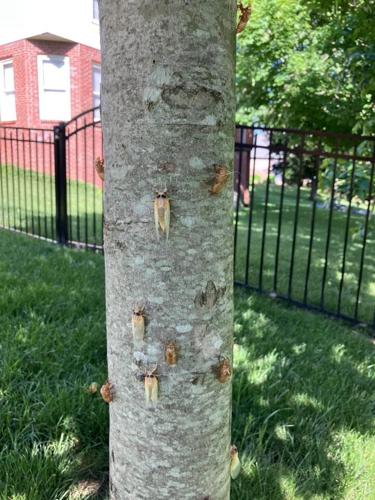
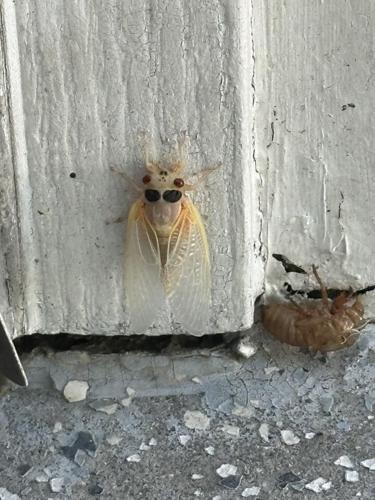
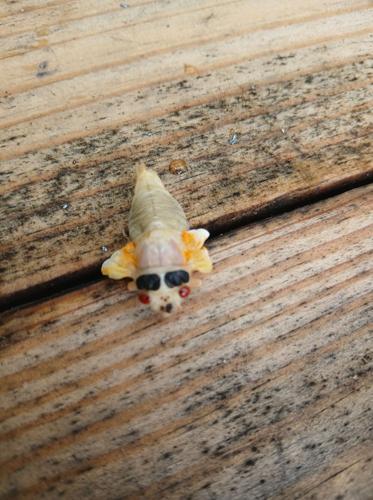
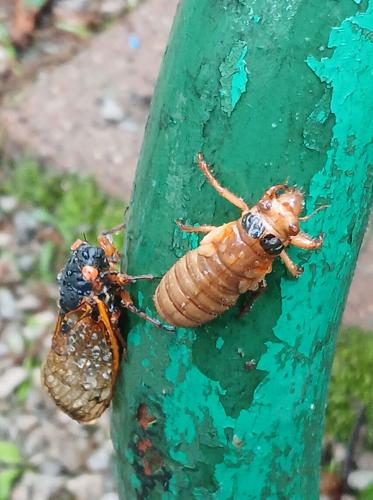
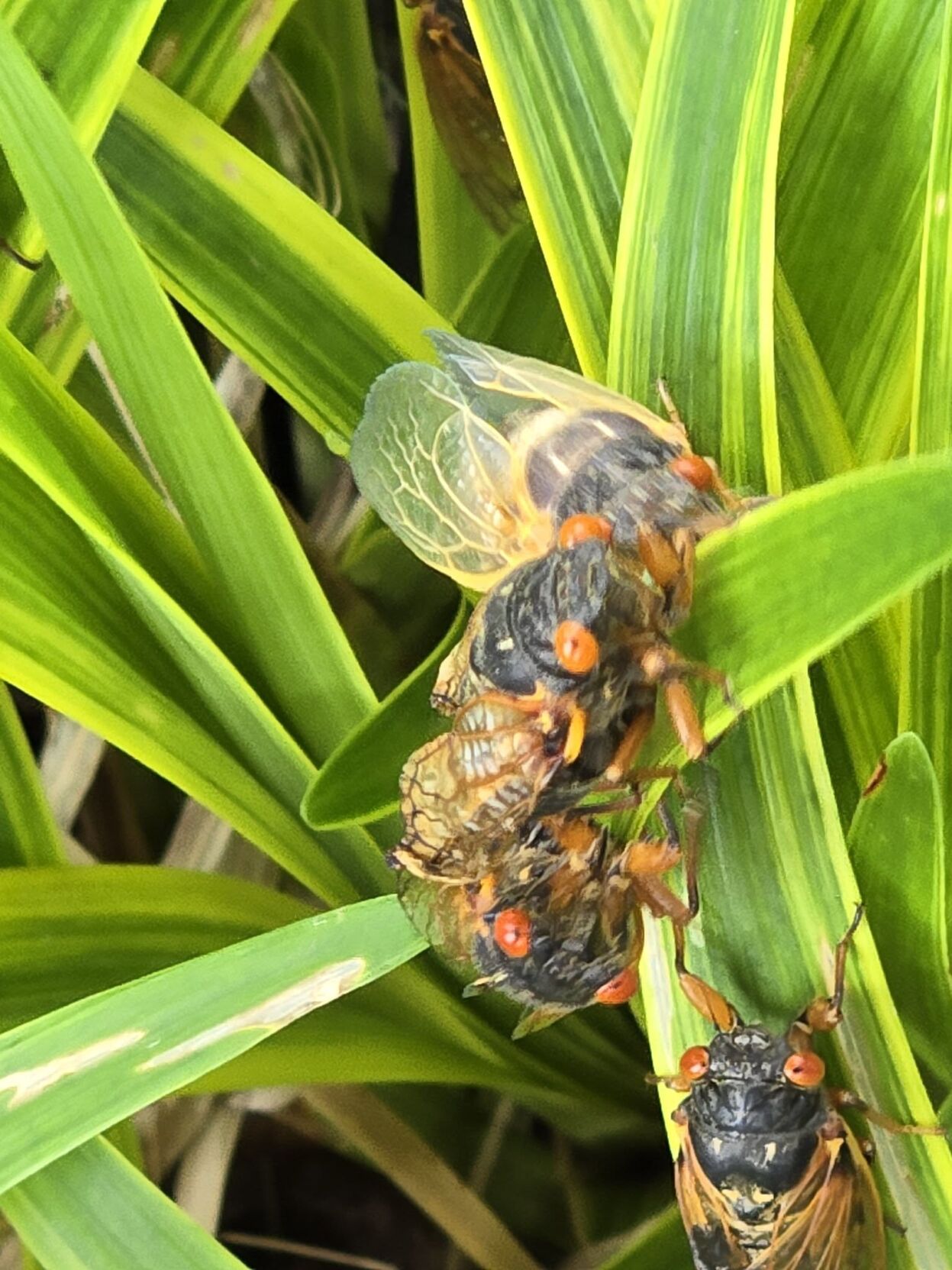
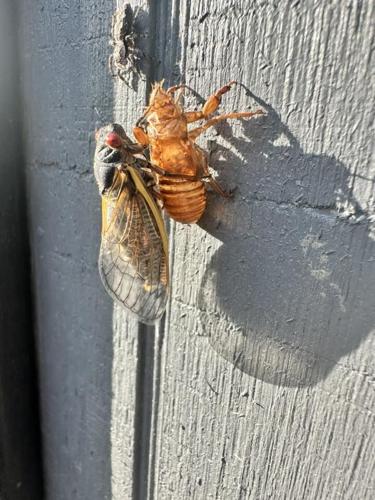
IMAGES | Cicadas begin summer 2025 takeover in Kentucky
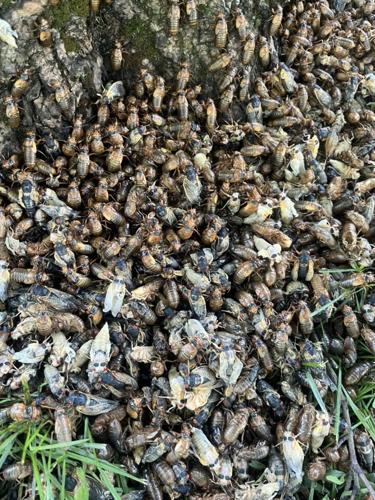
(Photo courtesy of Samantha Keri Lacefield on the WDRB Facebook page)
Q: "So their lives above ground are rather short, six to eight weeks. ... Explain what they do in that time."
Yanoviak: "So the cicadas that are coming out right now are the 17-year cicadas. This is Brood 14. You might say to yourself, 'Well, we just had a brood of 17-year cicadas come out four years ago, so how could it be a 17-year cicada?' Well, we happen to live in a very unique position where we have two broods, different broods of 17-year cicadas, that overlap right here on the Ohio River. So Brood 10, that came out four years ago, is mostly northern in distribution, and Brood 14, which is coming out now, is mostly southern and eastern, relative to our position. And so what's happening now is they've come out, and they're going to climb up the trees and try to find each other. It takes them a few days to sort of harden up and get their muscles going. But then the males only will start buzzing, and the females will respond to those calls by flicking their wings, typically, to basically identify that they're responsive to mating. ... And then they make more cicadas. Basically, the female will lay her eggs by inserting them into just underneath the bark of twigs and trees, and those eggs will hatch. The baby cicadas will drop out of the trees onto the ground and dig into the soil and find new roots to feed on."
Q: Two questions: Can cicadas hurt you in any way? And what benefit do they provide to the environment?"
Yanoviak: "First of all, the cicadas are harmless to humans. ... That's the truth. They're just not going to hurt you. They might annoy you. They might fly into your hair and freak you out a little bit. But they're really harmless overall. They don't bite. They don't sting. They don't do anything to us. They're really interested in plants, primarily. And ... so during this large this this immature stage where they're burrowing through the soil, of course, they're aerating the soil. They're providing, more space for plant roots to grow. Although they're feeding on plants, they're really not doing a lot of harm to plants. In particular, they're not going to kill an entire tree. But they're kind of harmless to most of the environmental concerns that we might have. And they provide a lot of food. When they come out at this time of the year, they provide a huge amount of food for birds and bats and birds and other vertebrates that would feed on them."
Q: We only have to put up with them for a few weeks. It's kind of nice, honestly, the sound is."
Yanoviak: "It's an amazing phenomenon. I think people should appreciate it and say 'Wow, this is a really cool thing.' We have our annual cicadas that come out every year. This year is special, because we have this 17-year brood that's emerging. But come July, August, when these are gone, our regular annual cicadas will be out as well, so we get extra cicadas this year."
Top Stories:
Buzzing chorus of cicadas begin emerging in Kentucky after 17-year wait
JCPS board votes in favor of beginning contract negotiations with superintendent finalist
4 people cited after 'altercation' outside JCPS middle school ceremony
Louisville WWII veteran jumps out of plane to celebrate 100th birthday
Cannonball! Louisville celebrates grand opening of new Algonquin Park Pool
Copyright 2025 WDRB Media. All Rights Reserved.


