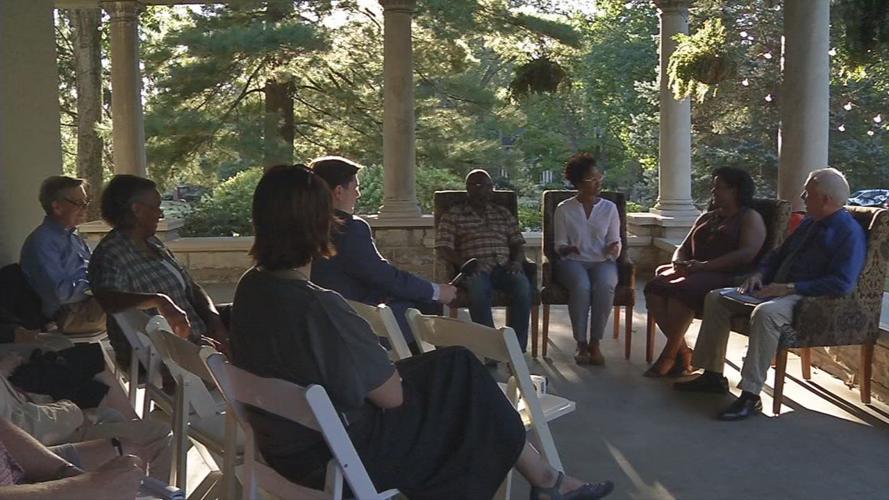


LOUISVILLE, Ky. (WDRB) -- In the dappled sunlight of a cool and pleasant evening, a diverse group of people — men and women, black and white, young and old — sat on banquet chairs lining the porch of Louisville's historic Peterson-Dumesnil House. They were invited there by the Louisville Historical League to discuss a divisive topic: John Castleman.
But, somehow, there was no hostility. There was no finger-pointing, and there were no buzzwords. The group of historians and history buffs tried to figure out the legacy of a man whose statue could soon be removed from Cherokee Triangle.
"Essentially, he was a young man who cast his lot with the Confederacy," local historian James Prichard said. "When he got his citizenship rights back and made his home in Louisville, he spent the rest of his life working for national reconciliation."

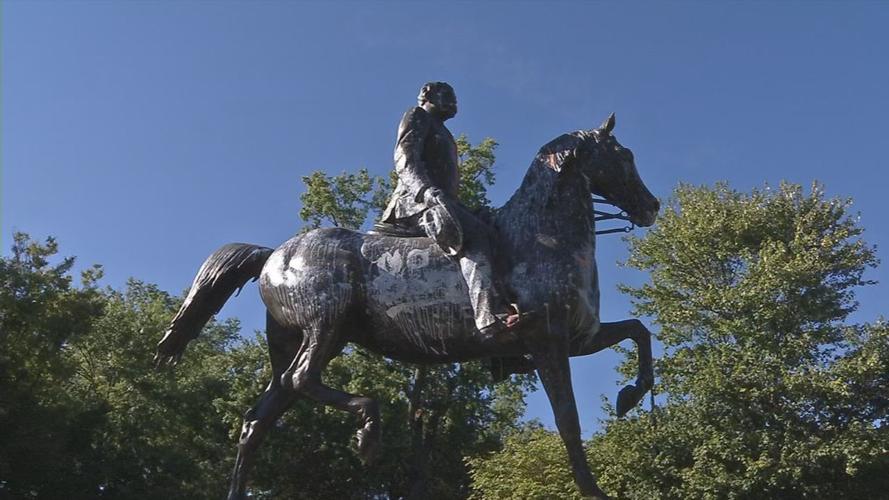
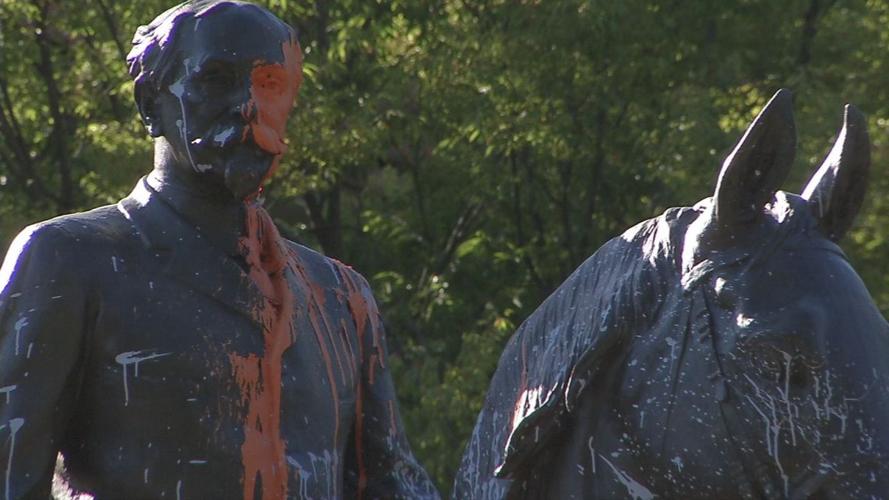
The often-vandalized statue has been the source of much debate. (WDRB Photo)
The Castleman Monument has been the center of controversy because its critics argue that Castleman is closely associated with the Confederacy, slavery and segregation. Friday night, on the porch of the historic Crescent Hill home, historians argued Castleman's legacy is not that simple.
"History is messy," said Michael L. Jones, a local music historian.
Historians like Jones, Prichard and others pointed out Castleman's record after the Civil War. They say Castleman stopped a lynch mob and did other things to win the support of some African Americans.

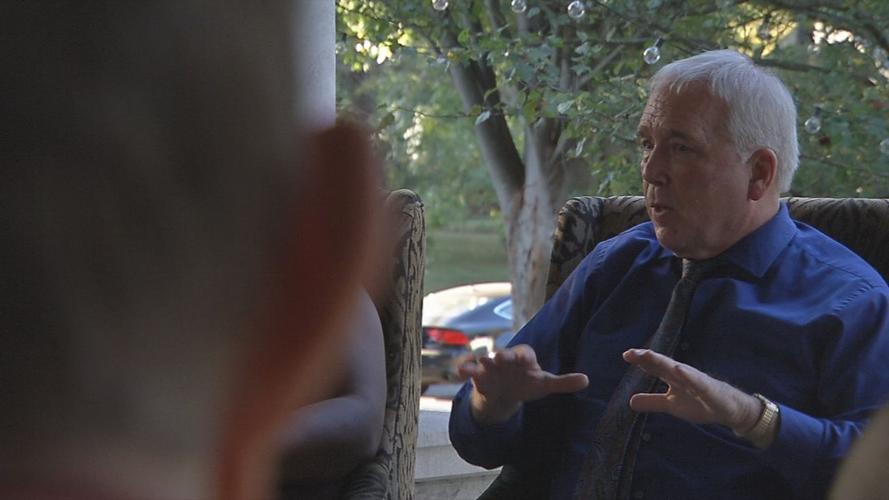
Historian James Prichard discusses Castleman's life. (WDRB Photo)
"He had some favorable activities within the black community during his day," said Donovan Taylor, a history buff who lives in Louisville's Chickasaw neighborhood. "I mean, although he was a Confederate, he was a city leader and was an integral part of the parks system here."
Regardless, a city panel has voted to remove the statue from its current spot at the direction of Mayor Greg Fischer, whose office has said, "Louisville must not maintain statues that serve as validating symbols for racist or bigoted ideology." So far, however, the statue hasn't been removed as a group legally challenges the decision to move it.

The panel discusses Castleman's legacy. (WDRB Photo)
Taylor, an African American, was undecided on whether or not the statue should be moved. His hang-up: Was the monument placed to memorialize a notable Louisville public servant, or was it placed to glorify the Confederacy?
Prichard says records show it was the former, not the latter.
"Unfortunately, this statue was falsely targeted as a Confederate statue," he said.
Prichard points out that the Southern Poverty Law Center, which maintains a list of Confederate monuments across the country, has removed the Castleman statue from its list.

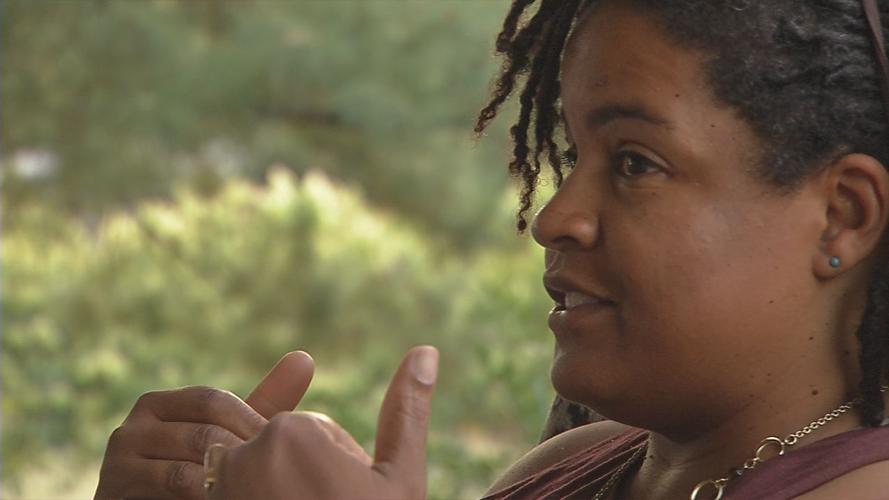
Ameerah Granger, a panelist, speaks during the forum. (WDRB Photo)
"This isn't the person or the statue to take down or attack," said Ameerah Granger, a discussion panelist. "There are bigger names in our city that have more problematic histories."
Tia Brown, with the Louisville Historical League, also made conclusions for the group that she wasn't able to make before Friday's meeting: The Castleman statue should stay, and the city should put up more statues depicting women and minorities.
Related stories:
- Group files lawsuit to stop removal of Castleman statue from Cherokee Triangle
- Vandals deface Castleman statue following approval to remove it from Cherokee Triangle
Copyright 2019 WDRB Media. All Rights Reserved.


