LOUISVILLE, Ky. (WDRB) -- A rare but serious COVID-19 complication in children has amplified concerns among state leaders and health officials.
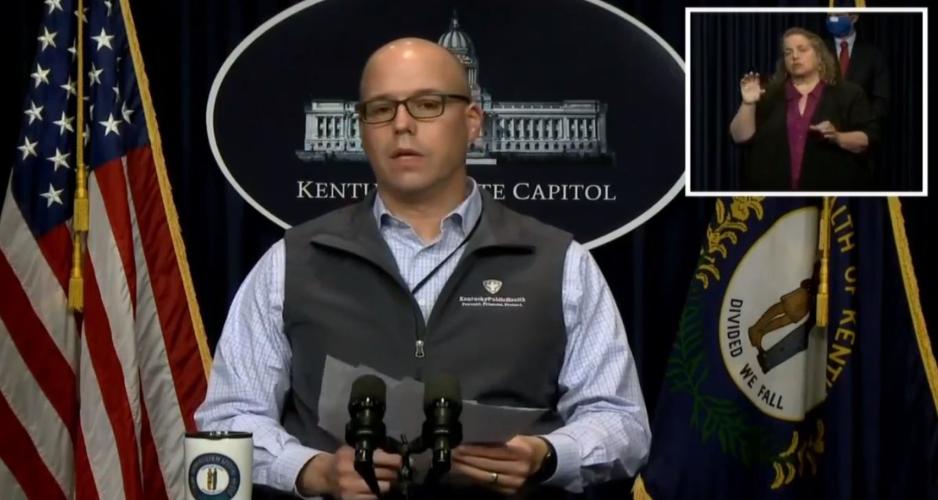
State Health Commissioner Dr. Steven Stack said Tuesday that a 16-year-old Kentuckian now has similar symptoms as the 10-year-old whom state officials said Monday was on a ventilator.
Stack said that the children are not displaying the respiratory symptoms that the disease can cause in adults, but are suffering from a rash, persistent fever, weakness, fatigue, muscle aches, a runny nose and watery eyes. He compared the symptoms to Kawasaki disease, a potentially life threatening illness that can damage the arteries of the heart.
Stack said doctors are calling the new COVID-19 complication pediatric multisystem inflammatory syndrome.
"This is very dangerous and life threatening," Stack said.
The health commissioner said that COVID-19 still is a relatively unknown virus, and a lot of its effects remain unknown.
He urged people to remain cautious, to practice proper hygiene and to wear their face masks.
The 16-year-old is in the hospital, though not in intensive care, Stack said, and the 10-year-old is showing signs of improvement, as doctors have been able to reduce some of the patient's medications.

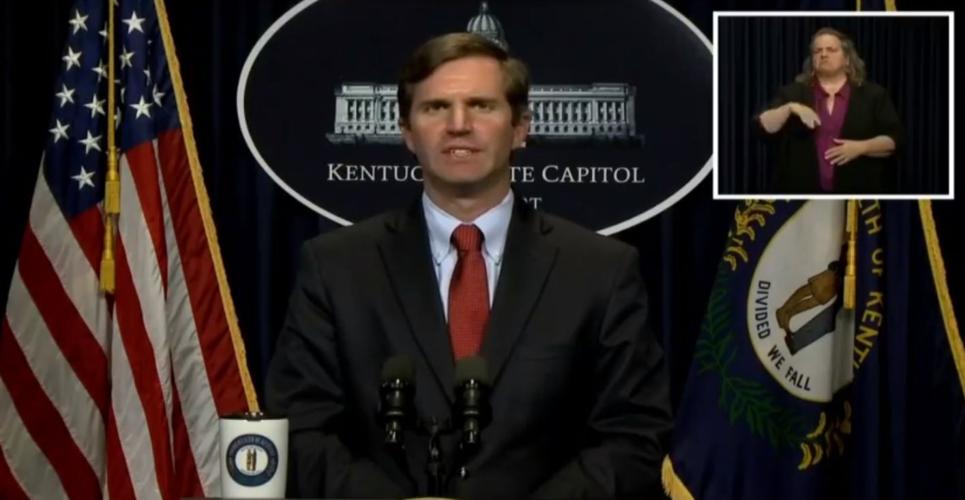
Gov. Andy Beshear.
Gov. Andy Beshear said that while the complications are rare, and children seem to be largely spared from COVID-19 respiratory problems, he emphasized that children do get infected with disease caused by the novel coronavirus. The governor on Tuesday mentioned at least eight children under 10 who had tested positive for COVID-19.
New cases
Beshear also announced 191 new cases of COVID-19 Tuesday, including 26 in Jefferson County.
The governor also said 10 more Kentuckians have died from the disease, including a 77-year-old woman, an 85-year-old man and a 57-year-old woman from Jefferson County.
Beshear also criticized people who have waved Confederate and white supremacy flags while protesting measures the state has implemented to curb the spread of COVID-19. While the governor said that people have the right to display such symbols, he said they send "a message of hate."
He also urged Kentuckians to put aside the "naysayers" who are promoting the idea that the state and country should open up again even if it means losing a certain percentage of the population.
"I don't believe that," Beshear said.
While he wants to reopen the state's economy, the governor emphasized that the state has to do it safely, and he acknowledged that he worries a bit that the state's reopening plan may create among some Kentuckians a false sense of security.
"Our reopening of our economy is tenuous. … We've got to be really careful," he said.
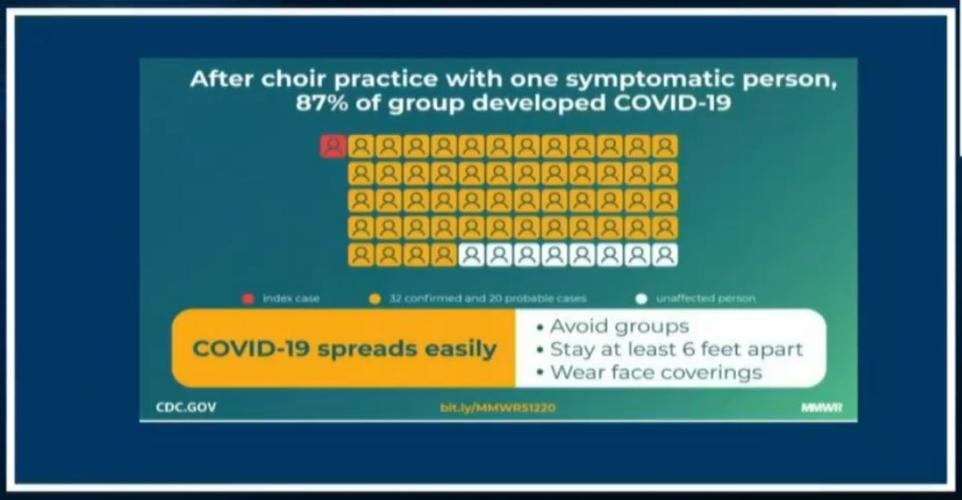
To indicate the ease with which the virus spreads, Stack presented new research from the Centers for Disease Control and Prevention that showed that one infected person who attended a 2.5-hour choir practice with 61 people spread the virus to 32 of them, with another 20 probable cases. Three of the infected people had to spend time in the hospital, and two died, Stack said.

Courtesy of the Commonwealth of Kentucky.
The health commissioner also had some bad news about how the approach of summer might affect the viability of the virus.
"Early reports suggest that warmer weather … may not help us," he said.
Globally, more than 4.2 million people have become infected with COVID-19, more than 290,000 have died, and nearly 1.5 million have recovered, according to data from Johns Hopkins University as of 4:48 p.m. Tuesday.
More than 1.3 million cases have been recorded in the U.S., with nearly 82,000 deaths and nearly 233,000 recoveries. With about 4 percent of the world's population, the U.S. now has 32 percent of the world's COVID-19 cases and 28 percent of the world's COVID-19-related deaths.
For most people, the virus causes only mild or moderate symptoms, such as fever and cough. For some, especially older adults and people with existing health problems, it can cause more severe illness, including pneumonia. The vast majority of people recover.
One of the best ways to prevent spread of the virus is washing your hands with soap and water. The U.S. Centers for Disease Control and Prevention recommends first washing with warm or cold water and then lathering soap for 20 seconds to get it on the backs of hands, between fingers and under fingernails before rinsing off.
Copyright 2020 WDRB Media. All Rights Reserved.