

LOUISVILLE, Ky. (WDRB) -- The 2023 men's NCAA Final Four in Houston this weekend will be unlike the ending that unfolded in New Orleans last season or in Indianapolis in 2021 or ... (fill in the blank).
How different?
Enjoy these numbers:
0.451: Tournament winning percentage of the four coaches prior to the 2023 tournament, a combined 14-17.
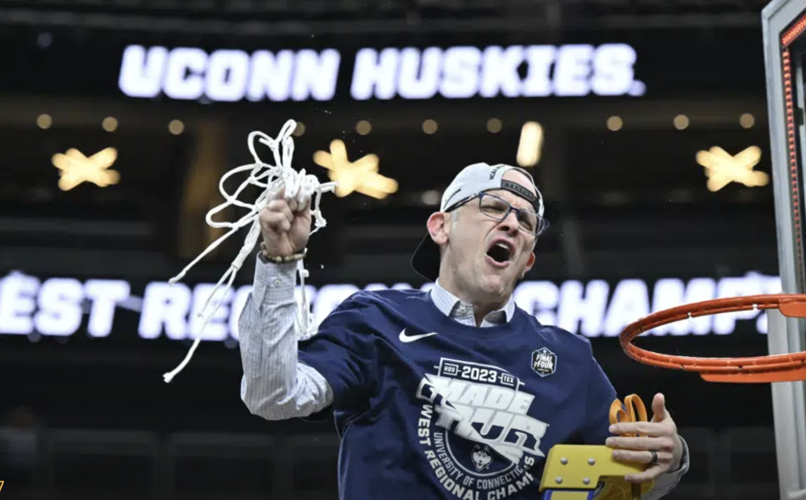
Jim Larranaga of Miami was 12-10. UConn's Danny Hurley was 2-4, losing in the first round the last two seasons to Maryland (2021) and New Mexico State (2022).
Brian Dutcher of San Diego State was 0-3, losing to lower seeded teams the last two seasons. Dusty May of Florida Atlantic had only coached in the tournament as an assistant.
1: Dual qualifier in offensive and defensive efficiency in Ken Pomeroy's computer power rankings. That is Connecticut.
When making NCAA Tournament bracket predictions, many observers believe the national champion must rank in the top 20 in offensive and defensive efficiency (points per possession) in Pomeroy's metrics.
UConn (No. 3 on offense, No. 11 on defense) fits the profile. Nobody else does.
San Diego State ranks fourth on defense but is likely to lose because the Aztecs rank 75th on offense. FAU is close, ranking 24th on offense and 29th on defense. Miami plays solid offense (No. 5) but is likely to lose because of its defense, which ranks No. 104.
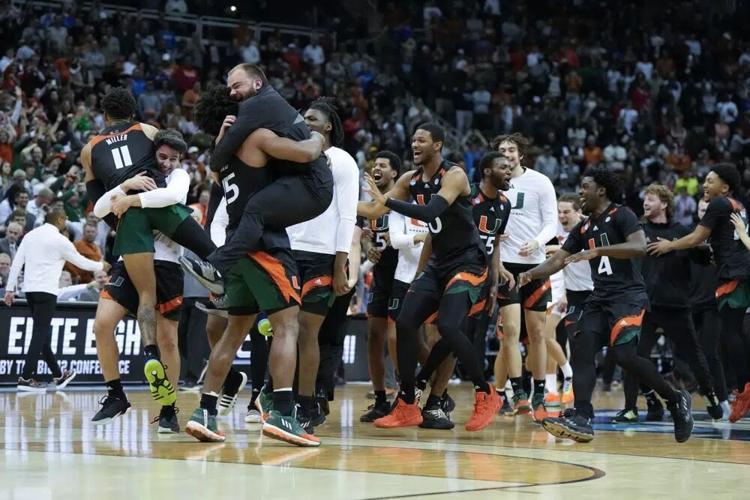
8: Number of Final Four starters who are transfers. All four teams start at least one transfer, led by Miami, which has three: Nijel Pack (Kansas State), Norchad Omier (Arkansas State) and Jordan Miller (George Mason).
San Diego State (guard Darrion Trammell from Seattle and guard Matt Bradley from California) and Florida Atlantic (center Vladislav Goldin from Texas Tech and guard Bryan Greenlee of Minnesota) both start a pair of transfers.
UConn starts one: guard Tristen Newton, who played his first three seasons at East Carolina.
0: Number of Final Four starters who were ranked among the top-50 prospects nationally in their classes by 247 Sports. The highest ranked player is UConn guard Jordan Hawkins, who ranked No. 51in the Class of 2021.
14: Number of Final Four starters who were not ranked among the top-100 players in their high school classes.
That includes all five starters at San Diego State and Florida Atlantic plus every Miami starter except Isaiah Wong.
467: The lowest ranked starter among the 20 in the Final Four? FAU guard Bryant Greenlee was No. 467 in the nation and 37th in the state of Florida when Richard Pitino signed him for Minnesota in his 2019 class.
19: The highest ranking of any Final Four team in the Associated Press preseason Top 25. San Diego State started as No. 19 with UConn No. 27 and Miami No. 28. FAU did not receive any preseason votes.
23: Combined seed totals for UConn (4), Miami (5), San Diego State (5) and FSU (9), the second-highest combined total since the NCAA Tournament Selection Committee started seeding the field in 1979.
The record (26) was set in 2011 by Kentucky (4), UConn (3), Butler (8) and VCU (11).
Only three other Final Fours featured teams with a combined seeding of 20 or higher: 1980 (Louisville, Iowa, Purdue, UCLA —21); 2000 (Michigan State, Florida, Wisconsin, North Carolina) and 2006 (Florida, UCLA, LSU, George Mason).
1: Number of times a 4, 5 or 9 seed has won the tournament. Arizona scored as a 4-seed in 1997. Neither a No. 5 seed nor a No. 9 seed has ever cut down the nets.
In fact, a 9-seed has never made the final game. Three 5-seeds have lost in the championship game, the last being Butler in 2010.
5: Consecutive years a No. 1 seed won the men's tournament prior to this season.
2014: The last time a team seeded lower than 3 won the title. UConn was a 7-seed when the Huskies defeated Kentucky in Arlington, Texas.
33: This will be the 33rd and final Final Four play-by-play call by Jim Nantz of CBS Sports. Nantz replaced Brent Musburger for the 1991 tournament, which ended memorably in Indianapolis with Mike Krzyzewski and Duke winning their first national title by upsetting unbeaten UNLV in the semifinals and holding off Kansas in the title game.
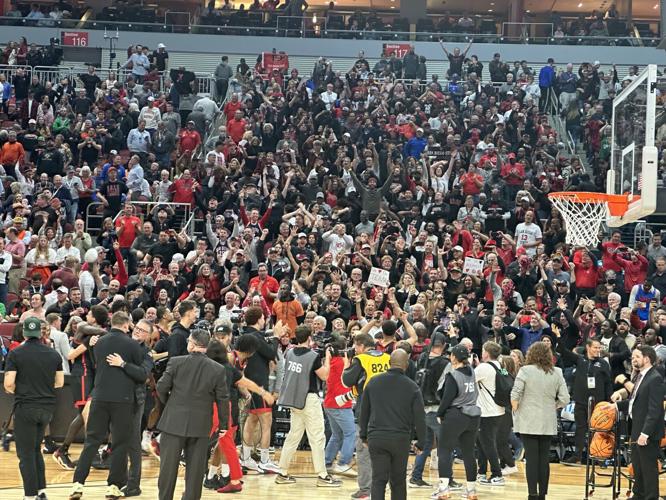
52.1 miles: The distance from Baldwin Arena (home of FAU) to the Watsco Center (home of the Miami Hurricanes).
330: With 2,500 seats, Baldwin Arena ranks as the 330th largest arena among the 363 in men's Division 1 basketball.
The Watsco Center (7,792) ranks 142; UConn's Gampel Pavilion (10,167) is No. 93 and the San Diego State's Viejas Arena (12,414) is No. 51.
Yep, none of the four schools plays the majority of its home games in one of the 50 largest venues in the college basketball. (UConn plays several games at the XL Center in Hartford, which seats 15,564.)
3: Number of first-time Final Four programs (everybody but UConn).
31,329: Twitter followers for Hurley (@dhurley15), the most of any Final Four coach.
18,869: Twitter followers for Larranaga (@CanesCoachL), not bad for a 73-year-old sage.
8,871: Twitter followers for May, a group that includes me. (And a Thank You to Dusty May for following me before I began following him.)
0: Twitter followers for Dutcher as I was unable to uncover an account.
Copyright 2023 WDRB Media. All rights reserved.


