
LOUISVILLE, Ky. (WDRB) -- University of Louisville Athletics Director Vince Tyra welcomed the move by Kentucky Gov. Andy Beshear to issue an executive order allowing college athletes to profit from their name, image and likeness but acknowledged, “now comes the hard part,” as the school continues to try to craft practical policies to go with the general guidelines that are being hastily put in place.
“The old saying, 'If it weren’t for deadlines, nothing would ever get done' certainly applies here,” Tyra said. “The July 1 date has been pretty motivating,” for the NCAA, other states and even Congress as six states prepare to have NIL legislation go into effect on that date.
A new day has come. Tyra said he expects to see some six-figure deals for college athletes announced, whether it is here or elsewhere.
“There are rumors out there about six-figure deals in waiting that we’ve heard of,” he said. “So do I think it’s possible that I pull into the sports complex in my F-150 and park next to somebody’s Mercedes? Yeah. I think that could happen. It’s going to happen.”
Tyra has had the Louisville athletics department preparing for this for more than a year. He and others in the department have been meeting with athletes. He has made Associate Athletics Director Matt Banker the point person for NIL efforts and in preparing for the eventuality has worked to put a pilot clinic with U of L’s law school in place to advise athletes, along with aligning with Opendorse and the eLevate program to work with athletes in identifying opportunities and executing possible deals. Louisville’s sports administration department will offer a class in NIL basics.
But some questions can’t be answered until specifics are available.
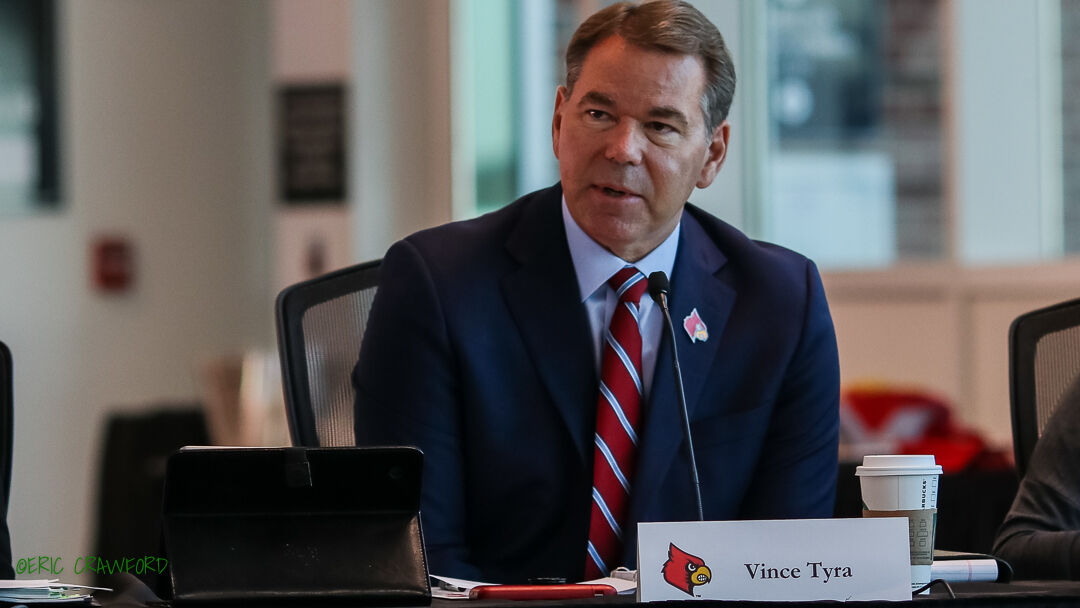
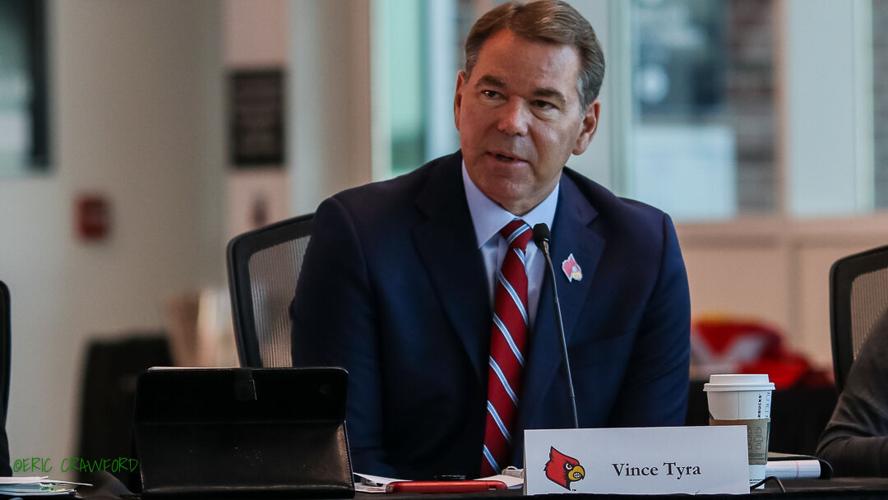
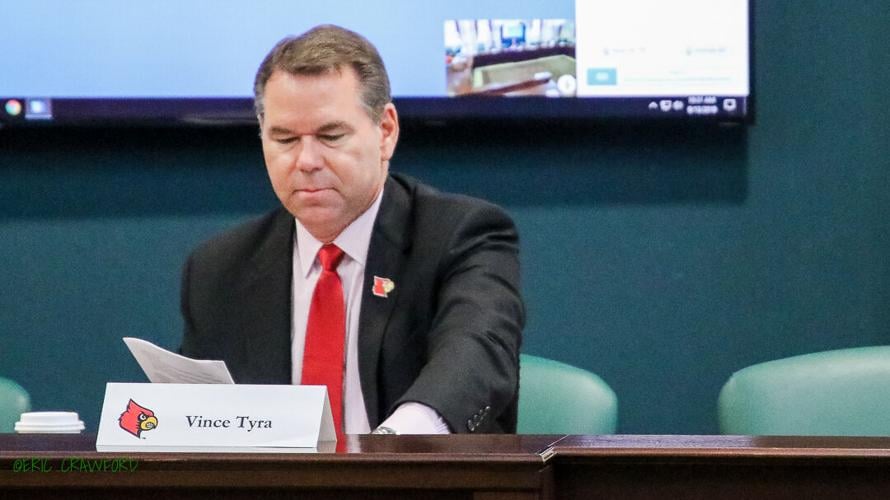
Louisville athletic director Vince Tyra.
Tyra said that the area of greatest concern heading in is disclosure — having athletes notify the university of deals they are making ahead of time and when they are signed.
“My guess is that’s where there will be some slippage and learning curve,” Tyra said. “We have to have all those individual deals logged. And over time, we’ll learn what the quote-unquote fair-market value for some of these opportunities.”
It’ll be especially difficult, Banker said, because of some of these deals could take place online in real time.
“U of L isn’t a party to any of these transactions," he said. "It’s going to be between a student-athlete and whoever that third party is. But we’re going to be trying to vet situations as best we can ... The reality is some of these opportunities can happen in real time. Especially in social media, there could be an opportunity that comes to someone, and within a minute, they’ve just earned $100. Their awareness that they need to report that is critical. We’re realistic and recognize that some of (that reporting) is going to come on the back end. But it is going to be central to this whole process to disclose. It’s not going to be a 'gotcha' moment. We’re trying to help protect and be transparent and fulfill our obligations.”
Tyra noted, “We can’t tell them do or don’t on the companies. But on a company like Cameo, they can do happy birthday wishes to people and earn money. And there’s coaches earning $10,000-plus doing this birthday wishes or happy anniversary and things like that. We want to make sure they understand the reporting of that, they’ll get a statement from Cameo. We’ve had to learn about all these services like that, so they can track their dollars. These are kids that will leave their baseball glove at home before the College World Series or cleats or helmet. So we have to help them as best we can to know how to track the financial aspect of what’s happening.”
The other sticky area is conflict of interest. The state’s executive order says players can’t receive compensation from any party that the university decides is in conflict with a deal it has in place.
For a school like Louisville, there are myriad deals to consider, with businesses that range from hotels to car dealerships to jewelers.
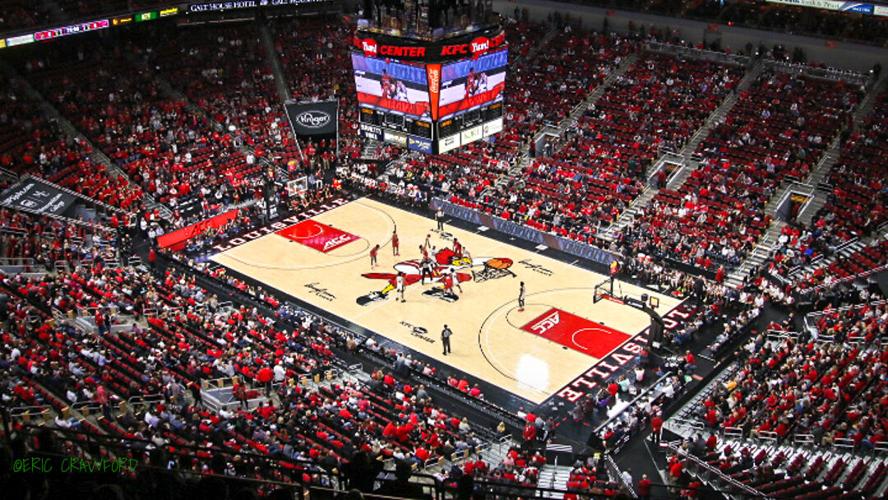
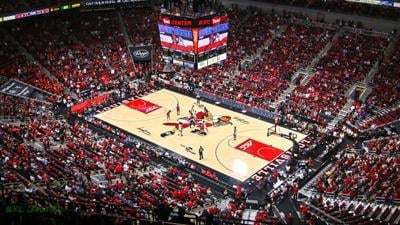
“Our brand is prevalent in this town,” Tyra said. “From the time you land at the airports to billboards to what people wear in this city. We call it Pro-Ville, because Louisville feels more like a pro sports setting. Our venues feel more like pro sports venues. Certainly, our football and basketball stadium feel like more of a pro atmosphere. And I think the way our contracts are and things we do with Learfield and others, and the way we look at treating our fans and donors, is frankly more like a pro environment. And there’s that engagement you see. There’s not many large companies in this city that aren’t represented somewhere in advertising around our venues. It’s the law of large numbers.”
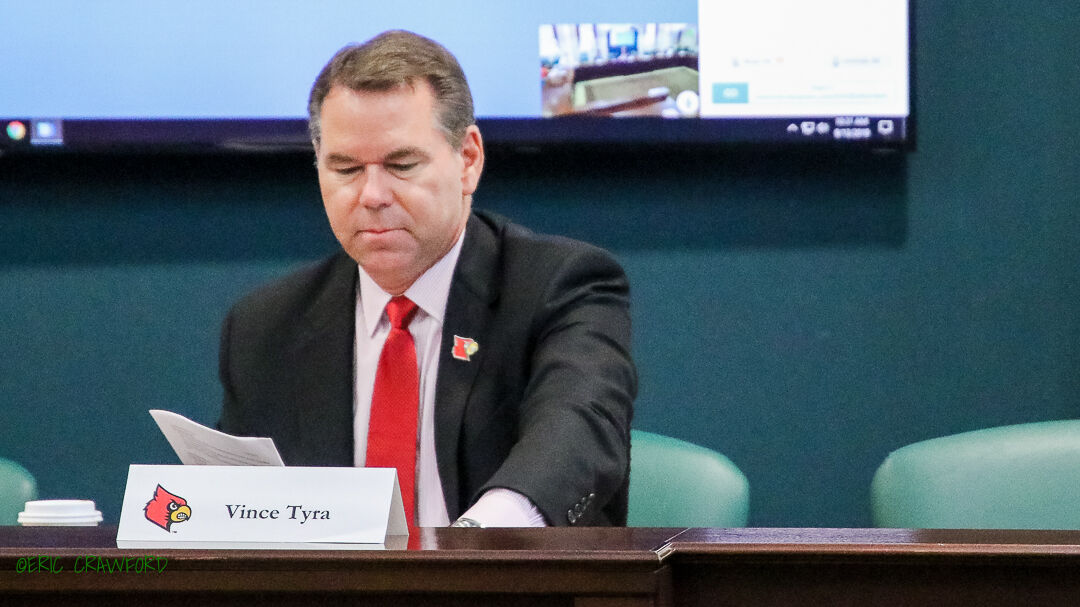
Louisville athletic director Vince Tyra said he was "disappointed and frustrated today with what's occurred" after having to shut down four fall sports because of positive COVID-19 tests related to athlete participation in an off-campus party.
As result, Tyra said, deals done with those companies or with competing companies would have to be evaluated on a case-by-case basis.
“One, we want to make sure that companies don’t cross ways with the values of the university,” Tyra said. “Whether it be drug, alcohol, gambling, whatever. We just want to make sure that they are in line with university values. The other thing is you do look at these companies if they want to do a sponsorship, that part is still fluid. I can’t tell you right now whether I feel comfortable as to whether that car dealership may or may not be able to do what they want to do until I see what comes out of the NCAA guidelines ... Smaller Division I schools don’t have the breadth of sponsors that a bigger city would. Smaller schools ... might say let the car dealership use the university marks and license. That’s not the case at the higher level, where there’s some credible level around marks and license, like at the University of Louisville.”
Also still in the works are university policies on how boosters can do deals with athletes. At the moment, Tyra said, the thinking is that boosters can’t personally do deals with athletes, but their companies perhaps can do deals with them.
There are, clearly, many details to be worked out.
Tyra said, as a former athlete himself, he welcomes the changes. But he admits athletic departments around the country are in for some chaotic times as the NCAA works to define its rules and operating policies in a post-amateurism landscape.
Copyright 2021 WDRB Media. All Rights Reserved.