
LOUISVILLE, Ky. (WDRB) — This week, power conferences in college sports are finally facing their self-government moment.
It may last approximately until the next lawsuit.
The Southeastern Conference gathered its presidents Tuesday to deal with the latest emergency in college athletics, which is that professional football players have apparently discovered college eligibility is something like a hotel rewards program. Just when you think you've checked out, somebody finds another free night.
The SEC considered this development and decided, unanimously, that it was ridiculous. The unanimous vote, of course, included LSU.
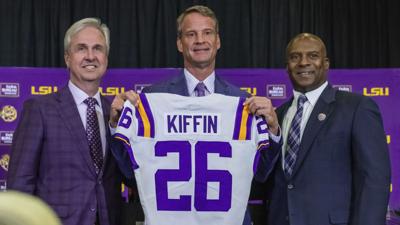
LSU is the school currently trying to put two former NFL players on its football team.
So LSU's president voted for a rule preventing LSU from doing the thing LSU's football coach wants LSU to do.
And everybody appears prepared to proceed accordingly. This is college athletics in 2026. The university says no. The football program says yes. The conference says absolutely not. The players say we'll see you in court. And the lawyers say, presumably, what time?
There was a time when college athletics had an organization responsible for settling matters like this. It was called the NCAA.
You may remember it from previous lawsuits.
For years, the power conferences complained that the NCAA couldn't govern modern college sports. They wanted more autonomy. More authority. More control over their own affairs.
Be careful what you wish for. Sometimes they give you the whistle.
Tuesday provided a useful glimpse of what that future might look like.
The Big Ten unanimously adopted a rule barring players who have crossed specified lines into professional football from returning to play in the conference. The SEC followed with its own rule.
That is the easy part of self-government.
You hold a meeting. You take a vote. Somebody issues a statement. Everybody goes home.
The difficult part comes when the rule costs somebody something, and for this we didn't have to wait long.
Representatives for the players LSU wants are already examining whether a Louisiana court order can prevent the SEC from enforcing the rule LSU itself just voted to adopt.
Meanwhile, attorneys who have been challenging NCAA eligibility rules in state courts have made clear that conferences shouldn't expect to escape the litigation simply by putting their own names atop the rulebook.
Which raises a fascinating question.
Who, exactly, is allowed to govern college sports?
For decades, the answer was the NCAA. Courts have increasingly told the NCAA: Not so fast. So conferences are stepping forward. The lawyers are telling them: Not so fast, either.
College sports got rid of the traffic cop.
Everybody began driving wherever they pleased.
So the conferences put up stop signs.
Now somebody is headed to court to have the stop signs removed.
And here's the part that makes this more than another funny episode in the ongoing demolition of the NCAA rulebook. Rules require more than agreement. They require people to accept them when the rule works against their interests.
Ohio State coach Ryan Day said as much this week. He doesn't like the idea of NFL players returning to college. But if somebody else can use them, Ohio State has to consider doing it, too.
That's not hypocrisy. That's an arms race. If LSU can use an NFL player, Alabama has to consider one. Georgia has to consider one. Ohio State has to consider one. Soon every recruiting coordinator in America is studying NFL cut lists alongside the transfer portal.
That's exactly why conferences exist.
Sixteen schools agree that none of them will do something, so none of them has to do it.
Except we've now reached the wonderful point where all 16 SEC schools agreed not to do something while one of them simultaneously appears determined to find out whether it can do it anyway.
College athletics has spent years preparing to govern itself.
This week it finally gets the opportunity.
Almost simultaneously, it was preparing to meet its new boss.
The judicial system.
Copyright 2026 WDRB Media. All Rights Reserved.


