
LOUISVILLE, Ky. (WDRB) -- It was a bold statement, coming from one of the most prominent horse racing journalists of his generation. Andy Beyer, creator of the Beyer Speed Figure, author of best-selling handicapping books, longtime horse racing columnist for The Washington Post and one of the most decorated racing writers of all time did not mince words talking about Saturday's Preakness Stakes.
Speaking with Tony Kornheiser on his podcast, Beyer proclaimed the upcoming Preakness, "the worst Preakness ever."
And that was before morning-line second choice First Mission was scratched for an issue in his left hind leg.
A year ago, Kentucky Derby upset winner Rich Strike skipped the Preakness in favor of a shot at the Belmont. This year, Derby winner Mage is at Pimlico, but everyone else from the Derby is skipping the race.
In modern horse racing, nobody runs back in two weeks. What once was commonplace now is something reserved for a handful of colts, but essentially only one, just once in his life: The Kentucky Derby winner, on the third Saturday in May.
It's time to move the Preakness Stakes.
Traditionalists may howl. They’ll argue that it waters down the Triple Crown. But the fact of the matter is that running back in three weeks today is roughly equivalent to running back in two a couple of decades ago.
And the simple fact is this: If the Kentucky Derby is designed to have the best available 3-year-olds competing against each other on the first Saturday in May, then why have the vast majority drop off in the second race of what it supposed to be a three-race test of the best?

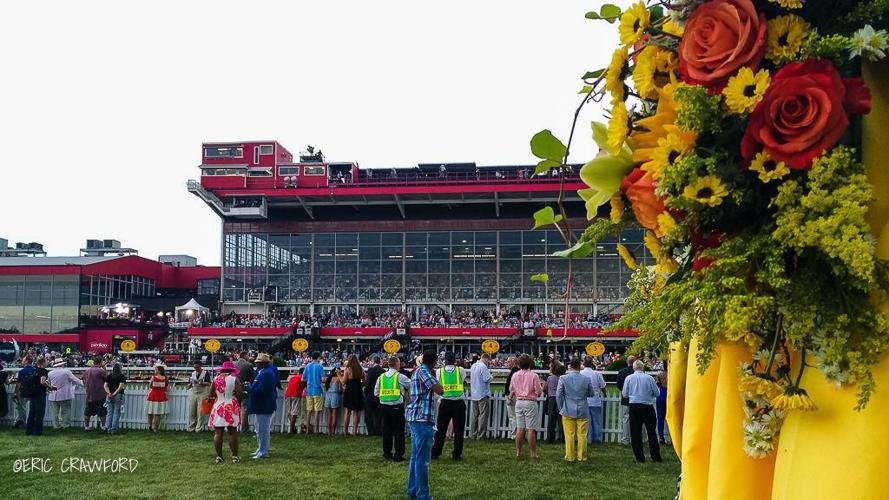
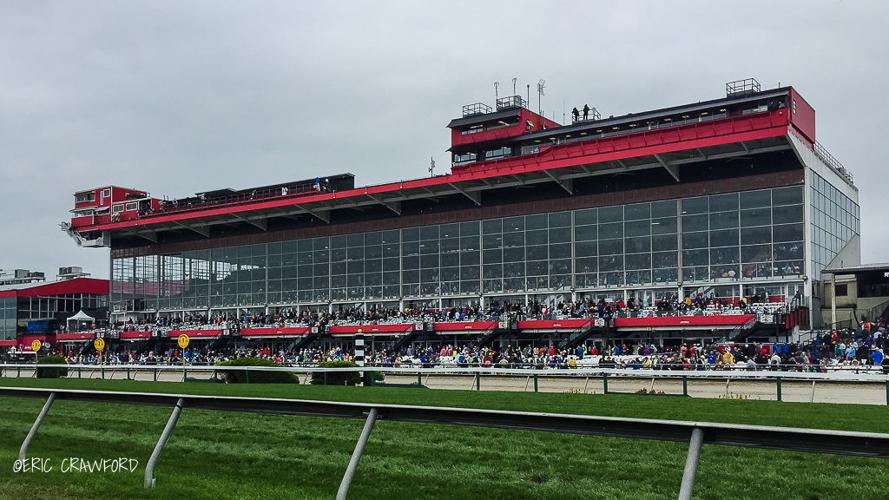
The grandstand at Pimlico.
Some will drop out anyway. Others will wait and take a shot at the Kentucky Derby winner with a fresher horse in the Preakness.
All of that is fine. The test is supposed to be hard. And even with a three-week break after the Derby, it will be.
There are other reasons to make the move. Under new HISA guidelines, a veterinary scratch, such as we saw with Kentucky Derby favorite Forte two weeks ago, mandates a two-week non-competition period, plus a workout in front of a state vet before returning. A 3-week break would allow for that, if a trainer were so inclined.
A three-week break doesn’t just make sense in light of recent racing practices, but it makes sense for the Preakness.
On Saturday, the Preakness will have a seven-horse field. That would be the smallest since 1986, when Derby winner Ferdinand faced six rivals. If the Preakness loses another one, it would drop to just a half-dozen horses, which would be the smallest field since 1979, when only five went to post.
The Preakness is never going to draw a huge field. But a three-week break would give it a bigger field, with more carryover from the Derby, plus the inevitable new shooters.
It makes sense for the health of horses, in keeping with modern practices. It makes sense for the Preakness, giving it an opportunity for bigger and better fields. And it makes sense for the sport, providing a better, safer show in the long run.
It is not a capitulation for a watered-down Triple Crown. It is an acknowledgement that the game, and the athletes, have changed, as have the needs of the sport.
Is Saturday’s race in fact the "worst Preakness ever?"
I don’t know. I wouldn’t presume to argue with Beyer, who has looked at this longer and harder than I have, I’m certain.
Mage is lightly raced. Did not race at 2, and had run only three races at 3 before winning the Derby.
While this isn’t (yet) the smallest Preakness field ever, it is remarkably unaccomplished. Without First Mission, the new likely second-choice in the betting, Bob Baffert’s National Treasure, who is admittedly not yet ready for the big races, according to Baffert, becomes the leading challenger. Baffert, who was not at the Kentucky Derby, serving the second of a 2-year suspension from Churchill Downs that ends next month, admits he's just taking a shot.
"The talent is there, we just haven’t seen it in full," Baffert told reporters this week. "... He would have been a great ‘Kentucky-Derby-in-September horse."
Aside from Mage, only one other horse has a graded stakes win to his credit -- Chad Brown’s Blazing Sevens, who would’ve made the Derby field as an also-eligible, but his connections chose to move on to Baltimore instead.
Blazing Sevens won the Grade 1 Champaign Stakes at Belmont last October, but ran fourth in the Breeders’ Cup Juvenile and was a disappointing eight in the Grade 2 Fountain of Youth in his debut as a 3-year-old. He came back with a more encouraging third-place finish in the Blue Grass Stakes, but even at his best has not flashed the kind of speed that likely will be necessary to win the Preakness.
Steve Asmussen’s Red Route One is an interesting colt, who will be making his 10th career start, and seventh against graded stakes company. His speed figures have steadily improved over his past five races. After a disappointing sixth in the Arkansas Derby, the colt stepped down in class to win Oaklawn’s Bath House Stakes, his second win in nine career tries.
As for Mage, it has been an uneventful 2 weeks since winning the Derby, which is exactly what his trainer, Gustavo Delgado, was hoping for. He’s lightly raced, which will work in his favor now, and with a slower pace expected in the Preakness, should be set up well for a late run.
"Every time he races, he’s getting more mature," assistant trainer Gustavo Delgado Jr. told reporters this week. "Last race, he didn’t look like an apprentice to anybody. ... I don’t think there’s any trainer who will tell you he’s 100% sure that he’s not going to regress. But other than that, all the signs — the good ones — allowed us to take this chance out here."
Copyright 2023 WDRB Media. All Rights Reserved.


