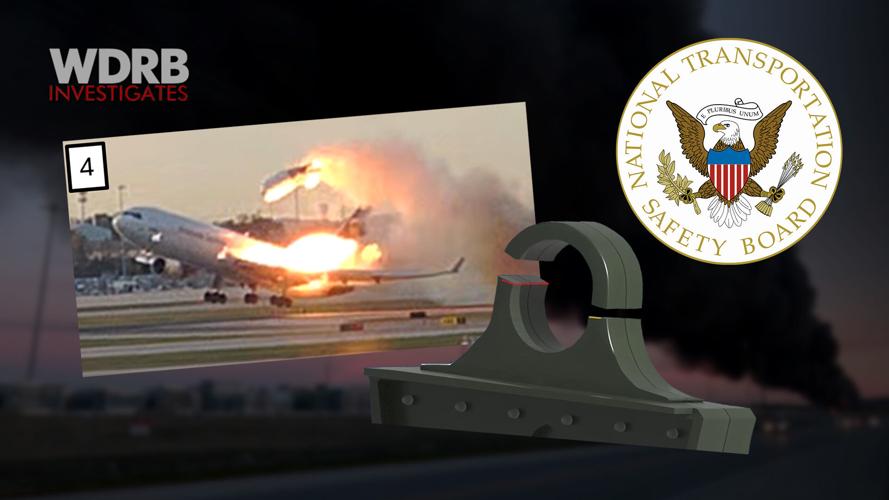
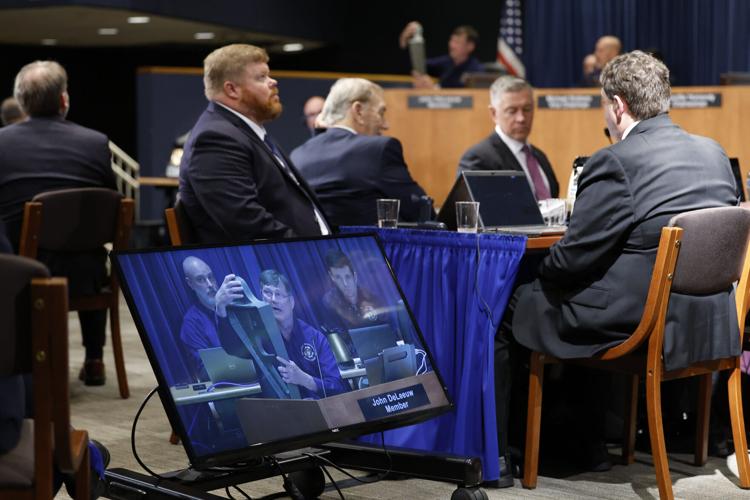
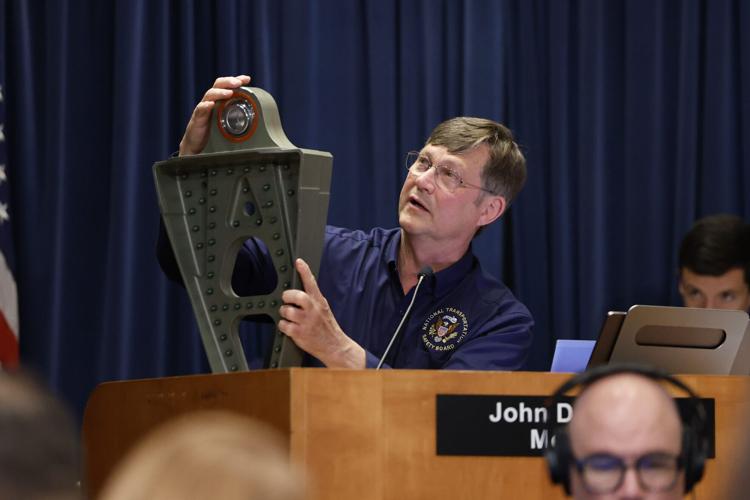
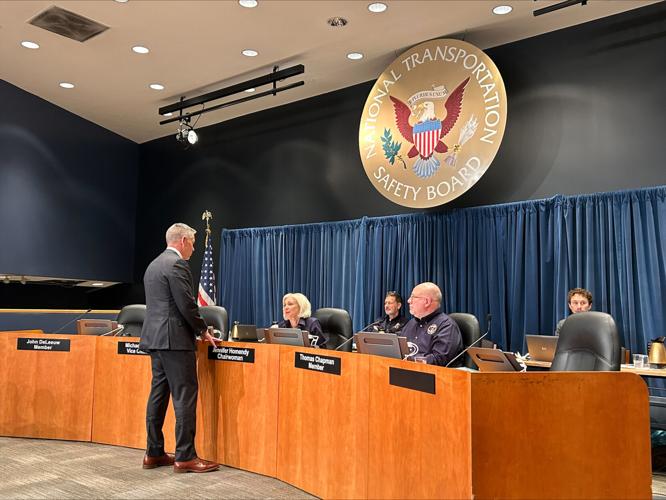
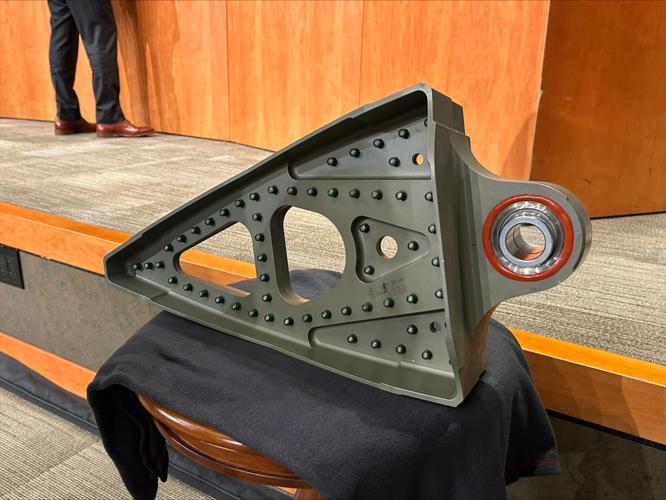
An NTSB official holds up a pylon, the structure that connects the engine to the wing of the plane, during an investigative hearing in May 2026 into Louisville's deadly UPS plane crash. Cracks were found in the pylon of the UPS plane that crashed in Louisville on Nov. 4, 2025, killing 15 people. (WDRB photo)
Surveillance footage from the Louisville Muhammad Ali International Airport shows the left engine separating from UPS Flight 2976 after the takeoff rotation on Nov. 4, 2025.
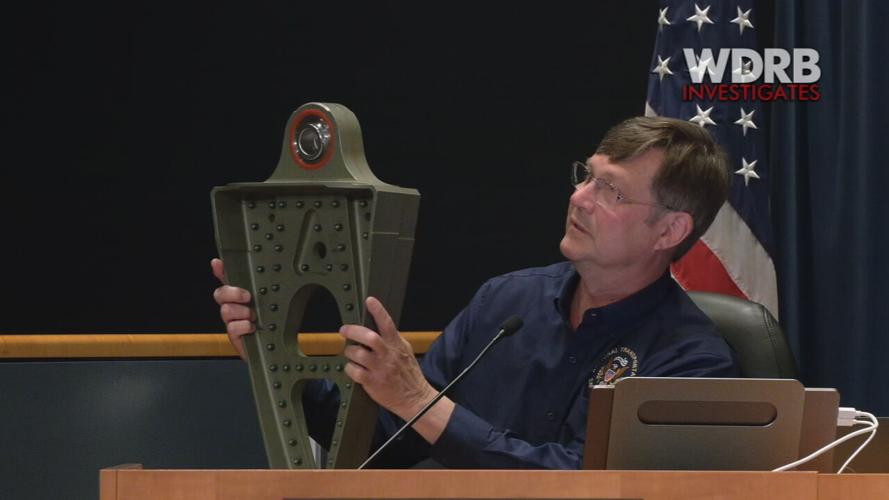
An NTSB official holds up a pylon, the structure that connects the engine to the wing of the plane, during an investigative hearing in May 2026 into Louisville's deadly UPS plane crash. Cracks were found in the pylon of the UPS plane that crashed in Louisville on Nov. 4, 2025, killing 15 people. (WDRB photo)
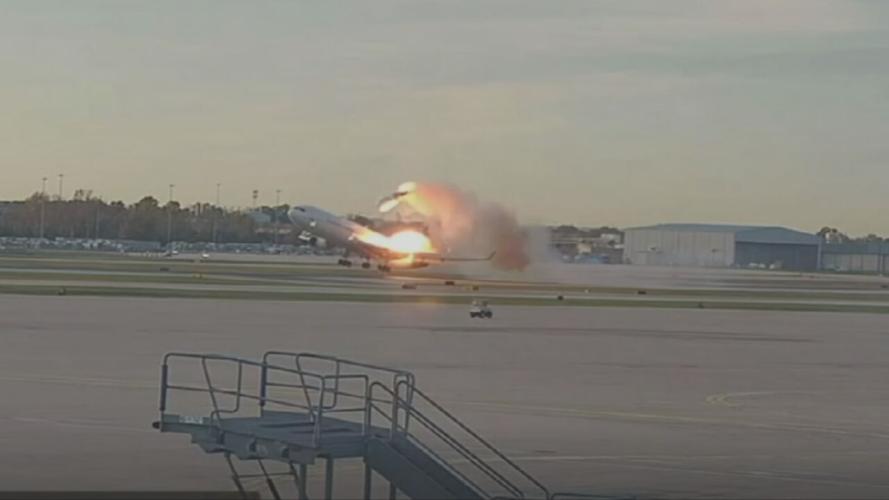
Surveillance footage from the Louisville Muhammad Ali International Airport shows the left engine separating from UPS Flight 2976 after the takeoff rotation on Nov. 4, 2025.
WDRB Google Preferred Source Asset
See more WDRB reporting in Google Search
Add WDRB as a preferred source on Google to ensure that local news and weather from WDRB appears more often in Top Stories when relevant to your search.
LOUISVILLE, Ky. (WDRB) — Before the deadly crash of UPS Flight 2976 in Louisville, there were warnings. Not just days or months before, but decades.
The McDonnell Douglas MD-11 cargo plane, built in 1991, went down around 5:15 p.m. Nov. 4, 2025, after its left wing caught fire, killing all three pilots on board. The plane slammed into Grade A Auto Parts, killing 12 employees and customers on the ground. Twenty-three other people were injured.
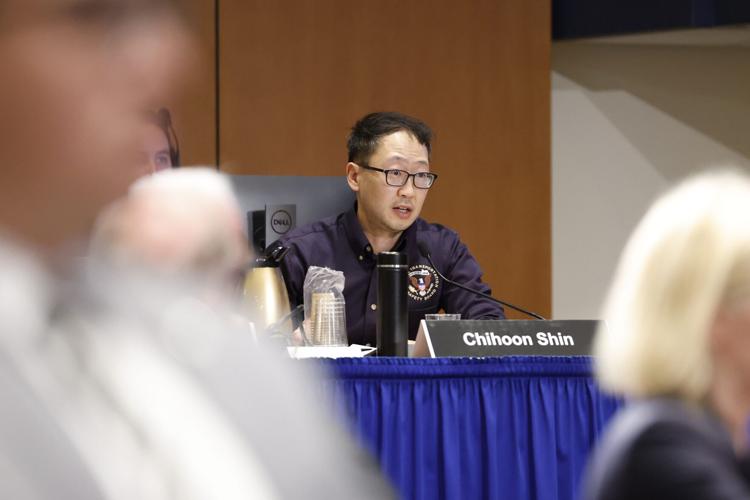
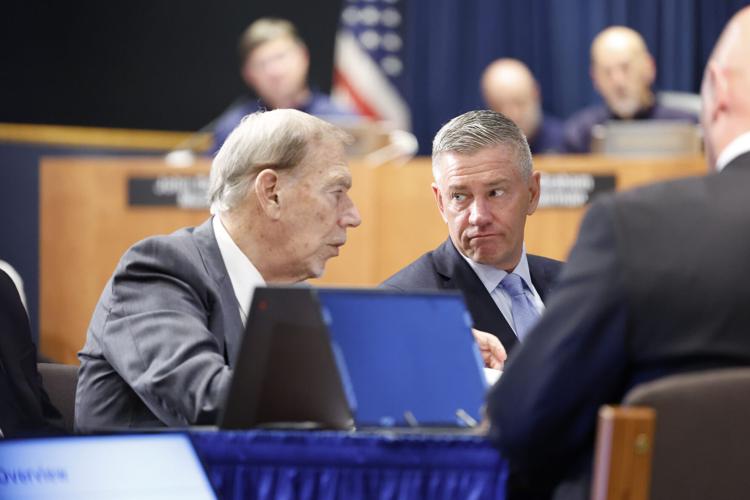
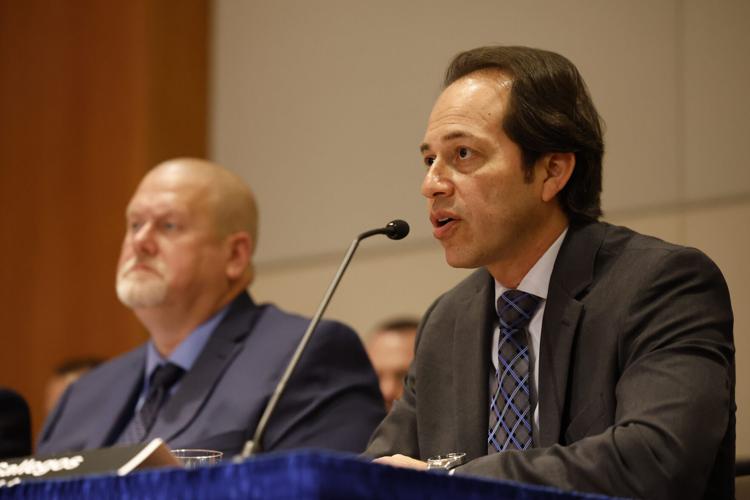
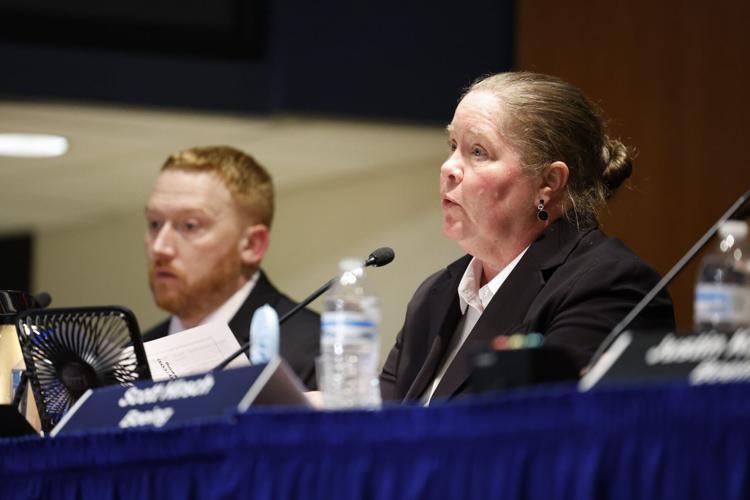
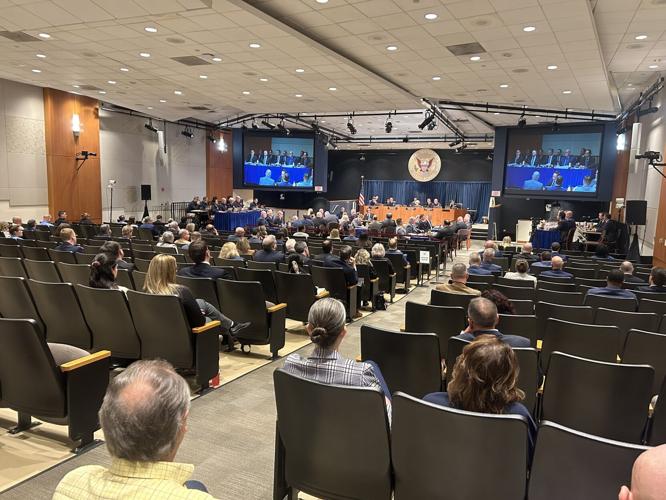
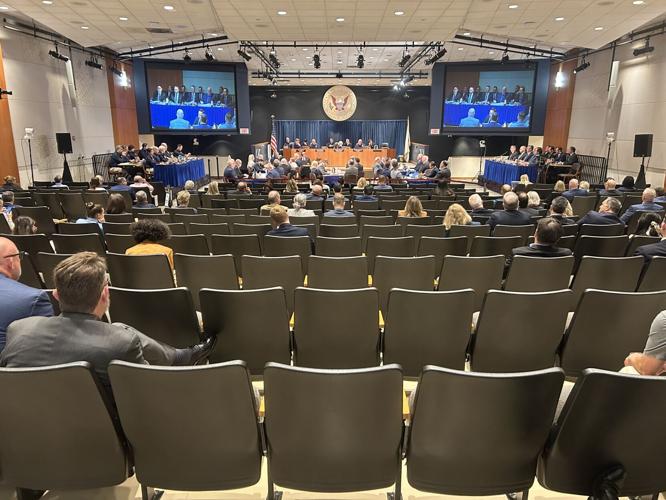
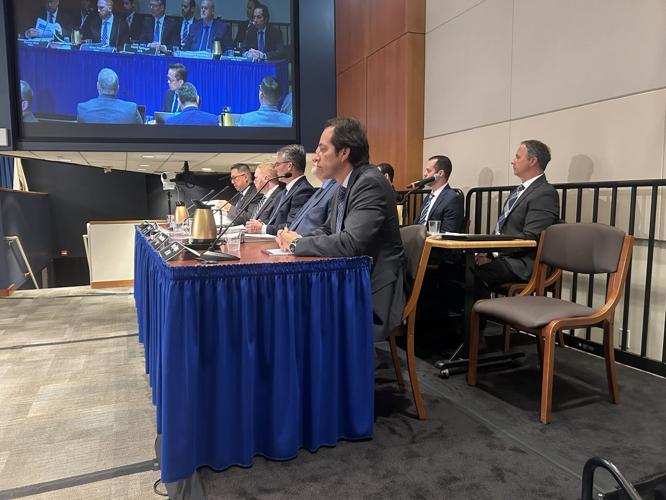
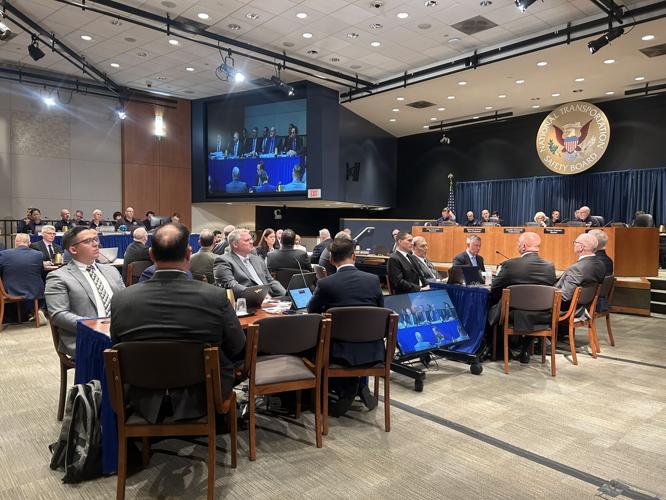
In May, the National Transportation Safety Board held a two-day investigative hearing in Washington as part of its investigation into the crash.
The NTSB says the left engine and pylon of the plane separated after the takeoff rotation. The pylon is the structure that connects the engine to the wing of the plane. Investigators examining the wreckage after the crash found cracks in some parts of the pylon.
The National Transportation Safety Board convened for the second day of investigative hearings on Wednesday, May 20, 2026, in Washington, D.C., as part of the agency's investigation into Louisville's deadly UPS plane crash in November 2025. (WDRB photo)
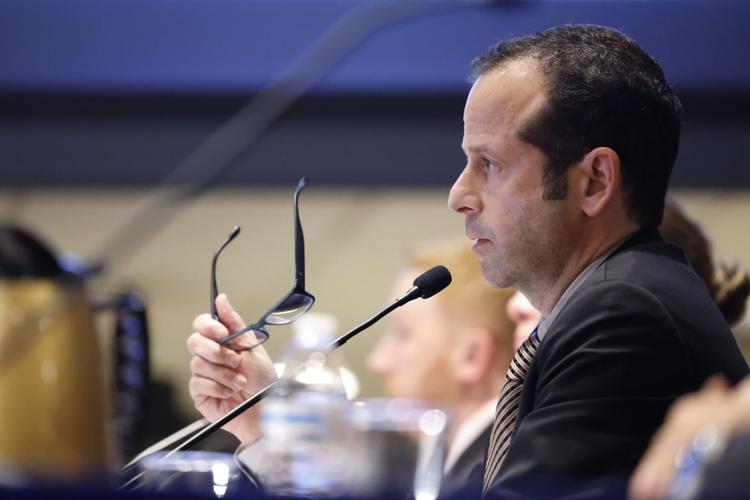
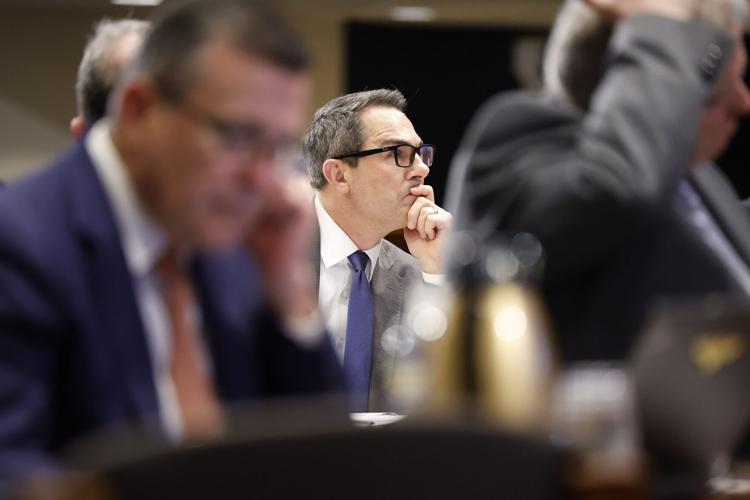
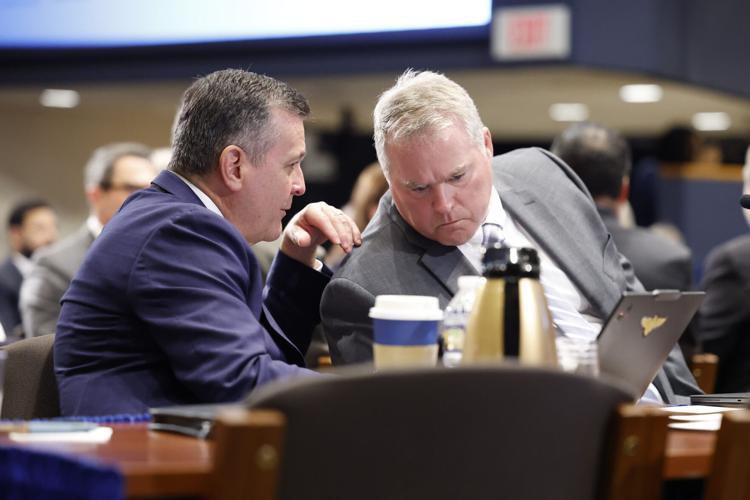
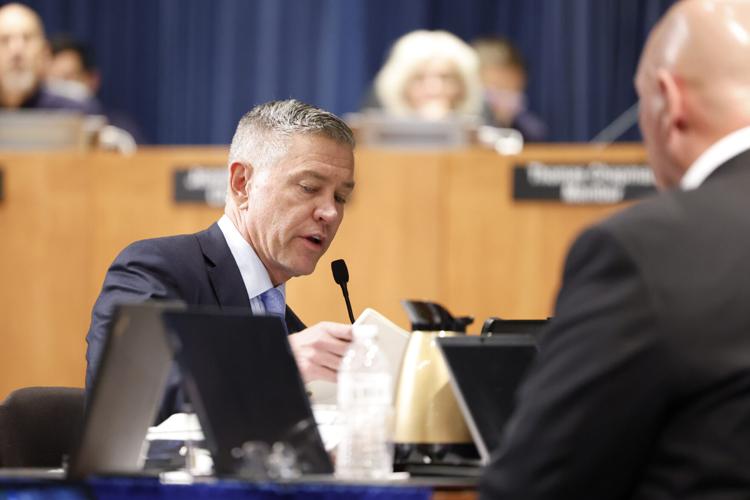
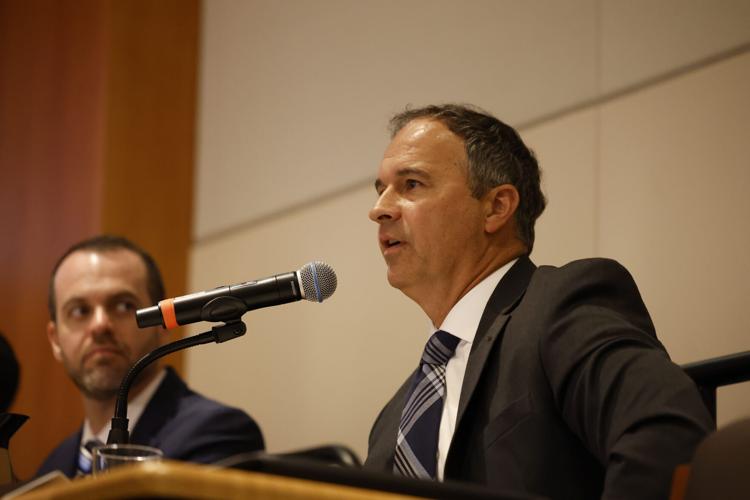
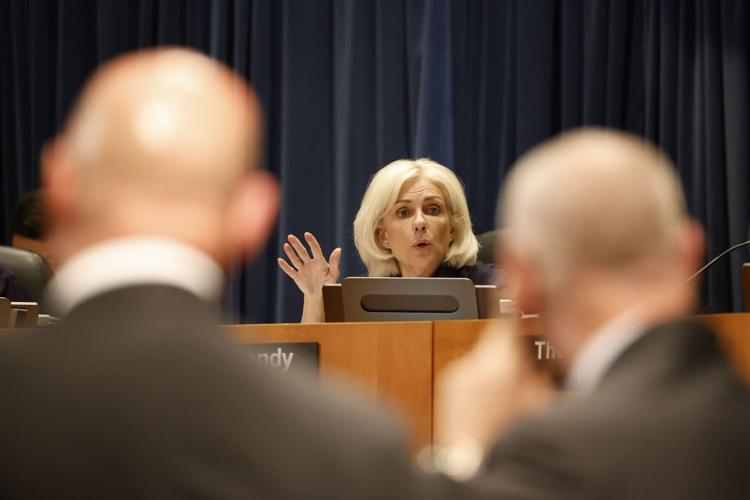
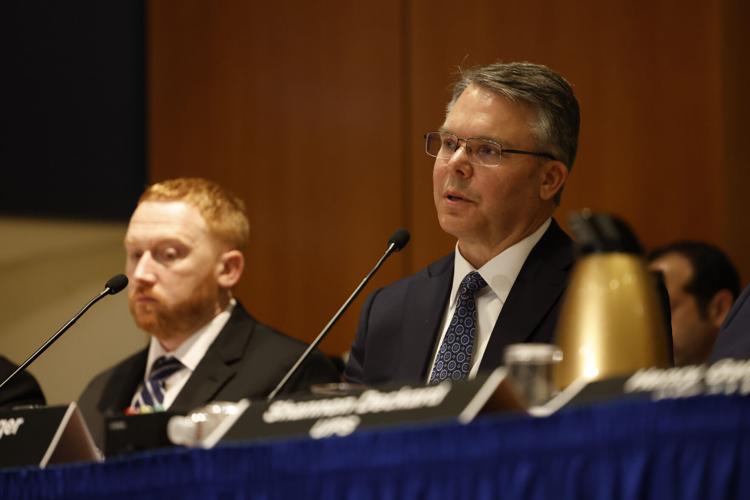
The National Transportation Safety Board kicked off two days of investigative hearings on Tuesday, May 19, 2026, in Washington, D.C., as part of the agency's investigation into Louisville's deadly UPS plane crash in November 2025. (Ariana Shchuka/WDRB photo)
The National Transportation Safety Board kicked off two days of investigative hearings on Tuesday, May 19, 2026, in Washington, D.C., as part of the agency's investigation into Louisville's deadly UPS plane crash in November 2025. (Ariana Shchuka/WDRB photo)
The National Transportation Safety Board kicked off two days of investigative hearings on Tuesday, May 19, 2026, in Washington, D.C., as part of the agency's investigation into Louisville's deadly UPS plane crash in November 2025. (Ariana Shchuka/WDRB photo)
The National Transportation Safety Board kicked off two days of investigative hearings on Tuesday, May 19, 2026, in Washington, D.C., as part of the agency's investigation into Louisville's deadly UPS plane crash in November 2025. (Ariana Shchuka/WDRB photo)
The National Transportation Safety Board kicked off two days of investigative hearings on Tuesday, May 19, 2026, in Washington, D.C., as part of the agency's investigation into Louisville's deadly UPS plane crash in November 2025. (Ariana Shchuka/WDRB photo)
The National Transportation Safety Board kicked off two days of investigative hearings on Tuesday, May 19, 2026, in Washington, D.C., as part of the agency's investigation into Louisville's deadly UPS plane crash in November 2025. (Ariana Shchuka/WDRB photo)
The National Transportation Safety Board kicked off two days of investigative hearings on Tuesday, May 19, 2026, in Washington, D.C., as part of the agency's investigation into Louisville's deadly UPS plane crash in November 2025. (Ariana Shchuka/WDRB photo)
The National Transportation Safety Board kicked off two days of investigative hearings on Tuesday, May 19, 2026, in Washington, D.C., as part of the agency's investigation into Louisville's deadly UPS plane crash in November 2025. (Ariana Shchuka/WDRB photo)
The National Transportation Safety Board convened for the second day of investigative hearings on Wednesday, May 20, 2026, in Washington, D.C., as part of the agency's investigation into Louisville's deadly UPS plane crash in November 2025. (Ariana Shchuka/WDRB photo)
The National Transportation Safety Board convened for the second day of investigative hearings on Wednesday, May 20, 2026, in Washington, D.C., as part of the agency's investigation into Louisville's deadly UPS plane crash in November 2025. (Ariana Shchuka/WDRB photo)
The National Transportation Safety Board kicked off two days of investigative hearings on Tuesday, May 19, 2026, in Washington, D.C., as part of the agency's investigation into Louisville's deadly UPS plane crash in November 2025. (Ariana Shchuka/WDRB photo)
The National Transportation Safety Board kicked off two days of investigative hearings on Tuesday, May 19, 2026, in Washington, D.C., as part of the agency's investigation into Louisville's deadly UPS plane crash in November 2025. (Ariana Shchuka/WDRB photo)
The National Transportation Safety Board kicked off two days of investigative hearings on Tuesday, May 19, 2026, in Washington, D.C., as part of the agency's investigation into Louisville's deadly UPS plane crash in November 2025. (Ariana Shchuka/WDRB photo)
The National Transportation Safety Board kicked off two days of investigative hearings on Tuesday, May 19, 2026, in Washington, D.C., as part of the agency's investigation into Louisville's deadly UPS plane crash in November 2025. (Ariana Shchuka/WDRB photo)
The National Transportation Safety Board kicked off two days of investigative hearings on Tuesday, May 19, 2026, in Washington, D.C., as part of the agency's investigation into Louisville's deadly UPS plane crash in November 2025. (Ariana Shchuka/WDRB photo)
The National Transportation Safety Board kicked off two days of investigative hearings on Tuesday, May 19, 2026, in Washington, D.C., as part of the agency's investigation into Louisville's deadly UPS plane crash in November 2025. (Ariana Shchuka/WDRB photo)
The National Transportation Safety Board kicked off two days of investigative hearings on Tuesday, May 19, 2026, in Washington, D.C., as part of the agency's investigation into Louisville's deadly UPS plane crash in November 2025. (Ariana Shchuka/WDRB photo)
The National Transportation Safety Board convened for the second day of investigative hearings on Wednesday, May 20, 2026, in Washington, D.C., as part of the agency's investigation into Louisville's deadly UPS plane crash in November 2025. (WDRB photo)
IMAGES | NTSB holds investigative hearings in deadly UPS plane crash investigation in Washington
The National Transportation Safety Board convened for the second day of investigative hearings on Wednesday, May 20, 2026, in Washington, D.C., as part of the agency's investigation into Louisville's deadly UPS plane crash in November 2025. (WDRB photo)
The National Transportation Safety Board kicked off two days of investigative hearings on Tuesday, May 19, 2026, in Washington, D.C., as part of the agency's investigation into Louisville's deadly UPS plane crash in November 2025. (Ariana Shchuka/WDRB photo)
The National Transportation Safety Board kicked off two days of investigative hearings on Tuesday, May 19, 2026, in Washington, D.C., as part of the agency's investigation into Louisville's deadly UPS plane crash in November 2025. (Ariana Shchuka/WDRB photo)
The National Transportation Safety Board kicked off two days of investigative hearings on Tuesday, May 19, 2026, in Washington, D.C., as part of the agency's investigation into Louisville's deadly UPS plane crash in November 2025. (Ariana Shchuka/WDRB photo)
The National Transportation Safety Board kicked off two days of investigative hearings on Tuesday, May 19, 2026, in Washington, D.C., as part of the agency's investigation into Louisville's deadly UPS plane crash in November 2025. (Ariana Shchuka/WDRB photo)
The National Transportation Safety Board kicked off two days of investigative hearings on Tuesday, May 19, 2026, in Washington, D.C., as part of the agency's investigation into Louisville's deadly UPS plane crash in November 2025. (Ariana Shchuka/WDRB photo)
The National Transportation Safety Board kicked off two days of investigative hearings on Tuesday, May 19, 2026, in Washington, D.C., as part of the agency's investigation into Louisville's deadly UPS plane crash in November 2025. (Ariana Shchuka/WDRB photo)
The National Transportation Safety Board kicked off two days of investigative hearings on Tuesday, May 19, 2026, in Washington, D.C., as part of the agency's investigation into Louisville's deadly UPS plane crash in November 2025. (Ariana Shchuka/WDRB photo)
The National Transportation Safety Board kicked off two days of investigative hearings on Tuesday, May 19, 2026, in Washington, D.C., as part of the agency's investigation into Louisville's deadly UPS plane crash in November 2025. (Ariana Shchuka/WDRB photo)
The National Transportation Safety Board convened for the second day of investigative hearings on Wednesday, May 20, 2026, in Washington, D.C., as part of the agency's investigation into Louisville's deadly UPS plane crash in November 2025. (Ariana Shchuka/WDRB photo)
The National Transportation Safety Board convened for the second day of investigative hearings on Wednesday, May 20, 2026, in Washington, D.C., as part of the agency's investigation into Louisville's deadly UPS plane crash in November 2025. (Ariana Shchuka/WDRB photo)
The National Transportation Safety Board kicked off two days of investigative hearings on Tuesday, May 19, 2026, in Washington, D.C., as part of the agency's investigation into Louisville's deadly UPS plane crash in November 2025. (Ariana Shchuka/WDRB photo)
The National Transportation Safety Board kicked off two days of investigative hearings on Tuesday, May 19, 2026, in Washington, D.C., as part of the agency's investigation into Louisville's deadly UPS plane crash in November 2025. (Ariana Shchuka/WDRB photo)
The National Transportation Safety Board kicked off two days of investigative hearings on Tuesday, May 19, 2026, in Washington, D.C., as part of the agency's investigation into Louisville's deadly UPS plane crash in November 2025. (Ariana Shchuka/WDRB photo)
The National Transportation Safety Board kicked off two days of investigative hearings on Tuesday, May 19, 2026, in Washington, D.C., as part of the agency's investigation into Louisville's deadly UPS plane crash in November 2025. (Ariana Shchuka/WDRB photo)
The National Transportation Safety Board kicked off two days of investigative hearings on Tuesday, May 19, 2026, in Washington, D.C., as part of the agency's investigation into Louisville's deadly UPS plane crash in November 2025. (Ariana Shchuka/WDRB photo)
The National Transportation Safety Board kicked off two days of investigative hearings on Tuesday, May 19, 2026, in Washington, D.C., as part of the agency's investigation into Louisville's deadly UPS plane crash in November 2025. (Ariana Shchuka/WDRB photo)
The National Transportation Safety Board kicked off two days of investigative hearings on Tuesday, May 19, 2026, in Washington, D.C., as part of the agency's investigation into Louisville's deadly UPS plane crash in November 2025. (Ariana Shchuka/WDRB photo)
The National Transportation Safety Board convened for the second day of investigative hearings on Wednesday, May 20, 2026, in Washington, D.C., as part of the agency's investigation into Louisville's deadly UPS plane crash in November 2025. (WDRB photo)
History of fractures
Since 2002, operators caught 10 fractures before takeoff on the same part that broke in the UPS crash. Only four were reported to the Federal Aviation Administration.
"Don't you think the FAA should have had the information that you had fractured races one, two, three, four times?" NTSB Chair Jennifer Homendy asked Boeing representatives during the agency's investigative hearing in Washington.
In 2008, Boeing wrote a service letter about the part that failed but did not require replacement and said it did not impact the "safety of flight condition." But another document from one month later shows Boeing told a maintenance company the pylon must be removed and replaced before the plane flew again.
UPS says it was kept in the dark.
"If we would've known that at UPS, we would've asked a lot of different questions at UPS," said David Springer, senior director of engineering at United Parcel Service.
Crew switched planes before crash
The first day of the NTSB's investigative hearings revealed the UPS crew switched planes before taking off in the MD-11 that would eventually crash just after takeoff. The plane was fully loaded with fuel for the nine-hour flight to Honolulu from UPS Worldport at the Louisville Muhammad Ali International Airport.
The ill-fated plane was cleared for flight after a fuel leak sidelined the crew's original plane. Among the hundreds of pages of interview transcripts released by the NTSB, one said that during the second plane's pre-flight inspection, the flight crew shared good-natured banter with the maintenance team about "meeting again" so soon.
Dramatic images the NTSB released after the crash showed the engine detaching as flames erupted on the wing. The plane was already ablaze as it briefly got airborne, leaving behind trails of smoke.
Examining the wreckage, investigators found cracks in some of the parts that held the engine to the wing, the NTSB said. Those cracks hadn't been caught in regular maintenance, which raised questions about the adequacy of the maintenance schedule. The last time those key engine mount parts were examined closely was in October 2021, and the plane wasn't due for another detailed inspection for roughly 7,000 more takeoffs and landings.
Warnings date to 1979 Chicago crash
The warnings stretch back further. In 1979, the engine detached from another McDonnell Douglas plane in Chicago, killing 273 people. It remains the deadliest plane crash in U.S. history.
The MD-11 was supposed to be an improvement to the DC-10, the type of plane that went down in the Chicago crash.
"How similar is the DC-10 design to the MD-11 in terms of the engine pylon design?" NTSB board member Chapman asked Justin Konopaske, director of airframe service engineering at Boeing.
"Very similar," Konopaske said.
Nearly 50 years ago, the NTSB held a hearing in the Chicago crash and made recommendations to improve safety that it says the FAA declined to follow.
"Is it still the FAA's position the NTSB's recommendations would not be worth it despite loss of 15 lives?" NTSB vice chairman Michael Graham asked.
"I think we would look at that recommendation differently in 2026 than in 1990 in regards to the cost benefit analysis," FAA manager Brian Knaup said.
Classification and inspection questions
Boeing did not classify the impacted part as a principal structural element, meaning it is critical to a safe flight. Brad Cosgrove, who represents those who lost loved ones in the Louisville crash, says that decision matters because classifying the part as critical would have required stricter inspections and more money.
"This is one of the classic cases of Boeing putting profits over individual safety," Cosgrove said.
The FAA testified it believes the failed part should have been classified as a principal structural element. The designation would require stricter inspections and oversight. Boeing has not reclassified the part.
Boeing says the failed part met fail-safe requirements, but at the hearing UPS questioned that.
"The accident establishes the lugs were not failsafe, correct?" a UPS representative asked Todd Martin, FAA airframe section manager.
"I would not agree. Failsafe only means if you fail one element, the other would be able to maintain limit load," Martin said.
After the crash, UPS inspected its MD-11 fleet and found the same problem on three other planes.
Industry acknowledges communication failures
Boeing, UPS and the FAA all acknowledged the same issue: When safety problems are found, the aviation industry has to do a better job making sure the right people know.
FAA and UPS officials said the reports they did get about problems related to the spherical bearings may not have included enough information. Springer said Boeing's service letters made the bearing problem "sound almost benign" and did not mention any of the collateral damage that could be caused to the lugs that attach the engine to the wing.
"Are you confident another accident wouldn't happen again?" Homendy asked Springer.
"No, we rely on the FAA or another agency that drives our priorities," Springer said.
"What's the next UPS? How do we make sure the next one doesn't occur?" Homendy asked.
Sean Garber, the owner of Grade A Auto Parts, said the hearing exposed failures at multiple levels.
"People just didn't do their jobs and they should be held accountable for this horrific tragedy," Garber said.
The plane crashed directly on top of the checkout area of Garber's scrapyard, killing three of his employees and nine of his customers.
Boeing service letter and maintenance history
A Boeing Service Letter dated Feb. 7, 2011, told operators the company was aware of four previous bearing race failures on three different airplanes. Boeing had seen the fractures of the bearing race, with the parts splitting in two and moving out of place.
Boeing said further regular inspection of MD-11 airplanes would include a look at this bearing assembly, something scheduled for 60-month service intervals. And while Boeing used that service letter to discuss a new bearing assembly configuration, the installation of the original parts "was not prohibited."
Flight records suggest the 34-year-old plane underwent maintenance while it was on the ground in San Antonio for more than a month, from September through mid-October. According to a report by The Wall Street Journal, the plane needed a critical fuel tank repair.
MD-11 planes grounded, then returned to service
Days after the crash, UPS and FedEx said they grounded their fleets of McDonnell Douglas MD-11s "out of an abundance of caution." And the Federal Aviation Administration's directive the following day sidelined the planes until inspection and correction of any problems. In January, UPS announced that its fleet of the cargo plans are now officially retired.
The MD-11 cargo planes returned to the air after the FAA said it approved Boeing's proposed fix for the planes. The company developed a plan to replace a key spherical bearing and step up inspections of the parts that hold the engines to the wings.
U.S. Rep. Morgan McGarvey, a Democratic congressman from Kentucky, called on the FAA to ground the MD-11 planes for good following the deadly UPS crash in Louisville, citing the amount of crashes involving the planes since 1990 and cargo carriers already retiring the aircraft from their fleets over "unacceptable risk."
Since 1990, there have been at least 10 MD-11 crashes or accidents where the plane was damaged beyond repair.
The NTSB will likely release its final report around a year after the crash. That will include probable cause and recommendations.