

LOUISVILLE, Ky. (WDRB) — U.S. Rep. Morgan McGarvey called on the Federal Aviation Administration to ground McDonnell Douglas MD-11 planes for good after a fatal UPS plane crash in Louisville.
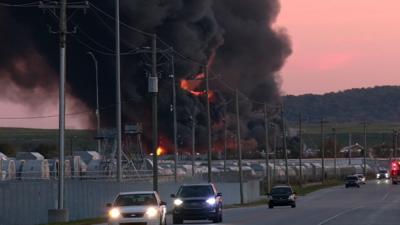
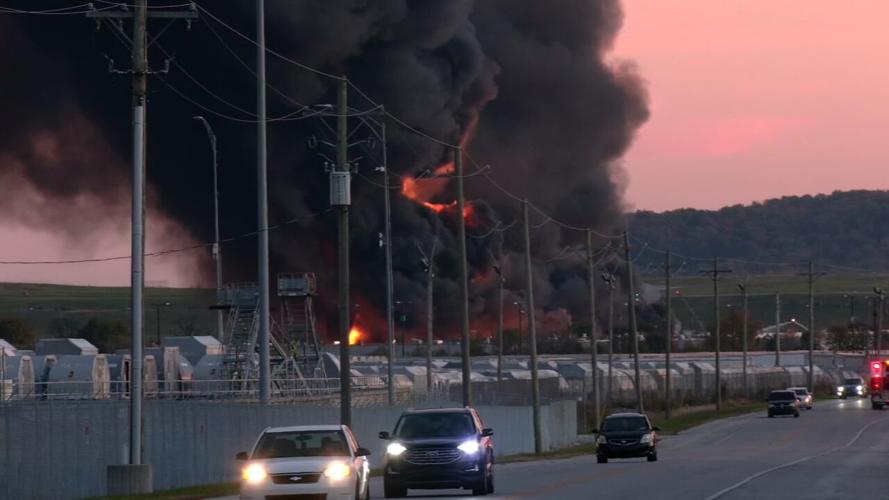
In a letter to the agency Friday, the Kentucky congressman cited the crash of UPS Flight 2976 in Louisville on Nov. 4, 2025. The McDonnell Douglas MD-11 cargo plane, built in 1991, went down around 5:15 p.m. after its left wing caught fire. The plane was fully loaded with fuel for the nine-hour flight to Honolulu from UPS Worldport at Louisville Muhammad Ali International Airport. Fifteen people, including three pilots, died in the crash.
McGarvey, D-Louisville, wrote that since 1990, there have been at least 10 accidents involving the MD-11 where the hull of the plane was lost. Boeing said that's the highest loss rate of any commercial jet airliner still flying in the U.S.
"Investigators, pilots, and operators have continuously documented the aircraft's tendencies toward instability on landing, center-of-gravity sensitivity, and structural stress around the engine pylons," McGarvey said. "Multiple cargo carriers have already decided that the aircraft poses unacceptable risk and have since retired the aircraft from their fleets voluntarily."
Days after the crash, UPS and FedEx said they grounded their fleets of McDonnell Douglas MD-11s "out of an abundance of caution." And the Federal Aviation Administration's directive the following day sidelined the planes until inspection and correction of any problems. In January, UPS announced that its fleet of the cargo plans are now officially retired.
"With a clear trend of users phasing out the MD-11, the FAA is one of the last major entities to have taken no action on removing this aircraft from commercial service," McGarvey said.
After the Louisville crash, the FAA grounded all remaining MD-11 aircraft and issued an order that required the immediate inspection of the aircraft, but has not grounded the aircraft permanently — something McGarvey wrote is an "action warranted by the aircraft's demonstrated structural deficiencies and declining use."
"We have a collective responsibility to ensure that no additional lives are put at risk by an aircraft whose design and operational history have repeatedly demonstrated an unacceptable level of danger," he said.
The NTSB's preliminary report said the plane's left engine caught fire and detached during takeoff. In that report, the agency's investigation revealed the part that secured the engine showed "fatigue cracks" and overstress failure across much of the bearing race inside the area that attached the plane's left engine to its wing. Investigators said the UPS plane got only 30 feet into the air before it crashed and burst into flames, hitting several businesses just south of the airport.
NTSB Preliminary report | Victims identified | What's next
The NTSB hearing is scheduled for May 19-20 at its boardroom in Washington, D.C. It will also be streamed live. The agency said it conducts investigative hearings "to assist in obtaining information necessary to determine the facts and circumstances of transportation accidents or incidents under investigation." While the hearing is open to the public, only board members, investigators, witnesses and parties to the hearing are permitted to participate.
The UPS cargo plane was nearly airborne when a bell sounded in the cockpit, Inman said. For the next 25 seconds, the bell rang and the pilots tried to control the aircraft as it barely lifted off the runway, its left wing ablaze and missing an engine, and then plowed into the ground in a spectacular fireball.
Flight records suggest the 34-year-old plane underwent maintenance while it was on the ground in San Antonio for more than a month, from September through mid-October. The Associated Press reported it wasn't clear what work was done. But according to a report by The Wall Street Journal, the plane needed a critical fuel tank repair.
The report cited FAA maintenance records that show the jet needed a permanent repair to fix a crack in the fuel tank before it returned to service. WDRB is working to independently obtain those maintenance records from the FAA.
The federal investigation into the plane crash showed one of the key defects found on the plane's failed engine was a known issue among Boeing's service team, albeit one Boeing didn't believe would lead to a "safety of flight condition."
NTSB investigators then went back into Boeing service data and confirmed the design of the bearing assembly was consistent with the original design of that part. However, a Boeing Service Letter dated Feb. 7, 2011, told operators the company was aware of four previous bearing race failures on three different airplanes. Boeing had seen the fractures of the bearing race, with the parts splitting in two and moving out of place.
However, Boeing told operators its review of the bearing failure "would not result in a safety of flight condition."
Boeing said further regular inspection of MD-11 airplanes would include a look at this bearing assembly, something scheduled for 60-month service intervals. And while Boeing used that service letter to discuss a new bearing assembly configuration, the installation of the original parts "was not prohibited."
Last week, the National Transportation Safety Board announced it would hold a two-day investigative hearing at the nation's capitol about the plane crash as part of their investigation.
Several lawsuits were since filed against UPS, General Electric, Boeing and the company that did maintenance on the plane. Those include a lawsuit filed by the widow of one of the plane's pilots.
Copyright 2026 WDRB Media. All Rights Reserved.