
LOUISVILLE, Ky. (WDRB) — The sun rose over Churchill Downs on Sunday, as it always does on the first morning of Kentucky Derby week, and, for a moment, it was possible to believe that nothing here on the backside ever changes.
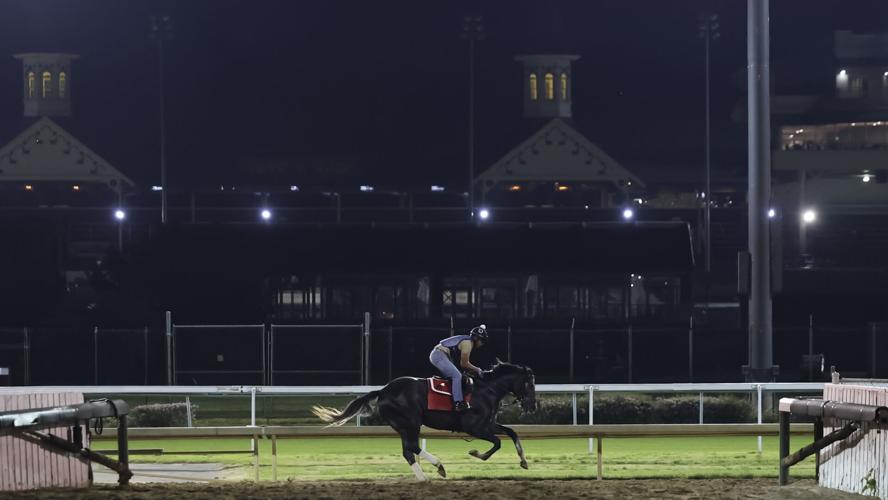
The horses went to the track in the half-light. The exercise riders sat quietly in the saddle. The hoofbeats made that familiar, hollow music on the dirt, and the shedrows filled with the small, purposeful sounds of a place going about its business.
It is a comforting illusion.
Churchill Downs is a place that trades in continuity, in the idea the race endures while the rest of the world spins itself dizzy. But even here, the years leave their marks, and this spring, one of them is impossible to miss.
D. Wayne Lukas is not here.
For 35 years, he was as much a part of this week as the bugle call or the Twin Spires. He died last June at 89, an age that suggests a long and complete life, though it doesn't quite prepare you for the absence.
"For Wayne, this was what he lived for," said Todd Pletcher, who learned his trade in Lukas' barn and has since made a Hall of Fame career of his own. "It won't be the same without him, for sure."
It is not.
Barn 44 still stands where it always has. Mike Maker, another of Lukas' graduates, works out of it now. The office has been carefully transported to the Kentucky Derby Museum.
The placards have been redistributed, too, finding new homes on the backside.
But presence isn't so easily relocated.
Lukas had a way of filling a place. He was equal parts showman and horseman, a man who could talk to a reporter in the morning and saddle a stakes winner in the afternoon and who never quite lost his appetite for the next good 2-year-old.

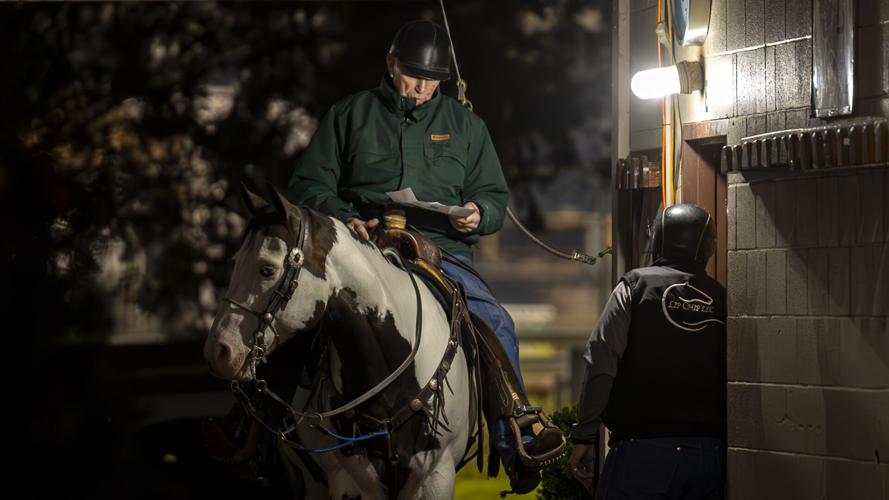
A scene from morning training at Churchill Downs on April 15, 2026.
A year ago, he was here, on horseback at dawn, watching the track with the practiced eye of a man who had seen nearly everything and was still looking for more. Two years ago, he won the Preakness. Four years ago, the Oaks. Time, in his case, didn't behave the way it was supposed to.
For the last several years, I have come out early with a camera, hoping to catch Lukas somewhere in the barn or on the track, usually on horseback, usually in conversation. There was a particular arrangement that presented itself from time to time: Lukas, Steve Asmussen and Bill Mott, three Hall of Fame trainers, all mounted, all talking, as if the morning might last forever.
It had the look of permanence about it.
On Saturday, there were only two.
Asmussen and Mott stood in the same light, in the same place, carrying on the same sort of conversation. The picture was nearly identical, and entirely different.
The Derby, of course, will proceed.
It always does. There are horses to be saddled and wagers to be made, and by Saturday evening one of the colts now circling the track will have been promoted, for better or worse, into the small and permanent fraternity of winners.
Whether there is a "great one" among them is a question for another day. Greatness has a habit of declaring itself here without much regard for prior opinion, a fact Lukas understood as well as anyone.
He would have been inclined to like his chances.
In the meantime, the race goes about the business of renewing itself. The names change. The barns change hands. The conversations continue with slightly altered membership.
The pageant remains.
But mornings like this one have a way of reminding you that the Derby is not only a race, or even a spectacle. It is also an accumulation -- of people, of voices, of habits and small rituals that give the place its character.
Every year, I think of my friends, or those who made this place memorable for me. John Asher. Buck Wheat. Cliff Guilliams. The list could go on.
The mornings are the same. The light. The sounds.
And yet, for me, anyway, it is impossible to miss the difference. The colors, it seems, are not quite as bright as they once were.
Copyright 2026 WDRB Media. All Rights Reserved.


