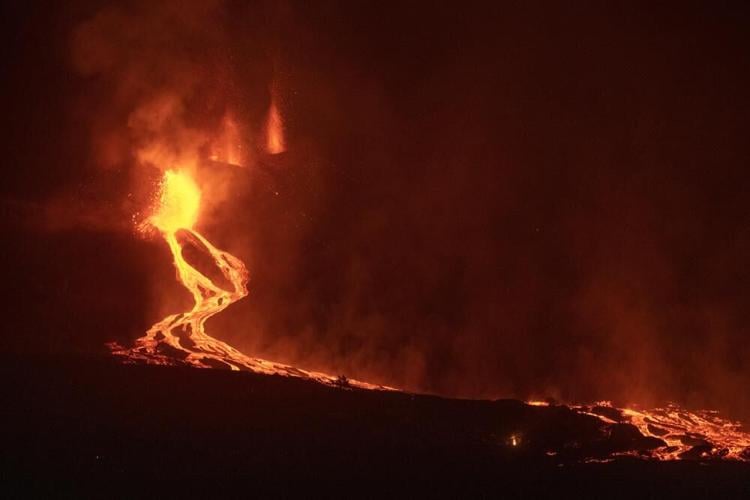
You may have already heard about the La Palma volcano which started erupting on September 19, but did you know it's *STILL* erupting?! The most recent update from Instituto Geografico Nacional, published on December 3, mentions ongoing seismic activity (earthquakes) and an ash cloud.

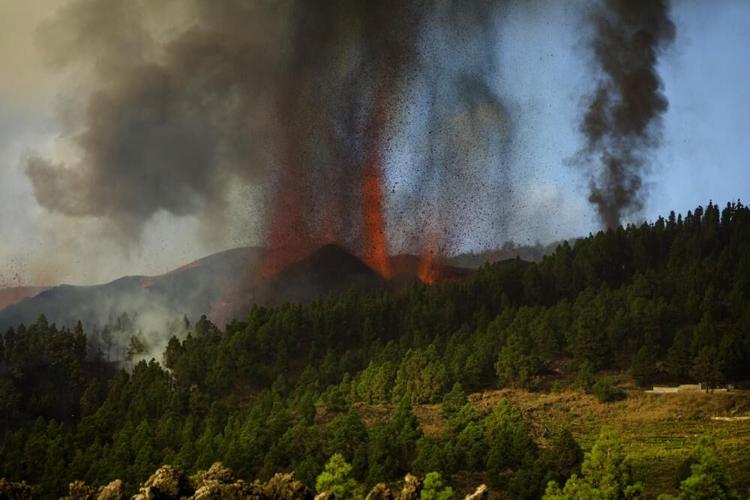
Lava flows from an eruption of a volcano near El Paso on the island of La Palma in the Canaries, Spain, Sunday, Sept. 19, 2021. Lava continues to flow slowly from a volcano that erupted in Spain’s Canary Islands off northwest Africa. The head of the islands' regional government says Monday he expects no injuries to people in the area after some 5,000 were evacuated. (Europa Press via AP)
La Palma is the northwestern-most island in Spain's Canary Islands, and there are actually two volcanoes on the island. The older, northern one is Caldera Taburiente, but we are focusing on the younger, southern one called Cumbre Vieja. Cumbre Vieja means "Old Peak" and is one of the most active volcanoes in the Canary Islands. It is a stratovolcano, which means it's been built up over time on layers of ash and lava.

Lava flows from an eruption of a volcano at the island of La Palma in the Canaries, Spain, Sunday, Sept. 19, 2021. A volcano on Spain's Atlantic Ocean island of La Palma erupted Sunday after a weeklong buildup of seismic activity, prompting authorities to evacuate thousands as lava flows destroyed isolated houses and threatened to reach the coast. New eruptions continued into the night. (AP Photo/Jonathan Rodriguez)
According to the Smithsonian Global Volcanism Program website, lava has covered more than 1% of the island and has reached the sea. At this point the eruption has forced thousands of people to evacuate and the lava has destroyed thousands of buildings. It has run over roads and is destroying the main revenue sources for the island. The Smithsonian went on to say this eruption is "characterized by Strombolian explosions and lava fountaining/jetting from multiple existing and new vents, advancing and sometimes branching lava flows, and daily ash emissions."

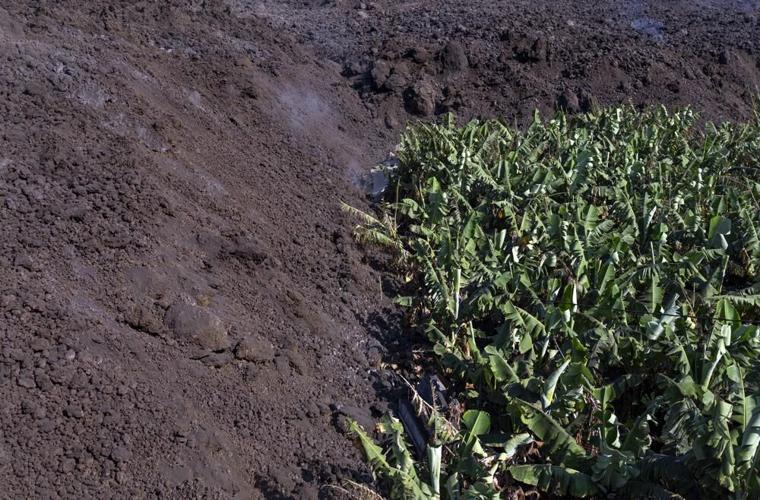
Lava from a volcano advances destroying a banana plantation on the Canary island of La Palma, Spain, Sunday, Oct. 31, 2021. The volcano that has been roaring on Spain's La Palma for over six weeks has destroyed the livelihoods of thousands of farmers and workers who grow and sell the Canary Islands banana. So far, lava flows have covered over 390 acres of land dedicated to the cultivation of the sweet yellow fruit that feeds 30% of the economic motor of the Atlantic island. (AP Photo/Emilio Morenatti)
Banana farms are one of the island's main sources of revenue and many have been destroyed by the lava flows. The volcanic ash in the air has also forced some flights to be canceled over the last two months and the airport closed for a short time. Tourism is the other major source of revenue for the island, and the airport appears to have opened back up on November 20. Only one death has been reported from this eruption.

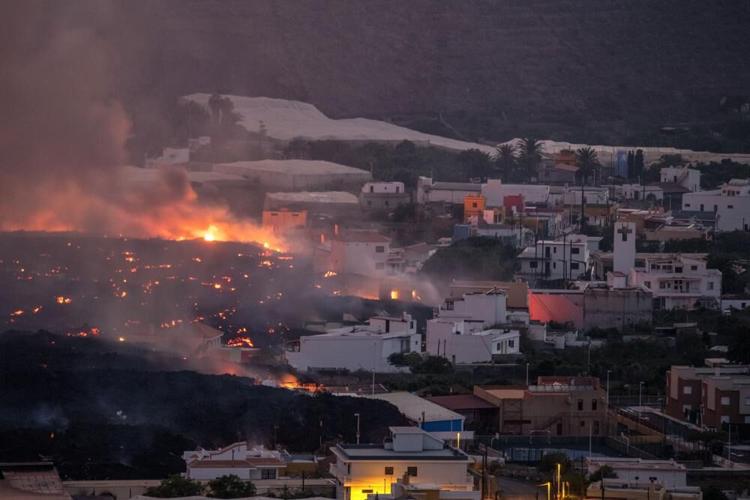
Lava flows from a volcano destroying houses at La Laguna neighbourhood on the Canary island of La Palma, Spain on Thursday Oct. 21, 2021. A second tongue of lava is expected to reach the Atlantic today and release more toxic gases into the atmosphere, an event which will lead to the home confinement of some nearby towns. (AP Photo/Saul Santos)
Thousands of earthquakes, most of them smaller tremors, have been recorded as part of the eruption. There have been several earthquakes with a magnitude above 4.0 since early October, according to data from Spain's National Geographic Institute. Before this current eruption, the last one for Cumbre Vieja was in 1971, more than 50 years ago. That eruption lasted more than 3 weeks.
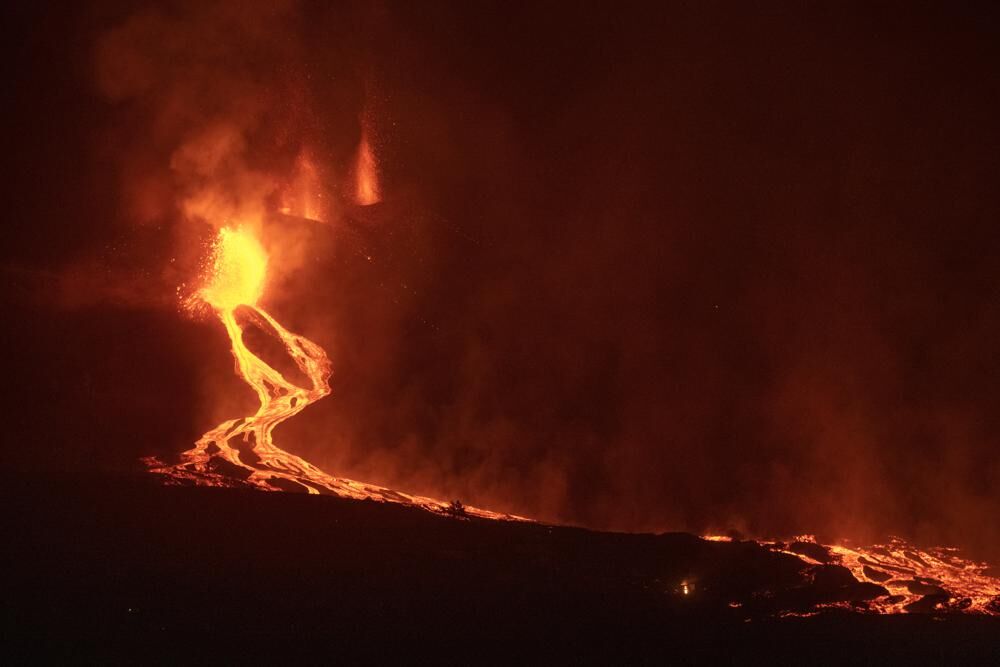
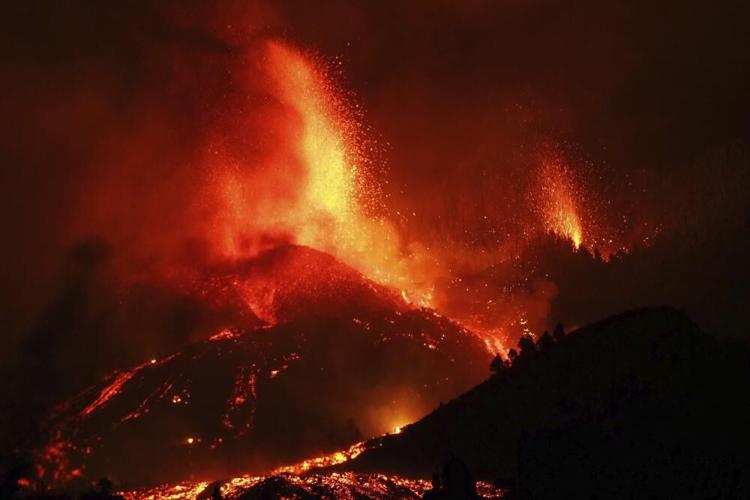
Lava flows from a volcano on the Canary island of La Palma, Spain in the early hours of Tuesday Sept. 28, 2021. A Spanish island volcano that has buried more than 500 buildings and displaced over 6,000 people since last week lessened its activity on Monday, although scientists warned that it was too early to declare the eruption phase finished and authorities ordered residents to stay indoors to avoid the unhealthy fumes from lava meeting sea waters. (AP Photo/Saul Santos)
Weather is causing additional concerns after the island saw some heavy rain last week. Rain like that can cause a "lahar" - a mudslide or debris-flow from the combination of the heavy rain and the volcanic rock/dust/ash that has settled.


