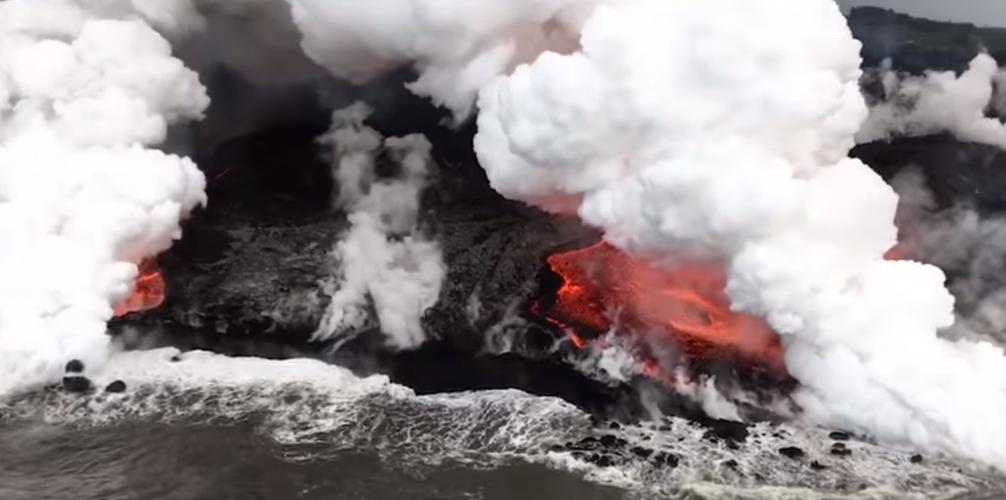
Remember this? To spark your memory, it was the Kilauea Volcano eruption in Hawaii. In May 2018, the volcano erupted setting off months of intense activity. Through August, incandescent lava from fissures spewed hundreds of feet in the air, and billowing ash clouds reached as high as six miles into the atmosphere! This week, scientists say they may have found what led to the eruption...rain!

Volcanoes erupt when molten rock called magma rises to the surface, and many factors, from the shape of the volcano to the composition of the magma, factor into the timing of eruptions.
The new NASA-funded study published this week in the journal Nature said it could have been prompted by months of heavy rainfall leading up to the initial eruption.
The rain caused changes to the water content in the Earth's crust and it triggered the eruption. It can also trigger other natural disasters like landslides or earthquakes. NASA says wet rock breaks easier than dry rock when under pressure from magma. That, in turn, forges pathways for magma to travel to Earth’s surface.

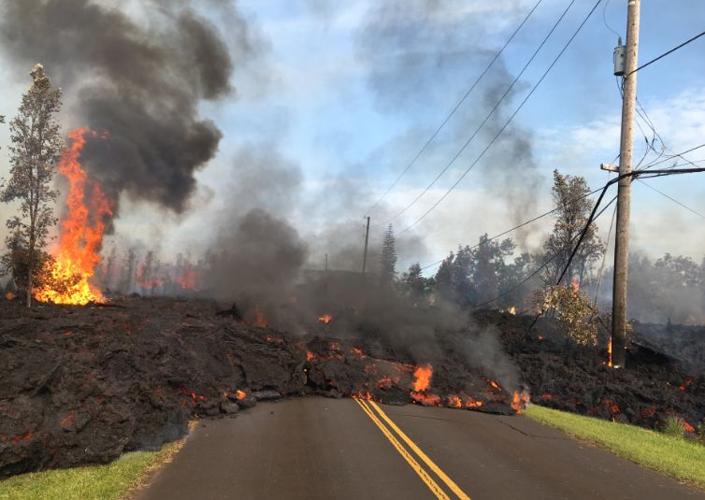
At 07:45 a.m. HST, (May 5), lava from fissure 7 slowly advanced to the northeast on Hookapu Street in Leilani Estates subdivision on Kīlauea Volcano's lower East Rift Zone. Image Credit: U. S. Geological Survey
The lead author of the study, Jamie Farquharson, argues that local rainfall patterns may contribute significantly to the timing and frequency of these phenomena at Kīlauea and perhaps at other volcanoes. Farquharson also said, as the climate changes, rainfall-induced volcanic activity could become more common.
While rainfall has been linked to small steam explosions and volcanic earthquakes, this is the first time that scientists attribute prolonged heavy rainfall to explain magmatic processes more than a mile below the surface.
Researchers used a combination of ground-based and NASA satellite measurements of rainfall for this study. For more information regarding the study click here.
Video Credit: USGS


