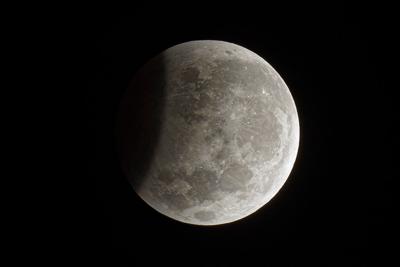

A lunar eclipse occurs when Earth gets in the way of the Sun’s light hitting the Moon. That means that during the night, the Moon fades away as Earth’s shadow covers it up. There are three types: total, partial and penumbral. You're probably most familiar with a total lunar eclipse. That's when Earth's umbra, the darkest part of its shadow, covers up all of the Moon's surface. Penumbral lunar eclipses happen when the Moon travels through the faint penumbral portion of Earth’s shadow. Finally, when only part of the Moon's surface is obscured by Earth’s umbra, it's known as a partial lunar eclipse.
A partial lunar eclipse is on the way, taking place overnight on November 18th and 19th, when the Moon slips into Earth's shadow for a couple of hours. Weather permitting, the eclipse will be visible from any location where the Moon appears above the horizon during the eclipse. Depending on your time zone, it'll occur earlier or later in the evening for you.

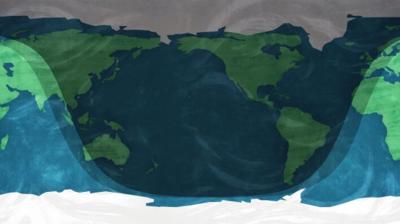
Map showing the visibility of the Nov. 18-19 partial lunar eclipse. Darker areas indicate greater visibility. Check local details for visibility near you. Credit: NASA/JPL-Caltech
Now that's a huge swath of the planet that'll be able to see at least part of the eclipse, including North and South America, Eastern Asia, Australia, and the Pacific Region. Here's the the timing of visibility for our area...
Penumbral Eclipse Begins: 1:02 a.m. EST
Partial Eclipse Begins: 2:19 a.m. EST
Greatest Eclipse: 4:03 a.m. EST
Partial Eclipse Ends: 5:47 a.m. EST
Penumbral Eclipse Ends: 7:04 a.m. EST
Partial lunar eclipses might not be quite as spectacular as total lunar eclipses, but they occur more frequently! Let's just hope clouds don't spoil the show. The WDRB Weather team will keep you posted as the event gets closer.