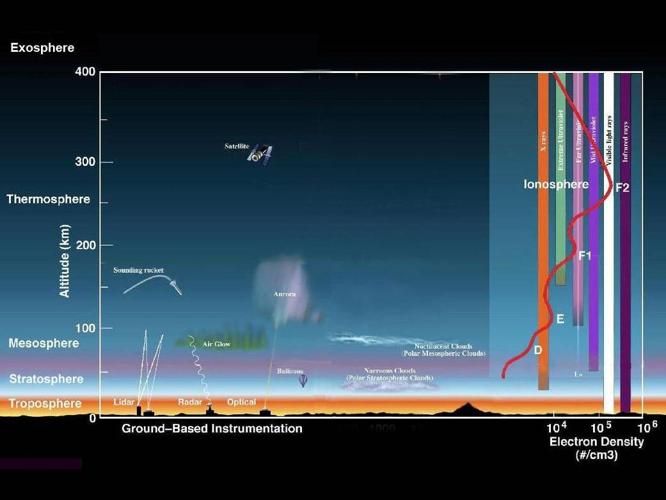

The TEMPO satellite launched yesterday from Cape Canaveral, Florida, on its way to space to explore pollution in Earth's atmosphere. NASA and the Smithsonian Astrophysical Observatory are working together on this project to study Tropospheric Emissions: Monitoring of Pollution (which is where the TEMPO acronym comes from). The troposphere is the layer of the atmosphere where weather happens, the layer closest to the surface of the Earth.

Image Credit: NASA/Goddard
The TEMPO instrument will look at where pollution is being produced and how it moves across the continent. This is the first time we will be able to get hourly observations (during daylight hours) of atmospheric pollution over North America at such good resolution. According to Smithsonian Magazine, "The satellite’s continental coverage will also be in tremendous local detail, with a spatial resolution of four square miles, representing an enormous upgrade from current satellite capabilities of roughly 155 square miles."

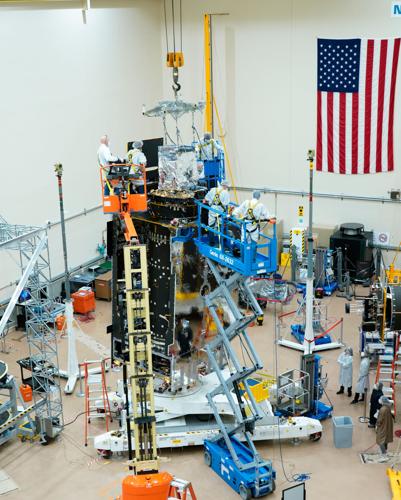
The TEMPO instrument at Maxar being integrated with the spacecraft IS-40e. Image via: Smithsonian
The technology in use before TEMPO took one observation in the middle of the day to get a perspective on the current pollution level. Without being able to study the movement, scientists have been missing important data in prediction how air pollutants (like smoke from wildfires) will move and affect different populations. This will also provide more insight into how weather dictates this movement.
It will be in geostationary orbit, like many weather satellites, more than 22,000 miles above our heads and will still be able to see air pollution levels changing by the hour! TEMPO will specifically be measuring levels of ozone, sulfur dioxide, aerosols, nitrogen dioxide, and formaldehyde in the lowest level of the atmosphere. It is the first instrument to go up to space from NASA's Earth Venture Instrument program which Smithsonian Magazine says are "small, targeted science investigations designed to complement the agency’s bigger research missions." You can click here to see the mission brochure and learn more about the technology onboard this new satellite.