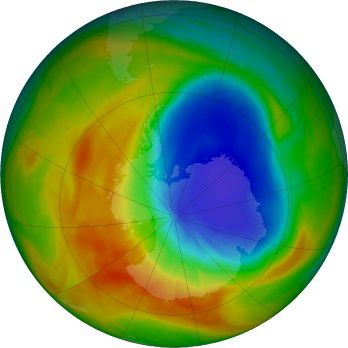
The hole in the ozone layer is shrinking according to scientists at the European Union's Copernicus Atmosphere Monitoring Service (CAMS)! In the 1970s the hole really started to grow, so in the 1980s legislation was put in place to protect the atmosphere. BBC explains, "chlorine and bromine-containing chemicals released by human activity have unbalanced the process, resulting in a loss of ozone that is at its greatest in the Antarctic spring in September/October." The image below from NOAA Earth System Research Laboratory Chemical Sciences Division explains why the size of the hole varies by season.

The Weather Channel adds, "The Montreal Protocol, which has been ratified by 196 countries and the European Union, monitors the production of these chemicals that were commonly found in aerosol sprays, refrigerators and air conditioning units." The United States ratified the Montreal Protocol in 1988. The video below from NASA's Ozone Watch shows how the size and position of the ozone hole has changed since the beginning of July. You will also notice the hole is off center, not directly over Antarctica like normal.
The size of the hole fluctuates during the year, so scientists are comparing September levels to normal and past September levels. This year the hole is about 1.9 million square miles, the smallest it's been in three decades. In 2018 that number was 7.7 million square miles, and in 2017 it was 3.9 million square miles, roughly the size of the United States. And that's why scientists caution too much optimism. This much variation in the numbers from year to year doesn't necessarily mean it really is shrinking long-term. We need to see the size readings next year before drawing conclusions.
What is ozone?
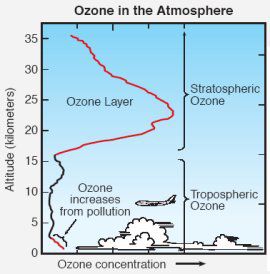
According to airnow.gov, "Ozone (03) is made naturally in the atmosphere when three oxygen atoms join together to form a colorless gas." Down here at the surface of the Earth where we live ozone is not good, but high up in the atmosphere it is good; the image below from airnow.gov shows this difference.
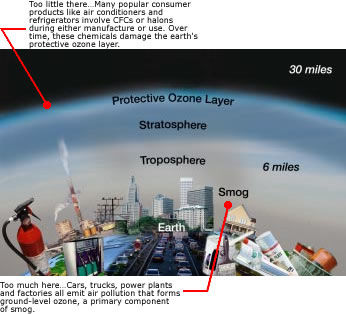
Ozone is the layer in the atmosphere that protects us from the sun's harmful UV rays. This layer is anywhere form 10 to 30 miles above our heads and acts like a sunscreen for the planet (see the airnow.gov image below for reference). The problem is not that a gaping hole has opened in the ozone layer. The "ozone hole" is a large area where that layer is too thin to be as helpful.
Banner image credit: NASA