

Daylight Saving Time starting and ending always sparks debate about changing clocks and the necessity of a time change. You can't actually lose or gain an hour. It's just a matter of how we measure time and daylight during the changing seasons. But what if we didn't change the clocks at all?
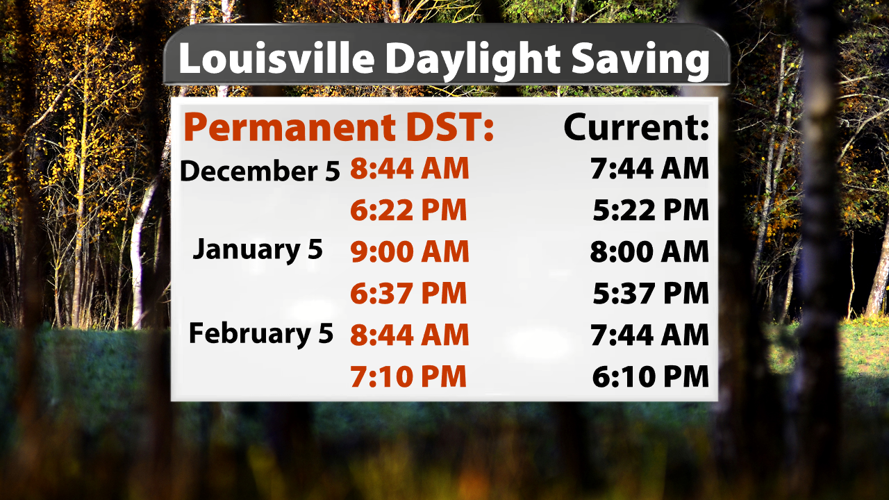
In Louisville on March 8th, the first day of Daylight Saving Time in 2026, the sun rose at 8:04 AM and set at 7:38 PM. On November 1st, Daylight Saving Time ends, so the sun will rise in Louisville at 6:28 AM and set at 5:44 PM... unless the bill designed to end the changing of the clocks actually becomes a law. If that happens, the sun will rise on November 1st at 7:28 AM and set at 6:44 PM. Here's a look at how it will affect other the sunrise and sunset times of other dates for Louisville during the winter months.

That means there will be a lot more morning commutes completed in the dark during December, January, and February. But later sunsets will be nice for those running errands during the evening. With pros and cons to both options, it's no wonder that there's so much disagreement surrounding this potential change.
And in case you were wondering, some parts of Michigan, North Dakota, and Montana won't even have sunrise until almost 10 AM. That's wild!


