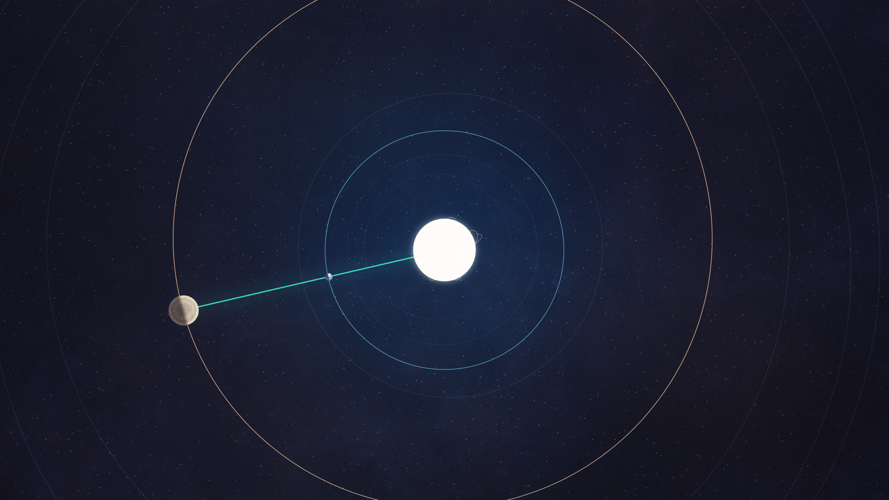

January 10, Jupiter will be at its most brilliant of the entire year!
This night, Jupiter will be at what's called "opposition," meaning that Earth will be directly between Jupiter and the Sun.

In this alignment, Jupiter will appear bigger and brighter in the night sky than it will all year - talk about starting off the new year bright!
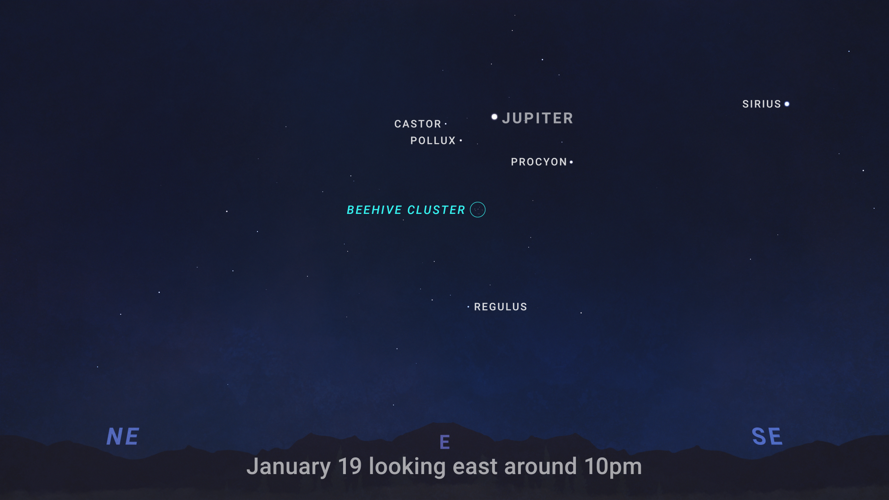
To see Jupiter at its best this year, look to the east and all evening long, you'll be able to see the planet in the constellation Gemini. It will be one of the brightest objects in the night sky (only the moon and Venus will be brighter)
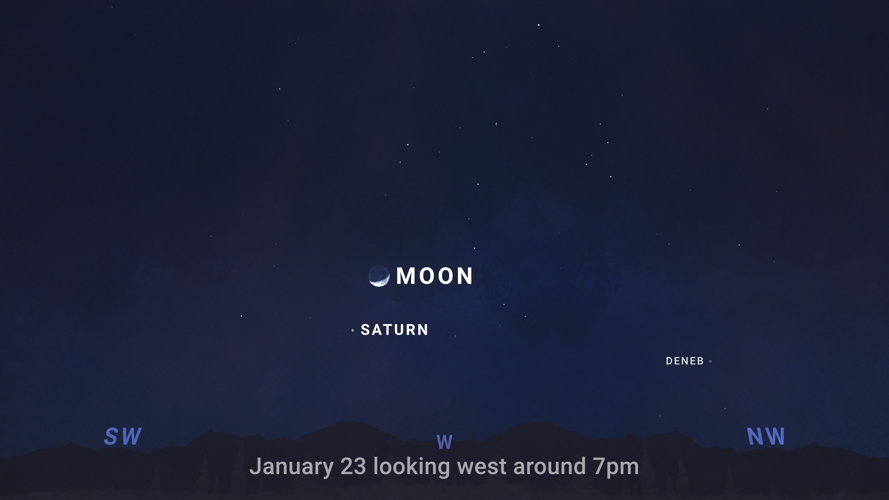
Saturn and the Moon will share the sky on January 23rd as part of a conjunction!

A conjunction is when objects in the sky look close together even though they're actually far apart.
To spot the pair, look to the west and you'll see Saturn just below the moon, sparkling in the night sky.
The beehive cluster will be visible in the night sky throughout January!
The beehive cluster, more formally known as Messier 44, or M44, is made of at least 1,000 stars
It's an open star cluster, meaning it's a loosely-bound group of stars. There are thousands of open star clusters like the beehive in the Milky Way Galaxy!

NASA/JPL-Caltech
To see the beehive cluster, look to the eastern night sky after sunset and before midnight throughout the month - especially great nights to spot the cluster are around the middle of January when the cluster isn't too high or low in the sky to see.
With dark skies you might be able to spot the beehive with just your eyes, but binoculars or a small telescope will help.
NASA Jet Propulsion Laboratory


