

LOUISVILLE, Ky. (WDRB) -- With two legislative days remaining, the Kentucky House and Senate are at odds over a bill creating statewide rules for data collected by license plate cameras.
Sen. Jimmy Higdon (R-Lebanon) said his Senate Bill 129 appears unlikely to pass when lawmakers return to work Wednesday and Thursday. He declined to say the measure is dead, but added: “I don't see moving the bill. I think we still have a lot of work to do.”
After easily clearing the Senate and advancing from a House committee, SB 129 was amended by House Speaker Pro Tem David Meade (R-Stanford) on the House floor to include his co-sponsored bill on self-driving vehicles that had stalled in the Higdon-chaired Senate Transportation Committee.
“That kind of muddied the water a little bit,” Higdon told WDRB News.
He said legislation on autonomous vehicles and license plate cameras, which increasingly are being used by police departments, homeowners’ associations, local governments and others in Kentucky, seems destined for hearings during the interim session that runs from June to December.
That’s when lawmakers typically discuss issues and seek input from various sides before filing legislation during the regular meetings of the General Assembly that start each January.
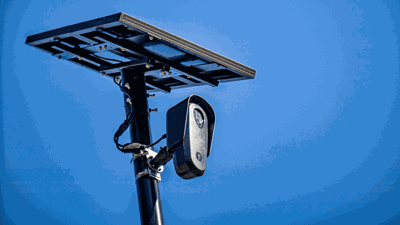
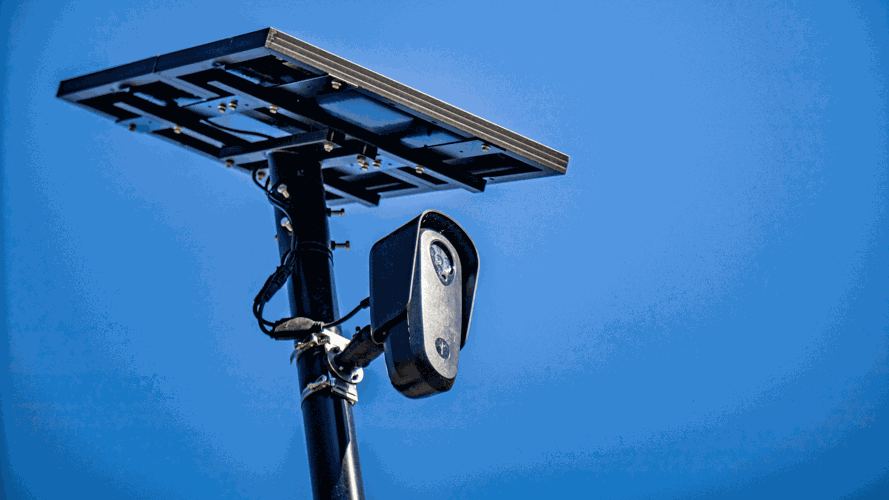
The cameras, also known as automated license plate readers, can be mounted to police cars, streetlights, overpasses and other infrastructure, or simply stand alone. They capture not only license plates, but track how often a vehicle passes by and show unique features like stickers and bike racks.
Law enforcement and other advocates say the technology gives police an extra investigative tool and can help quickly find abducted persons or stolen cars, for example, because of links to databases like the FBI's National Crime Information Center.
But the growing use of the cameras has drawn criticism from civil libertarians and privacy groups who contend that police are gathering data about people not under investigation, while private entities like homeowners’ associations could keep tabs on neighbors’ comings and goings.
Meanwhile, the policies on data retention and other guardrails vary by police department in Kentucky, according to a WDRB investigation last fall.
Higdon’s initial bill limited the use of the cameras to police departments and other law enforcement agencies, along with local governments and homeowners’ associations. Those entities wouldn’t be allowed to keep license plate data for longer than 90 days unless it’s being used in a felony prosecution or is subject to a subpoena.
The measure later was broadened to add administrative investigations and other evidence to the list of exemptions. The Kentucky Transportation Cabinet also would be allowed to keep data for longer than 90 days as part of toll collections, and other entities were added: School districts, charter schools, colleges and universities and others, including companies and private citizens.
SB 129 also clarified that data from the cameras couldn’t be sold, or made available except to law enforcement agencies, in response to a subpoena, to the National Insurance Crime Bureau or as needed for toll collections.
On the House floor, Rep. John Blanton (R-Salyersville) amended the bill to let a host of private entities avoid the data retention and other requirements for things like debt collection, parking enforcement, traffic research and commercial real estate development, among others.
Higdon’s initial bill was endorsed by Flock Safety, the Atlanta-based company whose cameras are widely used in Kentucky.
Flock spokeswoman Holly Beilin said “common sense state legislation is a good idea to ensure that ALPR technology is used appropriately, for public safety only, and while protecting the privacy rights of Kentuckians. We have consistently supported ALPR legislation governing acceptable use and data retention limits across the country.”
In a statement in February, she noted that Flock’s own data retention limit is 30 days, or much shorter than the 90 days proposed in the legislation. But images can be downloaded by police agencies, for instance.
Higdon said he hopes the interim session will let lawmakers craft a bill that takes into account many sides of what’s become a fast-evolving technology.
“My intention was that law enforcement can use them and that information couldn’t be shared,” he said. “And I figured out real quick that there's more to it than that.”
Copyright 2023 WDRB Media. All rights reserved.


