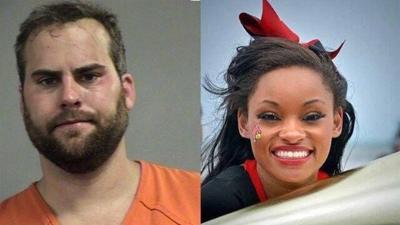


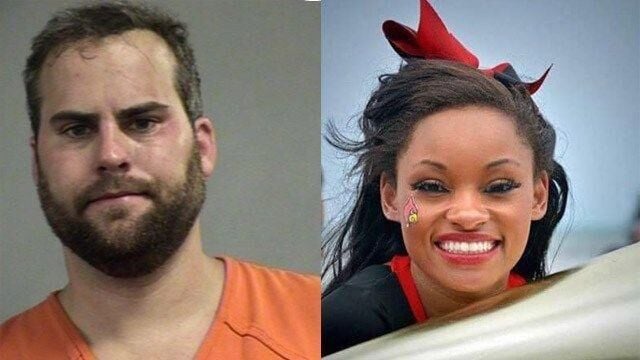
LOUISVILLE, Ky. (WDRB) – With less than two months before Bradley Caraway is scheduled to stand trial for murder in the drunken driving death of a former University of Louisville cheerleader in 2016, defense attorneys attempted to raise doubts in what will be one of their main defenses.
Who was driving the vehicle when Shanae Moorman was killed?
From the day of the wreck in August 2016, police have said Moorman was a passenger in Caraway’s car, which crashed and flipped on the ramp from Interstate 64 East to the Gene Snyder Freeway early on a Saturday morning.
Moorman was thrown out of the vehicle and pinned underneath.
Caraway was found walking down a ramp from the Gene Snyder Freeway onto Taylorsville Road, about 2 miles from the scene of the crash.
"The forensic examination puts him as the driver of that vehicle," said Lt. Joe Seelye, commander of the Louisville Metro Police Traffic Unit has said.
But defense attorneys on Wednesday questioned experts who are set to tell a jury Caraway was driving. Defense attorneys are expected to sow doubt about who was driving, given that no one saw the wreck, neither were found in the vehicle and both had been drinking.
Dr. Bill Smock, a former medical examiner and physician trained in forensic medicine who now works for the Louisville Metro Police Department, testified Wednesday that Caraway’s DNA was found in the windshield, and he had glass in his head.
In addition, Caraway had marks showing he had been wearing a seatbelt in the driver’s seat – and he was not ejected. An LMPD officer testified that the driver's seatbelt had marks indicating it was in use when the wreck occurred.
Moorman died of “positional asphyxia,” Smock testified, but may have been able to be saved if Caraway had pulled her out. Police said she had to be extricated by first responders and was pronounced dead at the scene.
In addition, Smock said Moorman, at 5 feet 2 inches, could not have reached the pedals from where the driver’s seat was positioned.
But defense attorney Rob Eggert pointed out that Smock now works for the police, making $300 an hour, was not at the scene immediately after the wreck, did not perform the autopsy on Moorman and could not say where her DNA was found, while pointing out some inconsistencies in his testimony.
For example, Eggert said Smock determined the shoes Caraway was wearing that night had the same dirt on them as his vehicle’s pedals.
“Are you a soil expert?” Eggert said. Smock said he did not remember saying that but admitted he was not a soil expert.
And Eggert questioned how he could know that Moorman might have lived if she had immediately been pulled from under the vehicle.
The defense’s aim is to limit some of Smock’s testimony, as well as others who will testify Caraway was the driver. The judge did not make a ruling and ordered both sides to submit briefs.
Caraway "fled the scene" and was seen by a police officer at about 6:45 a.m. walking on the ramp from Interstate 265 southbound to Taylorsville Road without a shirt or shoes, according to court records. He provided his driver's license, but refused to answer questions and asked for an attorney.
He has pleaded not guilty.
Caraway, whose blood-alcohol level was "at least" twice the legal limit in Kentucky, is scheduled to stand trial Aug. 29 on charges of murder, driving under the influence and leaving the scene of an accident.
Moorman, a graduate of Louisville Male High School, battled Cystic Fibrosis and used her disease to help inspire others, according to a family friend. She was known for her positive energy and enthusiasm, something she leaned on as a U of L cheerleader in college.
After the hearing, Lisa Mcgrew, a spokeswoman for the family, said "there is no closure. We have to walk in the court room and see him seven years. His family gets to walk out with him we don’t get that. She has missed so many important milestones. We just want to see justice and just want to know what happened to her."
Copyright 2023 WDRB Media. All Rights Reserved.


