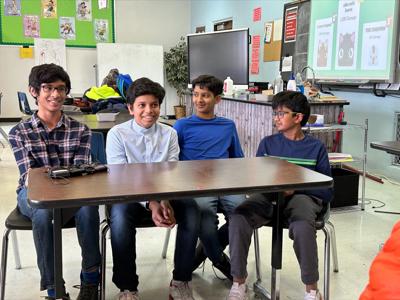


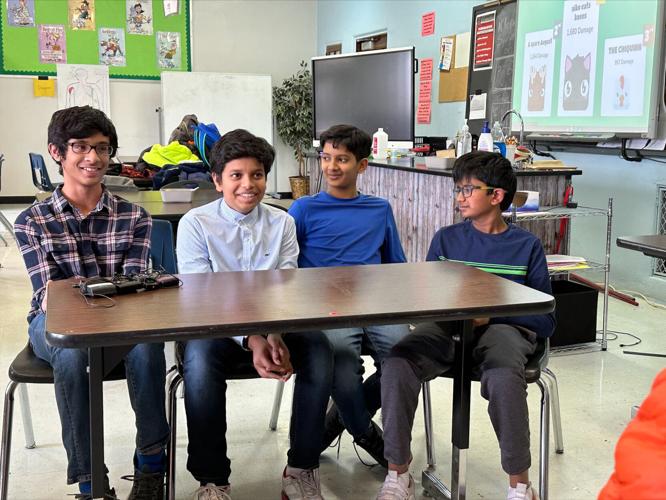
LOUISVILLE, Ky. (WDRB) -- Four Meyzeek Middle School students are working with NASA engineers.
The students have been conducting out of this world experiments in preparation for the NASA TechRise Competition.
It's an opportunity for students across the nation. After looking through hundreds of submissions, NASA chose 60 proposals, including one created by the students from Meyzeek.
JCPS | Four Meyzeek Middle School students are working with @NASA this year. At 6pm, you’ll get to hear them talk about their project! @WDRBNews @JCPSKY pic.twitter.com/o28J1Dukuv
— Molly Jett (@MolJett) February 2, 2023
Their teacher Jacob Holtgrewe submitted the students' experiment proposal to NASA last year.
"Most people that work for NASA have never been to space and have explored in the same way that we have. So, we're essentially living out those lives," Holtgrewe said.
After being picked, NASA sent the students a box of hardware to help them study sound waves in space.
"I was really happy, but we weren't all together when we were selected. My reaction was like really happy and my parents were really for me," said sixth grader Dhiraj Javvadi.
Javvad's teammates, Pratham Tippi, Agastya Mishra and Pramath Kodukulla, are seventh graders.
"It's really exciting, cause not a lot of people get this sort of opportunity to be chosen by NASA and I am really excited for like, the next few months," said Kodukulla.
The group said their goal is to put an ultrasonic sensor into space.
"We never have made like an actual like, prototype, or like design on paper," said Javvadi. "But, we have a good idea and we think we know what it's gonna look like."
Mishra was the one who thought of the idea while in robotics club.
"This could potentially be useful for devices and instruments that rely on sound," Mishra said. "One day, I was just there and I was kind of thinking about the project, and I saw the ultrasonic sensor and it kind of just captured my imagination, what we could do for it. So, then, I talked to my teammates and they added more to the idea about how we can measure the speed of sound."
Collectively, the students have spent nearly 100 hours outside of class working on their project.
"We're able to be (triumphant) and we can, you know, help out with multiple people's lives," said Tippi.
NASA engineers are also supporting them through Zoom.
"It's going to be a leg up for them," said Holtgrewe. "They're gonna be able to draw from this for the rest of their lives and obviously hone some new skills and also show off some skills that they've already got."
Later this spring, the students will be sending their finalized project to NASA, which will send it into space.
Copyright 2023 WDRB Media. All Rights Reserved.