(InvestigateTV/WDRB) — Across America, big-time college athletics is a $12 billion industry, in most cases, living beyond its means.
Ticket sales, TV deals, sponsorships and other revenue sources don't bring in enough money to cover the bills.
So, universities are filling sometimes massive gaps from their general funds and charging students millions of dollars in mandatory fees to support athletics.
Last year, public universities that are members of the Football Bowl Subdivision, or FBS, collectively took in more than $2.1 billion from students and their general funds to pay for sports, InvestigateTV found.
Critics such as the Knight Commission on Intercollegiate Athletics, the Drake Group and others have long been saying this model is unsustainable and new rules that require schools to pay their athletes more than $20 million in revenue sharing will put even more pressure on the budgets.
"Unlike the rest of the U.S. economy, where there's a lot of cost discipline that comes from the marketplace, there is no such discipline in college sports," said Andrew Zimbalist, a Smith College professor and sports economist. "The reason is that college sports administrations in different schools don't have stockholders. They don't have people who are electing a board of directors and charging them with making profits."
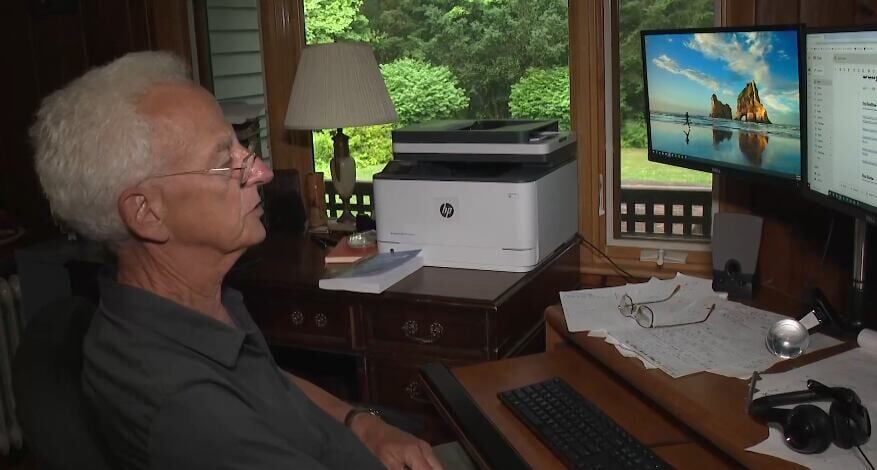
Andrew Zimbalist is a sports economist and professor at Smith College. He has studied collegiate athletics' finances for decades.(InvestigateTV)
Since 2005, the NCAA has required universities to supply financial disclosures that detail athletic expenses and revenues.
Through InvestigateTV public record requests and data supplied by the Knight-Newhouse College Athletics Database, InvestigateTV analyzed the most recent five years spending of the 109 public schools that have been members of the FBS since the 2019-2020 school year.
Since then, the FBS has added 13 new public universities to its membership, but they are not included the analysis.
Last year, only 10 athletic departments operated without financial backing from student fees or their universities: Arkansas, Kansas State, LSU, Mississippi State, Nebraska, Oklahoma, Oregon, Penn State, Purdue and Texas, InvestigateTV found.
On the flip side, California, Cincinnati, South Carolina and South Florida each sent more than $40 million from student fees and their universities to support athletics.
At 14 other schools – all from the smaller non-Power 4 conferences – the money from students and university coffers represented at least two-thirds of athletic budgets. Troy led the FBS in the percentage of these subsidies it received at 82%.

College athletics is big business, with college students and university general funds providing more and more financial support.(InvestigateTV)
Since 2019, the total amount of student fees and general funds that flowed into athletics increased 40%.
"College athletics are in crisis," Sen. Maria Cantwell, D-Washington, said during a hearing on the state of big-time college sports. "The system is broken and unsustainable."
The churn of coaches takes its toll on the bottom line
The bi-partisan trio of Cantwell, Sen. Ted Cruz of Texas and Rep. Michael Baumgartner, also of Washington, are pushing for reforms to, among other things, rein in spending.
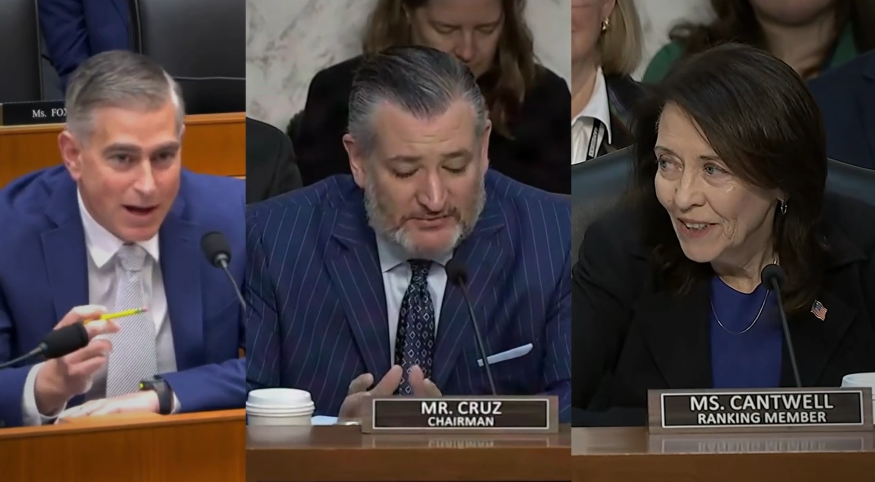
A bipartisan trio of lawmakers - Rep. Michael Baumgartner, D-Washington; Sen. Ted Cruz, R-Texas; and Sen. Maria Cantwell, D-Washington - are leading Congressional efforts to reform college athletics. (InvestigateTV)
But that means tackling the behemoth of big-time athletics: football, its unequal share of the expenses and its ballooning coaching salaries and buyout clauses.
Overall, football accounts for 30% of all athletic spending among the FBS's public schools, which also host up to two dozen or so other sports teams.
At Colorado State, football eats up half of the athletic department's budget. At six other schools – including Clemson, Florida State and Washington – football accounts for more than 40% of all athletic spending.
For every school chasing gridiron glory, only one hoists the championship trophy each year. And each year, lying in its wake, is a trail of coaches who were fired for not winning enough.
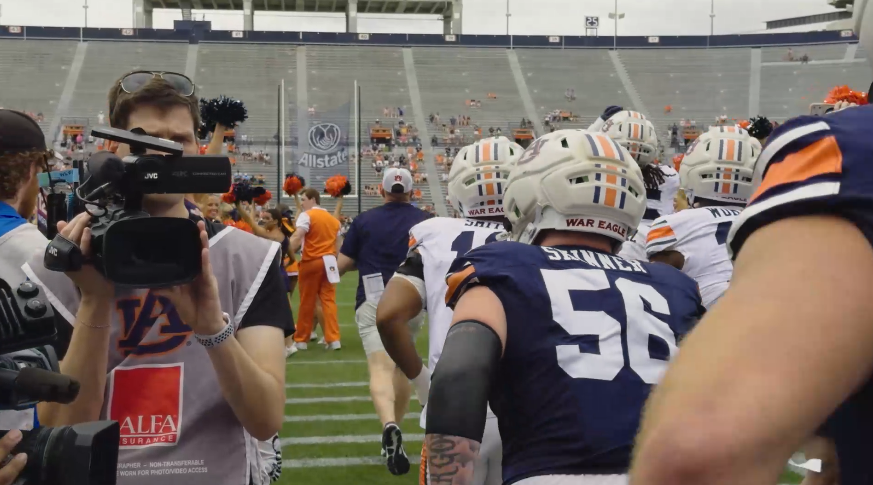
The Auburn Tigers take the field for spring practice with a new head coach - their fourth since 2020.(InvestigateTV/Owen Hornstein)
No school has cycled through head coaches more in recent years than Auburn, starting in 2020 with the firing of Gus Malzahn.
This spring, the Tigers' latest coach – the third since Malzahn's firing – took to the field with his new team for the annual A-Day Game.
"I think they made a good choice with (Alex) Golesh," said Vincent Echols, the father of tight end Jonathan Echols. "I think he'll change the program, get it back on a winning program."
But even as fans are eager for a fresh start, some complained about the amount of money Auburn has spent in severance payments to the three previous coaches - $52 million in total.
"I think the people who hired them should be at fault and have some type of financial loss for hiring them. Someone has got to be accountable," said fan Mary Williams.
Since firing Malzahn, the university also has raised mandatory student fees for athletics 24% to more than $7.3 million last year.
"I think anyone that has common sense can probably look at it and go, 'Yeah, we need to at least make some changes to it because that's an exorbitant amount of money,'" said another Auburn fan Hunter Mayton.
Across the all schools, reliance on student fees has increased 13% in the past five years, matching the percentage increase in the average cost of in-state tuition.
But Arkansas State has more than doubled the amount of money it takes from student fees and Florida has more than tripled its dependence on students.
"Happily, for university presidents, they don't have to look students in their eyes," the economist Zimbalist said. "They're mostly responding to the board of trustees. If there are 135 other schools out there doing basically the same thing, then it becomes part of the culture. It becomes accepted."
Undergraduate students at Old Dominion, for example, each paid about $1,900 in athletic fees, which totaled more than $33 million given to sports last year. At the end of a 4-year collegiate career, these students likely contributed more than $7,600 to support athletics.
According to the most recent data available, the National Center for Education Statistics estimates that nearly 60% of students who graduated during the 2019-2020 school year with an undergraduate degree from a 4-year public university took out at least one loan to pay for college.
For some students, that means they are using student loans to unwittingly fund athletics. In addition, tuition collected from students also feeds universities general funds as do tax dollars.
There has been a 56% increase in the past five years of general funds moving to athletics departments' budgets.
At some schools, the percentage increase in general fund support is staggering.
Reigning national football champion Indiana has seen a 10-fold increase in the amount of money the university is sending to athletics. It now stands at nearly $25 million.
Critics say multi-million dollar pay days 'not a societal benefit'
For decades, Indiana football was long considered one of the losingest programs in history.
But then came a stunning turnaround with a new coach.
Curt Cignetti debuted as Indiana's head football coach in 2024, and the Hoosiers made it to the College Football Playoff. During the middle of that season as Indiana's wins mounted, the university signed a new deal with the coach, doubling his annual salary to $8 million.
In the middle of the next season, the university penned another new deal for him, giving him an annual salary of $11.5 million and making him one of the highest paid college football coaches.

Football takes an outsized amount of athletic departments' budget due, in part, to large coaching salaries and severance payments when those coaches are fired. (InvestigateTV)
Last year, eight other coaches received more than $10 million in annual compensation. The only coaches earning more than Cignetti were Georgia's Kirby Smart ($13.6 million), Ohio State's Ryan Day ($12.1 million) and Oregon's Dan Lanning ($11.6 million).
Overall, head football coaches' salaries have increased 40% in the past five years.
It's these salaries that have caught the attention of Congress.
Rep. Baumgartner, a Washington Republican, last year introduced a bill to specifically rein in coaches' compensation.
"There's not a lot of societal benefit of a football coach making over $10 million a year," Baumgartner said at a Congressional hearing on the issue. "What you want is competitive balance."
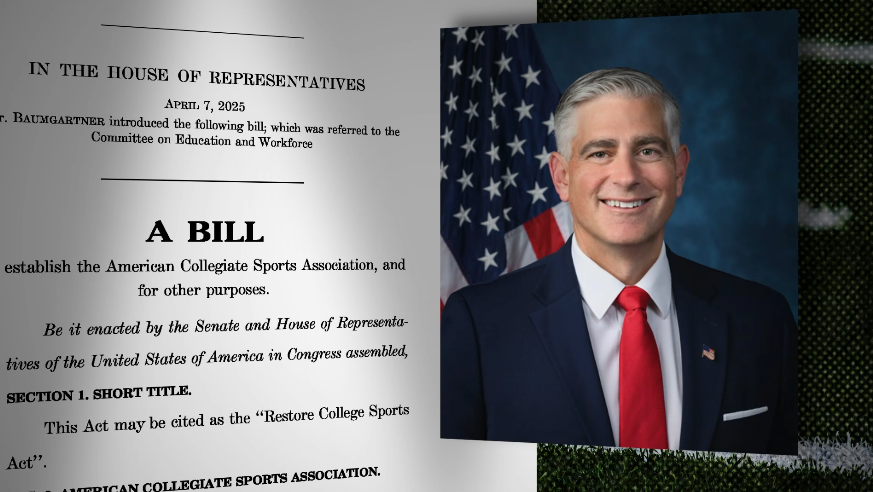
His bill would cap coaches' salaries at 10 times the average cost of attendance. It also would apply to private schools if their students receive federal student loans. Private schools generally do not make their coaches' salaries public.
But Baumgartner's proposal would reduce every single FBS coaches' salary, some by millions. Based on NCAA data from last year, the highest paid coach at a public FBS school would make only about $450,000 if the bill became law.
But these days, it's not just head football coaches who are cashing in.
Football's other millionaires
Some assistant coaches now are making millions.
InvestigateTV requested the most recent coaches' contracts from the 117 public universities that now make up the Football Bowl Subdivision and analyzed the contracts of the offensive coordinators, defensive coordinators and team general managers from the 78 schools that complied with public record laws.
Overall, these 169 assistants will earn more than $108 million this year, InvestigateTV found, contributing to the overall 33% increase in football staff salaries in the past five years.
Contracts show that at least 42 assistant coaches will earn more than $1 million this year – all are employed at schools that are members of the Power 4 conferences – the ACC, Big 10, Big 12 and SEC.
Those coaches earn more than 18 FBS head coaches, most of whom are members of the smaller, non-power conferences such as Conference USA or the MAC.
For example, those million-dollar assistants earn more than Bowling Green head coach Eddie George, a Heisman Trophy winner and former NFL star. He was paid about $850,000 last year.
At least six schools – Alabama, LSU, Michigan, Ohio State, South Carolina and Tennessee – pay coordinators more than $2 million.
Ohio State's defensive coordinator Matt Patricia is the highest paid assistant coach among the schools that provided assistant coaches' contracts. He has a three-year deal that pays him $3.75 million annually.
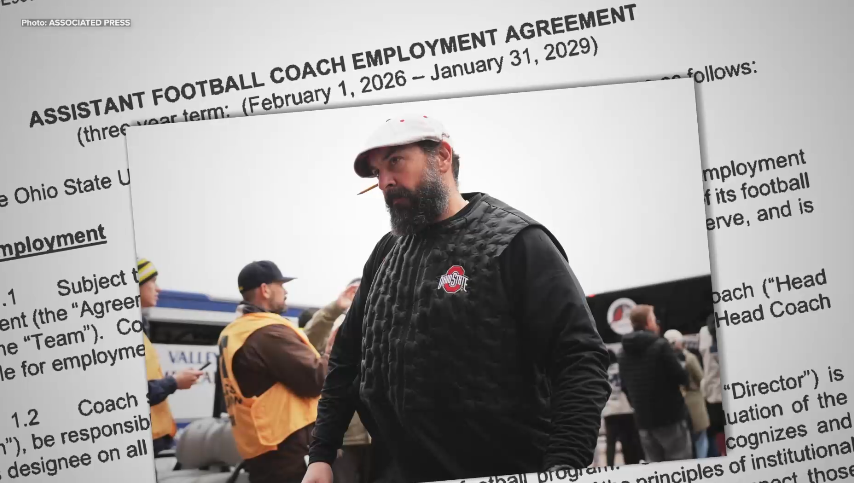
Patricia earns more than 52 FBS head coaches.
LSU's defensive coordinator Blake Baker is the second highest paid at $3 million. The Tigers' offensive coordinator Charlie Weis Jr.'s contract with LSU guarantees that he will always be the highest paid offensive coordinator in the SEC conference.
This year, Weis will earn $2.5 million.
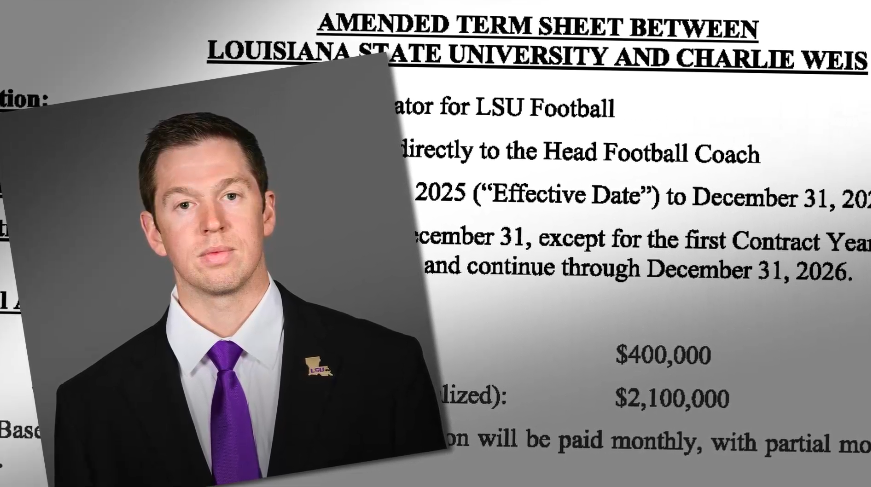
At least 64 have buyout clauses that will pay them if they are fired for poor on-the-field performance. But many of the contracts have "mitigation clauses," requiring the coach to find work and offset the damages from the former school owes.
Most also can receive handsome bonuses if their football players meet academic requirements and/or reach championship games – falling in line with typical contract terms for head coaches.
LSU's coordinators each could receive a $150,000 bonus if the Tigers win the national championship.
Michigan's offensive coordinator could pocket $100,000 if the Wolverines finish the regular season with at least the fourth highest scoring offense in the Big Ten.
Even some smaller schools offer incentives. Troy defensive coordinator Dontae Wright would get a $42,621 bonus if the team appears in a College Football Playoff game.
The bill sponsored by Sens. Cantwell, a Washington Democrat, and Cruz, a Texas Republican, would establish a 20-member panel to study whether any sport should be subject to spending or cost limitations.
Neither Cantwell, Cruz nor Baumgartner were made available to talk about their sports' reform efforts.
But Zimbalist said a deep study is needed.
"What we have to decide as a nation is what it is we want colleges to do, and what it is that we want college sports to do. How do college sports fit into our higher educational system?" he said.
In the meantime, a new season is on the horizon, and expectations are high from Akron to Wyoming and at 137 other college campuses in between.
Coaches who don't win enough will be fired, and millions of dollars will flow to a new coach – an endless cycle creating a billion-dollar blitz in college athletics.
Methodology:
InvestigateTV requested the most recent financial records submitted to the NCAA by the 109 public universities that have been members of the Football Bowl Subdivision since at least the 2019-2020 academic year.
We also used NCAA financial disclosures and data from the Knight-Newhouse College Athletics Database to analyze expenditures and revenues..
Knight-Newhouse data also was used to collect financial data from the five schools that did not comply with our public records request for financial records: Alabama-Birmingham, Coastal Carolina, Georgia State, Georgia Tech and Louisville.
Temple and Pittsburgh, say the documents requested by InvestigateTV are not public records.
Delaware, Jacksonville State, James Madison, Kennesaw State, Missouri State, North Dakota State, Sacramento State and Sam Houston were not included in the analysis of NCAA financial data because they joined the FBS in the years after 2019-2020 academic year.
There now are 138 schools – public, private and the service academies – competing in the FBS.
We also requested the most recent employment contracts from the 117 schools that as of 2026 are members of the FBS for all members of the football staff who will be on the field for the upcoming 2026 season:
78 schools complied.
11 schools only provided their head coaches' contracts but six of those schools said that only the head coach has a signed agreement.
Penn State, Pittsburgh and Temple each said employment contracts are not public records.
23 schools did not comply with our request for employment contracts.
Copyright 2026 Gray Media Group, Inc. All Rights Reserved.


