


(InvestigatesTV/WDRB) — Bob Sklar is a vocal critic of his local government — and proud of it.
He exercises his constitutionally protected rights by speaking at town council meetings, recording police officers conducting traffic stops, and challenging the local police department’s budget and conduct in public forums.
Being the proverbial thorn in the side of those in charge does have consequences, however, Sklar said. For example, he said the town council adopted new official rules for public meetings because of him, such as time limits on public comment periods.
But Sklar said he also believes his unabashed opinion-sharing led to unwanted extra attention from local law enforcement.
North Manchester, Indiana may be a small town, but he said over time, he noticed it felt like a police officer began showing up wherever he went.
"I would come into town and all of a sudden he would be there," Sklar said of one officer with whom he’s filmed several interactions.
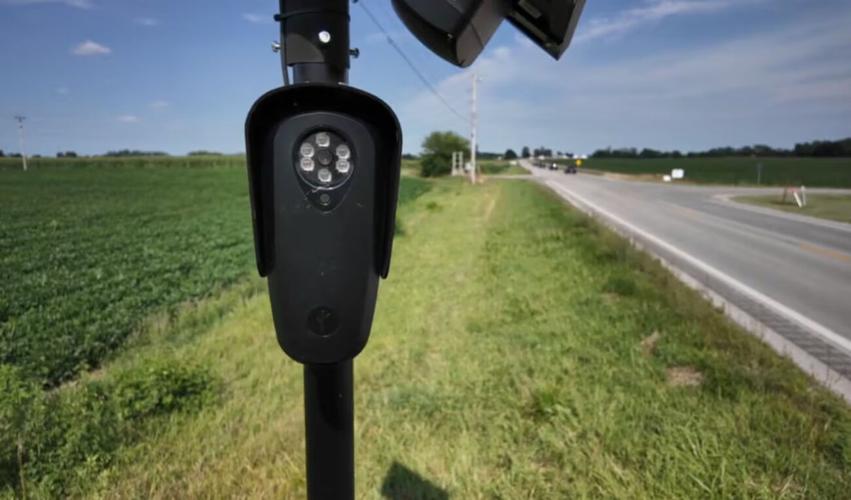
One day while out driving, he said he noticed one of the town’s Flock Safety automated license plate readers, and seeing the camera made him wonder if that was how officers seemed to always know where he was.

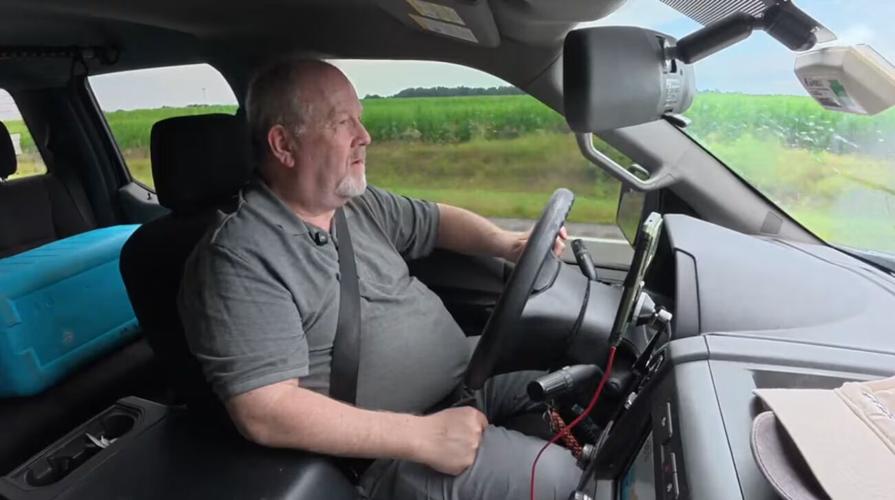
Bob Sklar drives through his rural Indiana community, where he said he noticed law enforcement appearing more frequently than expected. (InvestigatesTV)
True to his style, Sklar went to exercise his rights under Indiana’s public records law and requested information from the police department.
"They did have an alert on my vehicle," he said, but said the department would not disclose who had been tracking his license plate, for how long, or why.
The North Manchester Police Department is one of more than 6,000 agencies across 49 states that have access to Flock Safety’s database of information collected by more than 120,000 cameras.
As the network has generated criticism over the last few months, Flock has maintained it has adequate safeguards in place to balance privacy concerns with the investigative advantage the company said improves public safety.
"If it’s for a wanted person or something, I don’t have a problem with that," Sklar said.
But Sklar has not been charged with a crime, and he said his experience makes him feel he’s facing more peril, not less.
The law enforcement agencies from which the searches of Sklar’s tag originated told InvestigateTV the queries were legitimate, and in Indiana, there is no statewide law regulating the use of automated license plate readers like Flock cameras.
But InvestigateTV catalogued more than 70 cases from around the country where officers, deputies and employees of law enforcement agencies have been put on leave, fired, arrested and even convicted of misusing the Flock system — including cases of stalking and harassment.
"I’ve seen the abuse," Sklar said. "That doesn’t make me feel safe at all. It actually makes me scared."
'Locate'
Sklar said there was one officer he ran into the most, Griffen Miller with the North Manchester Police Department.
"I would come from Wabash on State Route 13 and all of a sudden he was there just outside of town, like he was waiting for me," he said. "And it started to be more than a coincidence."
While the records request he filed provided evidence supporting his hunch about being watched, Sklar discovered the extent of the surveillance through a website called HaveIBeenFlocked.com, which allows users to enter a license plate number and view aggregated search records the site has collected from law enforcement agencies, journalists and other sources.

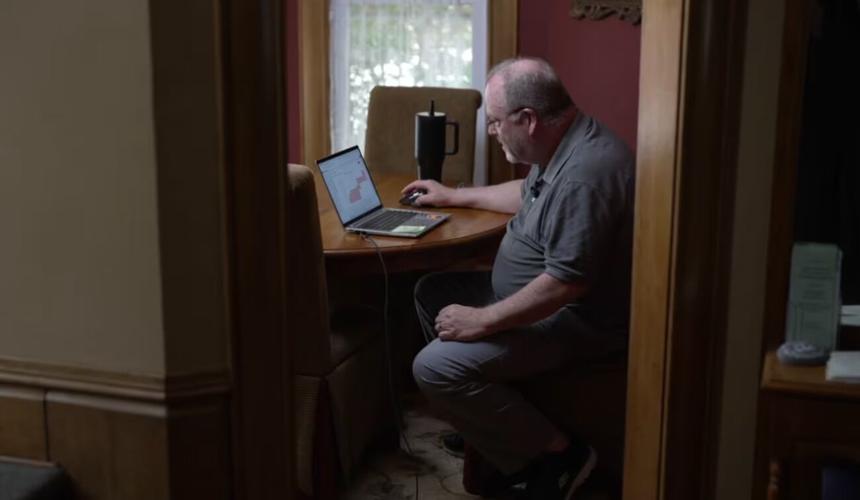
Bob Sklar looks at the results of searching his tag on HaveIBeenFlocked.com (InvestigateTV)
When Sklar entered his plate, he found 63 total searches logged against his vehicle from December 2024 through the end of 2025 — conducted by Miller and other officers from the North Manchester Police Department and the Wabash County Sheriff’s Office. InvestigateTV independently confirmed dozens of those searches through public records obtained from out-of-state departments whose audit logs were publicly available or through records requests.
"I was shocked, emotionally distraught when I saw the level of surveillance that that data revealed," Sklar said.
The searches were not just local license plate readers. Because North Manchester is connected to the national Flock network, a single search can query the data from thousands of other agencies and their combined pool of cameras.
"Minimum number of devices was 11,235, maximum, 98,000," Sklar said, reading the results of his search on HaveIBeenFlocked.com. "Almost 100,000 devices around the country. That’s scary. That is way scary."
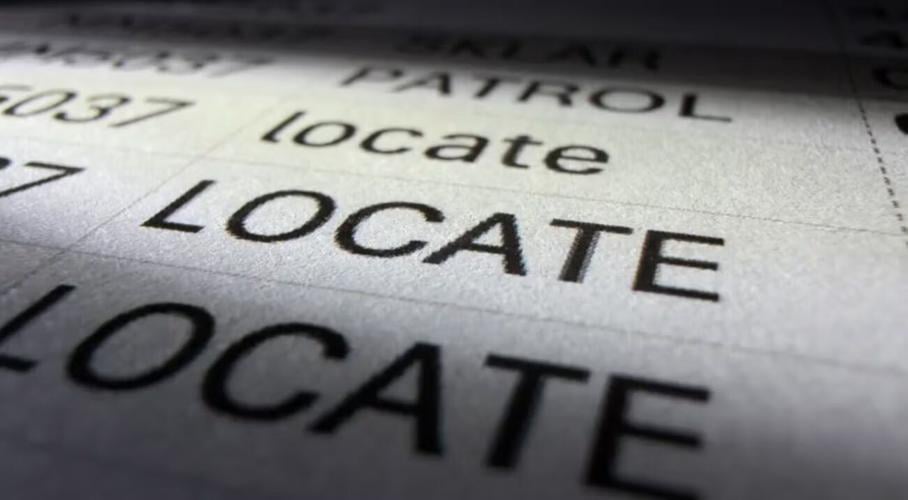
Flock requires officers to enter a reason for each search. The reasons logged for the searches of Sklar’s tag number included his last name, the word "PATROL" and the word "Locate," which the data indicates was used by Officer Miller numerous of times.

Records of Flock system searches showed officers used the word "Locate" in the required Reason field that must be populated for each search. (InvestigateTV)
In one of his filmed interactions with Miller, Sklar asked the officer about the searches, but Miller rebuffed the questions.
"You’re going to have to talk to somebody else about that. Don’t know," he can be heard saying in the cellphone video. "I don’t know what you mean by using it to track you."
Some searches for Sklar’s license plate were for periods going back 30 days from the time of the search.
One officer, Sklar said, asked him how his trip to Philadelphia was.
"How would you know that I was in Philly?" Sklar recalled wondering at the time, which was before he learned of the searches. "Now I know, because he ran me through Flock and was able to see everywhere I’d been. That scares the hell out of me."
InvestigateTV requested interviews with Miller and his chief, but neither agreed, and the North Manchester department had not provided additional comment at the time of publication.
The Wabash County Sheriff’s Office said in a statement that all of its searches of Sklar’s license plate were for a legitimate law enforcement purpose — "to ensure officer safety during traffic stops."
Records requests blocked; audit tool now gone
Sklar filed public records requests to find out who had placed an alert on his vehicle. The town acknowledged an alert existed but refused to identify the officer, citing officer safety. The sheriff’s office claimed all Flock data is exempt from disclosure under Indiana’s investigatory records exception.

North Manchester, Indiana has three Flock cameras, but the local law enforcement agencies in the community have access to the nationwide database, which collects data from tens of thousands of cameras. (InvestigateTV)
InvestigateTV was only able to confirm the searches for Sklar’s tag — and who made them — by looking at network audit logs from law enforcement agencies in other states. The logs capture every time that agency’s cameras were queried by another network. HaveIBeenFlocked.com draws the vast majority of its data from those logs.
Differing state laws determine whether these logs must be made public, and the transparency gap widened further after Flock recently changed what the logs display.
As of earlier this summer, logs of searches conducted by connected agencies on a department’s cameras no longer display the searching officer’s name, the license plate queried or open-text search reasons.
Flock told InvestigateTV that the omitted information is preserved with the originating agency, and that the changes came at the request of customer agencies.
"Flock updated the Network Audit log, which shows searches by other law enforcement agencies that an agency is sharing data with, to protect officer safety and active investigations," a spokesperson said in an emailed statement. "We identified a pattern of activists using publicly released audit data to identify undercover officers by name – publishing their contact information alongside details of active investigations. Nearly 200 law enforcement leaders raised this concern directly with our leadership, and we acted on it."
In a blog post published in June, Flock also noted that audit logs are not a legal requirement in most jurisdictions, but rather the company showing building safeguards into its license plate reader (LPR) system directly.
"Flock makes auditing the default because of our commitment to accountability and transparency, enabling the kind of oversight that some of LPR’s most ardent detractors actually call for," the post reads.
A pattern of misuse nationwide
The Flock blog post also says it is up to each community to define what appropriate use of the technology means — and the searches in North Manchester appear to be perfectly legal under current Indiana law.
But that’s not the case with more serious allegations of improper searches by police nationwide.
InvestigateTV identified more than 70 cases where law enforcement officers or employees were under investigation, disciplined, fired, or arrested for misusing the Flock database.
Many have been accused of looking up current or former romantic partners, family members or conducting other personal searches. Several have pleaded guilty or been convicted of stalking, harassment or otherwise taking advantage of their positions.
One police chief — Michael Steffman of Braselton, Georgia — was fired and arrested by the Georgia Bureau of Investigation on a stalking charge involving an ex-partner, then died by suicide while awaiting trial.
If you or someone you know is struggling or having thoughts of suicide, Call/Text/Chat 988 for help. Those experiencing domestic violence can call 1-800-799-SAFE for support.
Josh Thomas, chief communications officer for Flock Safety, acknowledged the misuse cases but emphasized that in several instances it was the company’s own audit tools that identified the misconduct.

Flock Safety Chief Communications Officer Josh Thomas. (InvestigateTV)
"These are people also being trusted today with a car, and a gun, tasers. They’re being trusted with a lot of very powerful tools. And in this particular example, our tool was the one that showed that they were doing something illegal, and they were held accountable," Thomas said. "I wish it never happened. But it did, and I’m thankful that we built the tools the way we did."
"Internal audits" were credited in the majority of the alleged misuse cases InvestigateTV reviewed.
At least four states — Washington, Oregon, Kentucky and Connecticut — have passed legislation in the last year regarding automatic license plate readers that require some kind of auditing, and some municipalities have as well.
Thomas said the company welcomes legislative or regulatory action.
"If there’s some part of this the city doesn’t like, they should just regulate that stuff. Outlaw it. Make rules about it. Change it. And we’re happy to oblige by those things," Thomas said.
Sklar said stronger rules and better oversight are exactly what is needed — or the cameras should go.
"We’re just seeing so much abuse because it’s not regulated," Sklar said. "We need legislation to control this stuff, or we got to get rid of the Flock cameras."
He said he has no intention of leaving North Manchester, where his wife’s family has lived for five generations, but that he now takes back roads on his way in and out of town.
"A little out of the way," he said, "but it avoids triggering the camera."
When asked about police departments potentially using Flock to track government critics, a spokesperson responded by email on Aug. 10, 2026:
"Local agencies own and control their own data, and each agency independently sets the policies governing how the technology is used, including which offense types qualify for a search. Flock requires every search to have a documented offense type, and every search is permanently logged and auditable. Questions about how a specific department has used the platform are best directed to that agency, since they are the ones who set and enforce their own use policies."
Copyright 2026 Gray Media Group, Inc. All Rights Reserved.


