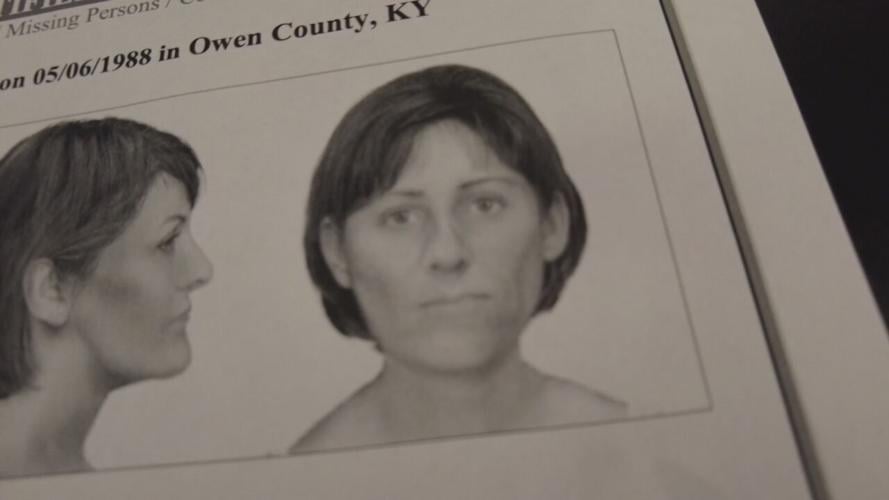
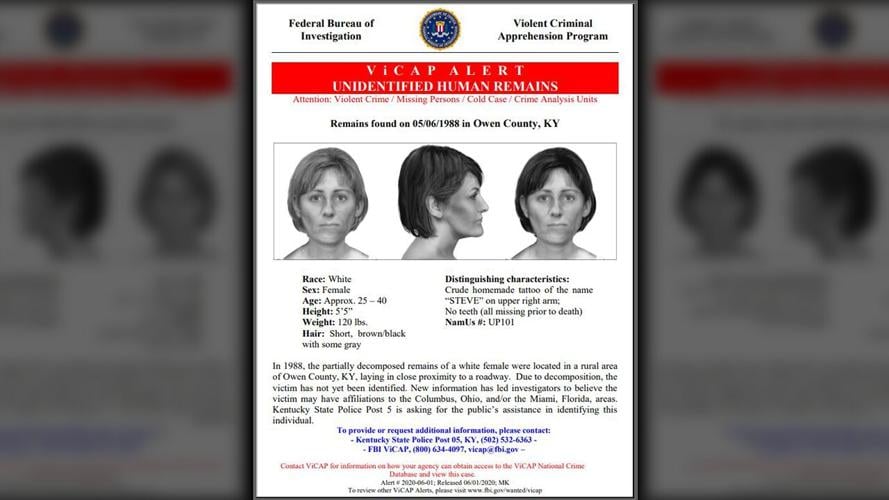


LOUISVILLE, Ky. (WDRB) -- Using advanced DNA testing, investigators now have a big answer they've been searching for for more than three decades in an unsolved case.
According to Kentucky State Police, the KSP Forensic Lab partnered with a private company called Othram to use advanced DNA technology to establish the identify of a victim previously known as "Jane Doe."
That woman is now identified as Linda Bennett, recovered along a roadside in rural Owen County, Kentucky, more than 30 years ago.

According to Kentucky State Police, the KSP Forensic Lab partnered with a private company called Othram to use advanced DNA technology to establish the identify of a victim previously known as "Jane Doe." That woman is now identified as Linda Bennett, recovered along a roadside in rural Owen County, Kentucky, more than 30 years ago.
Information from KSP shows in May 1988, a couple from Owenton spotted an unresponsive woman while on a walk. Detectives determined the victim's death was a homicide but leads were exhausted in identifying the woman, until recently.
A release from KSP states that in 2022, "new information was acquired about the potential identity of the Jane Doe, which led investigators to the victim's son, who provided a DNA sample. The DNA sample made a match to Linda Bennett, positively confirming her identity."
"We're using techniques that, as a scientist, have been made available to us. Technologies are changing and that gives us the opportunity to help answer questions," said Whitney Collins, who works as the lab supervisor for KSP's Central Forensic Lab.
Kristen Mittelman, the chief development officer at Othram, said the company was founded in 2018 and since then has helped several agencies find answers.
"The technology we've built here at Othram is actually quite advanced," said Mittelman. "It's the most powerful sequencer. It's like having the best camera to look at DNA. But that's not really the secret, the secret is being able to prepare the DNA in a way that it can be read by this really powerful camera, but only read the DNA that is suitable."
Mittelman has hopes that these tools can be advanced in the future and used in several ways to help solve crimes.
"I feel like it's possible with this technology that we would live in a world where all these backlogs are truly cleared. That we would get these answers and give people the answers they need," she said. "And that also there are not cases where the evidence is destroyed because it's consumed by a method that's not the right method for that DNA."
According to KSP, the Commonwealth's Attorney General's Sexual Assault Kit Initiative (SAKI) helped provide funding in Linda Bennett's case.
"One of the messages is, through the Sexual Assault Kit Initiative Grant that is supporting this, is that it might be justice delayed but we want to make sure it's not justice denied to these victims and their families who have been waiting so long for an answer. For us to all come together and be able to provide closure or an answer is why we do this work," said Robyn Diez D'Aux, executive director of the Office of Victim's Advocacy at the Kentucky Attorney General's Office.
KSP SAKI Detective Janet Barnett said finding answers remains important no matter how much time has passed. She said now, work will continue in Bennett's case in determining what happened to her.
"Even though in this case there's been decades that have passed, it is still important -- if it's possible -- to get (family members) that information and resolution and justice for the victim. The passage of time doesn't make it less important from our perspective," said Barnett.
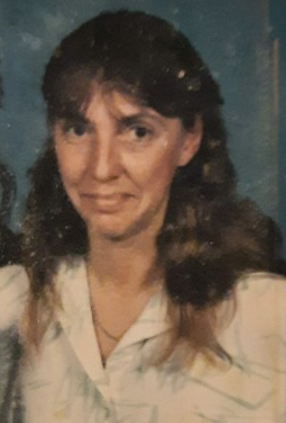
Dawn Clare Plonsky Wilkerson (KSP photo)
According to KSP, Bennett's family reported her missing in June 1988 to authorities in Columbus, Ohio, where she was last known to live. However, KSP said Bennett's family did not live in the same state as her and had limited contact.
This is not the only case where KSP is using DNA to try and put a name to remains that have been unidentified for years.
KSP has also worked with an organization called the DNA Doe Project to try and identify John and Jane Does.
In 2021, the DNA Doe Project helped KSP identify a woman whose remains were discovered about 20 years earlier in southern Kentucky as Dawn Clare Plonsky Wilkerson.
State police are currently working with the DNA Doe Project to try and identify a man who was found shot and killed in Grant County in 1989.
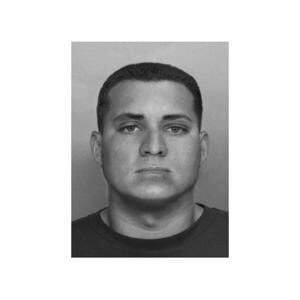
John Doe rendering (KSP photo)
The latest update from the DNA Doe Project says:
"John Doe does have a closer DNA match found earlier this year who is approximately a third cousin. This closest DNA cousin match comes from strong Yugoslavian roots mainly from Serbia, Montenegro, Croatia and Austria. Our team is working hard to identify who the shared ancestors are between John Doe and this closest DNA cousin match.
We have discovered that many cousins stayed in those countries, but those cousins also have ancestors who immigrated into the United States over the past 100 years. We are seeing immigration patterns mostly into Pennsylvania, Ohio, and Michigan."
Anyone with information on any of these cases is asked to call Kentucky State Police.
- For tips about the Dawn Clare Plonsky Wilkerson case, call Post 3 at 270-782-2010.
- For tips about the Grant County John Doe case, call Post 6 at 859-428-1212.
- For tips about the Linda Bennett case, call Post Post 5 at 502-532-6363.
Copyright 2022 WDRB Media. All Rights Reserved.


