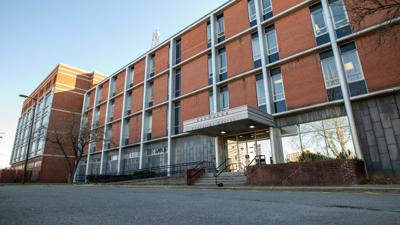


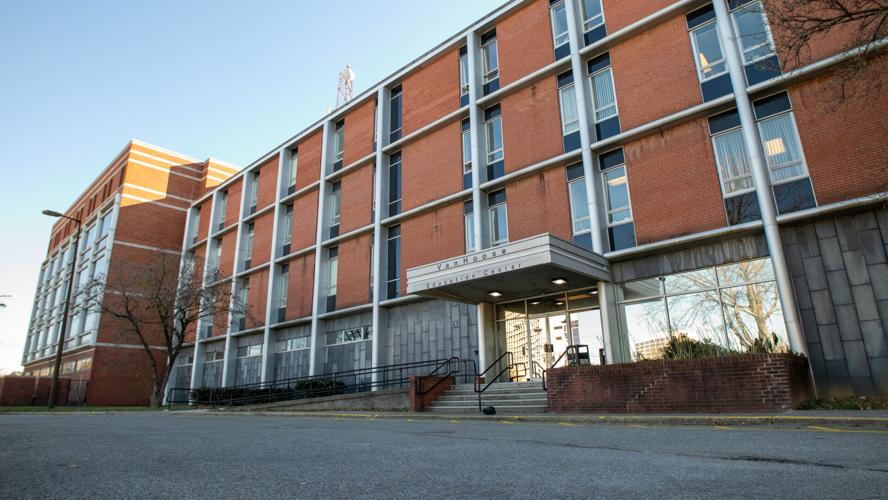
LOUISVILLE, Ky. (WDRB) — A scathing state audit of Jefferson County Public Schools found the district has a fostered a "culture of fear" and lacked a cohesive financial plan for years, leading to the $188 million budget shortfall it now faces.
The audit, released Tuesday by Auditor Allison Ball's office, detailed a fear of retaliation among central office leaders under former Superintendent Marty Pollio, a culture current Superintendent Brian Yearwood admitted he noticed when he arrived.
"From the highest levels of the district, we see a lack of communication and goal setting; there has been no cohesive plan for several years now," Ball said in a news release Tuesday.
The audit was mandated by the state legislature in the passage of House Bill 6 in 2024, at a cost of $1.5 million.
JCPS staff members cited "inappropriate and unprofessional interactions" with Pollio, the audit found, and said when they spoke up, they were retaliated against, barred from roles they were eligible for, were investigated and hassled, and were removed from their job and placed in other positions elsewhere in the district.
"Despite a system of staffing, policy, procedures, and a handbook designed to prevent retaliation, a theme across the data collected was a fear of retaliation that exists in the District's workplace culture," the audit says.
"We had instances where people told us that even if they saw something that was illegal, they didn't want to report it because they were afraid of losing their own jobs," Ball said.
Yearwood admitted to investigators he noticed that culture of fear when he arrived, though he said he didn't find it unusual for a district the size of JCPS.
"JCPS is the largest school district in Kentucky," Ball said in a news release. "Whether a school district serves 100 students or 100,000, Kentucky's children must be given the opportunity to succeed and chase the American Dream after graduation. JCPS has been receptive to these findings, and I'm optimistic they will use this special examination as an opportunity to grow and improve outcomes for all students."
The audit also says Former Superintendent Pollio had control over the internal audit process, including reviewing and filtering information. That included financial information shared with the board.
"We had information that was not shared with us that should've been shared with us," board member Linda Duncan said.
A spending problem
Much of the public conversation surrounding JCPS in the last year centered on the district's projected $188 million budget deficit and the cuts required to address it.
"In each working budget report from FY22 to FY26, expenses exceeded revenues," Ball said in a news release Tuesday. "Anyone paying attention could see that JCPS' financial picture was painted in red and was a roadmap to failure. Given that the School Board approved the maximum property tax increase every year over the last decade, we know it's a spending, not a revenue, problem."
JCPS has been dealing with staffing issues for years, starting with getting kids to school, and spreading into the district's leadership.
Ball said temporary federal relief funding helped mask those financial problems rather than solve them.
"The $500 million that was given to the school district during COVID was like a steroid on the problem," Ball said.
In September, the district said it planned to cut $132 million. It later drafted $142 million in reductions. However, the approved $1.8 billion budget shows the district cut recurring expenses by just over $115 million from fiscal year 2026 into fiscal year 2027:
- Districtwide costs: $44 million (38%)
- Central office and centrally managed positions: Nearly $28 million (24%)
- School-based flexible allocation reductions: Nearly $25 million (22%)
- Includes cuts to racial equity funds
- Central office operations: $12.7 million (11%)
- Includes costs outside of contracts and payroll
- Central office contracts: $6 million (5%)
One key part of JCPS' cuts involved staffing. Earlier this year, JCPS approved a reorganization plan that eliminated and restructured hundreds of central office roles as the district worked to address the deficit.
The audit says JCPS has way more administrators than comparable school districts, JCPS has one administrator for every 138 students. In a similarly sized district in San Diego, it's fewer than half that number.
The approved budget includes nearly $28 million in cuts tied to central office and centrally managed positions. Yearwood said some employees who previously worked in schools before moving into administrative positions could return to school-based roles as part of the restructuring. He said the district aimed to protect classroom instruction while making reductions elsewhere.
When the board approved the budget last week, interim CFO Dr. Tom Aberli said fully eliminating the deficit immediately would have caused more disruption for students. He said the district expects future revenues to gradually reduce the deficit over time and said JCPS still has a positive five-year forecast.
Projections show the district will continue carrying a deficit next school year of about $82 million in the working budget and is not expected to reach a balanced budget until 2031.
Yearwood said regardless, the district remains focused on moving forward.
"I will guarantee you this, that we will continue on the pathway to providing the best educational experience for children in JCPS," he said last month. "That is my guarantee."
The audit found JCPS' per-student revenue rose by 62% — adjusted for inflation — from 2002-22. However, in the classroom, average teacher salaries increased by just 12%, "contributing to stagnant purchasing power and salary growth that has not kept pace with the cost of living." At the same time, the audit said teachers feared retaliation if they spoke up against leaders. Ball said those teachers work hard every day and should feel "supported and valued" by district leaders.
"I'm grateful for their willingness to show up for Louisville's students, even in the face of countless challenges outside of their control," Ball said in a news release.
Poor student outcomes
Auditors say all of it happened while student achievement continued to slide.
"Our proficiency rates on how kids are doing in reading and math, that they had a sharper decline and a more sustained decline than any of those peer districts after covid," said Ball. Those gaps are even larger for African American students, and children with disabilities.
The audit also found just 15% of the JCPS Class of 2025 enrolled in college.
Lawmakers say if the district doesn't make major changes over the next few years, Frankfort could take even stronger action, including splitting the district.
"This is the last chance. I will give everything I have to right-size this district if they don't get it right this time," Rep. Jason Nemes said.
Additional findings
Here's complete list of findings from the audit Ball's office compiled in a news release Tuesday:
- JCPS lacks a current and cohesive plan that outlines district priorities and goals.
- A fear of retaliation exists in the JCPS culture.
- The board operates with too little focus on student outcomes
- Since 2016, the Board has approved the maximum allowed property tax increase annually.
- Despite receiving $500 million of COVID funds through the Elementary and Secondary School Emergency Relief (ESSER), in FY22, JCPS somehow began running a budget deficit.
- Every working budget from FY22-26 shows expenses exceeding revenues.
- In 2025, approximately 222 teaching positions were vacant. In a survey, nearly half of school-based staff agreed that vacant positions in their school made their jobs harder. School administrators and HR personnel noted delays in the hiring process, which led to hardship in finding qualified candidates for positions.
- Despite a 62% inflation-adjusted increase in per-student revenue from 2002 to 2022, average teacher salaries only increased by 12%. In comparison to peer-districts (ratio of 1:180 to 200), JCPS assigns more school administrators per student. Further, compensation for principals and assistant principals exceeds national averages.
- JCPS does not have a deferred maintenance plan. In October 2025, JCPS operations leadership estimated that a budget of $2.5 billion was required to solve the district's deferred maintenance repairs.
- JCPS claims that it has $1.3 billion in unmet facility needs.
- 26% of schools were found to be under-enrolled, meaning they were below optimal capacity.
- For 2022-23 and 2024-25, 33,358 out of 42,712 behavior incidents on a bus were committed by repeat offenders.
- 1/5 of all JCPS students feel unsafe at school.
- 25% of teachers observed by the exam team during school visits did not demonstrate high expectations for students.
- During school visits, the exam team observed frequent Chromebook usage for instructional purposes, which does not support high-quality instruction or student engagement.
- JCPS has experienced a sharper and more sustained decline in National Assessment of Educational Progress (NAEP) proficiency rates since the COVID-19 pandemic than many of its peer districts.
- Kentucky Summative Assessment (KSA) results indicate that significant achievement gaps remain across multiple student subgroups within JCPS. Notably, for 3rd grade reading for the 2024-25 school year, African American students' proficient or distinguished rate is 14 percentage points below the JCPS average, compared to 27 percentage points below the state average.
- According to the 2024-25 Kentucky Accountability System, approximately two-thirds of all JCPS schools receive an overall rating of "red" or "orange" — the two lowest of five performance levels
- JCPS is at risk of losing additional federal funding if they do not adhere to federal policy related to Diversity, Equity, & Poverty (DEP).
- JCPS has 40 DEP employees
- DEP has created and maintained six racial equity tools to be used at the school level. But the district doesn't maintain data on how these tools and resources are used.
- JCBE's (Jefferson County Board of Education) Policy and JCPS's Racial Equity Plan's focus is limited to "students of color," "Brown and Black students," and "educators of color." Given the significant achievement gaps among other student subgroups, particularly English learners and students with disabilities, JCPS could benefit from broadening the scope of its policy.
- JCPS (and Kentucky) do not track national trends in diagnosing children with disabilities, which can potentially signal that students are being misdiagnosed within the district.
- JCPS students who are multilingual are more likely to be over-diagnosed as students with Specific Learning Disabilities, Autism, Developmental Delays, Speech or Language Impairments, and Mild Mental Disabilities.
- JCPS's early learning programs have consistently failed to prepare eligible preschool students for kindergarten.
- JCPS lacks a clear, actionable plan to support Multilingual Learners' (MLs) student achievement. As of the 2024-25 school year, there were approximately 20,000 ML students with 154 languages spoken among them. The five most common languages spoken across the district have remained consistent over the past four school years: Arabic, Kinyarwanda, Spanish, Somali, and Swahili.
- JCPS does not have an updated repository of college and career readiness resources on the district website that is available to all students and families.
- 44% of 12th-grade students did not earn a career readiness indicator.
- According to KDE data on 2024-25 JCPS graduates, 15% percent of high school graduates enrolled in college.
- In 2024-25, 74% of English Learners graduated within four years compared to 89% of all students in the district.
What can be done
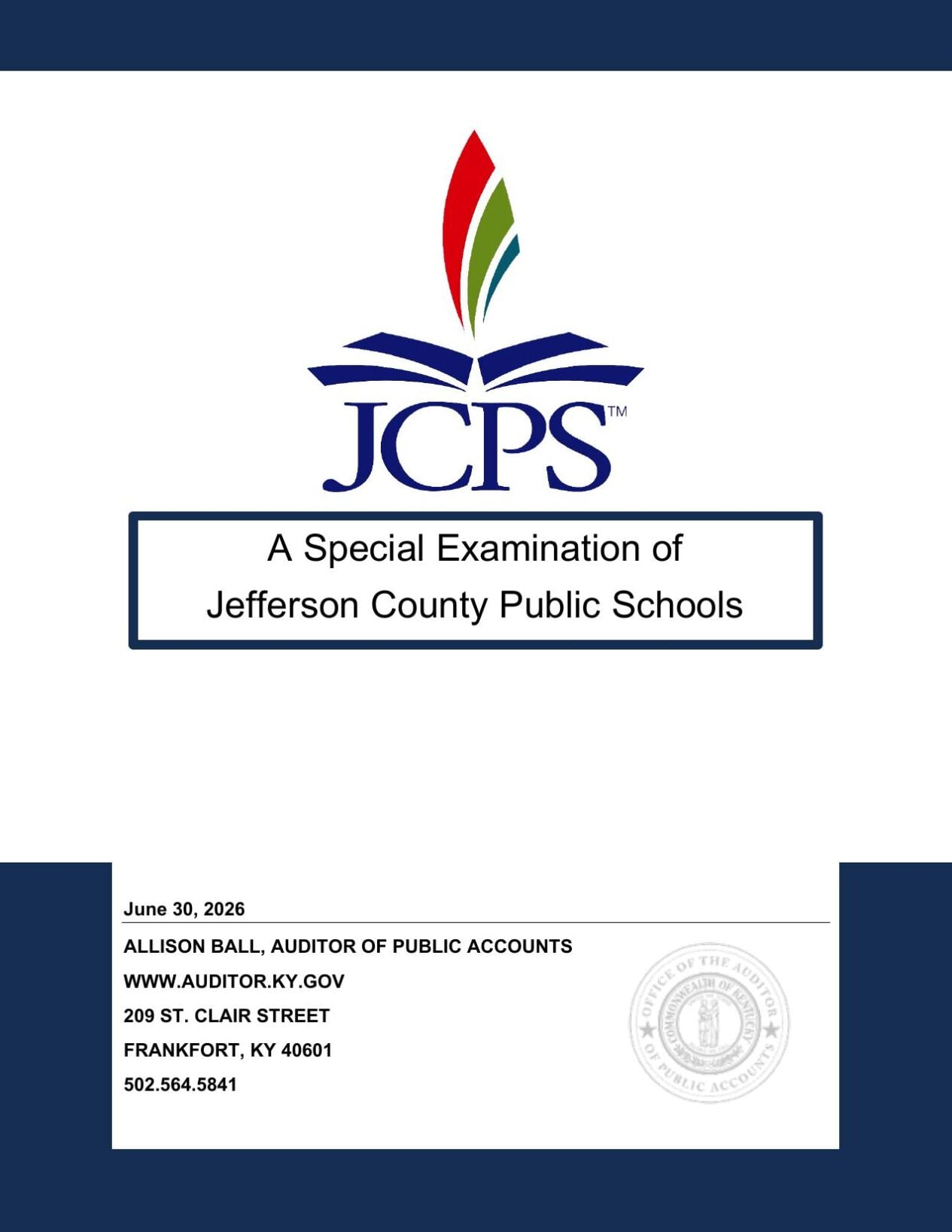
The audit listed an exhaustive set of recommendations that encompassed nearly every aspect of the district's operations. See the full audit below. The recommendations start on page 31:
Copyright 2026 WDRB Media. All Rights Reserved.