LOUISVILLE, Ky. (WDRB) – Longtime Jefferson County Board of Education member Linda Duncan was prepared to face a serious challenge to her seat in Tuesday’s election.
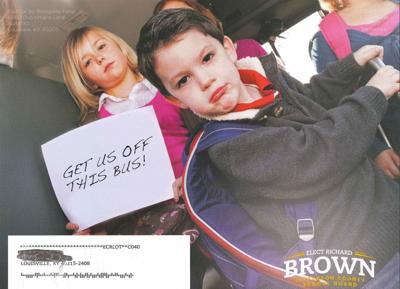
Four years ago, south Louisville resident Richard Brown tried to unseat Duncan with the help of thousands of dollars in advertising by the Bluegrass Fund, a political group founded by prominent business people who are critics of Jefferson County Public Schools.
But to Duncan’s surprise, no one stepped up to run against her this year, ensuring she will serve another four-year term on the board.
“I waited to the very last day to file to see if there was going to be somebody else appearing before then, and I thought, ‘OK, the last day somebody will come in,’” Duncan said. “But nobody did.”
Duncan, a retired JCPS teacher, has the backing of the Jefferson County teachers union and its political action committee, which has traditionally been the only big-spending force in local school board races.
The businesspeople behind the Bluegrass Fund tried to change that by pouring hundreds of thousands of dollars behind school board candidates in 2012, 2014 and 2016 races.
But after minimal success at the ballot box, the Bluegrass Fund has essentially ceded the battleground to the Jefferson County Teachers Association, at least for the 2018 election cycle. The fund hasn’t filed fundraising or expenditure reports with the Kentucky Registry of Election Finance for current races, meaning it has had no activity this year.
“We’re just watching to see what happens,” real estate developer David Nicklies, the chairman of the Bluegrass Fund, told WDRB News on Thursday.
Nicklies said the group is waiting to see what comes of the agreement between JCPS and the state education department, in which Education Commissioner Wayne Lewis is insisting the district make big changes in exchange for the state not taking over daily management.
The settlement, Nicklies said, is “very helpful to the system.”
The sidelining of the Bluegrass Fund, which was created in part to act as a counterbalance to JCTA and its political action committee, Better Schools Kentucky, essentially leaves the union to flex its political muscles unfettered.
Of the four school board seats up for election on Tuesday, two are filled by JCTA-supported incumbents (Duncan, who represents south Louisville, and Diane Porter, of west Louisville) who are running unopposed. In the other two races, the JCTA-backed frontrunners are the only candidates who have reported raising money for their campaigns.
So far, Better Schools Kentucky has spent $133,467 and $106,201 for advertising, yard signs, mailers and more in support of attorney James Craig and pastor Corrie Shull, respectively, in their bids for school board, expenditures filed with the Kentucky Registry of Election Finance show.
Craig is in a three-way race to replace Steph Horne, who declined to seek re-election, in eastern Jefferson County’s District 3. Shull is in a four-way race for the District 6 seat, representing central Louisville, currently held by Lisa Willner, the Democratic nominee in the 35th House District race.
A “crazy” and startling amount of cash
The Bluegrass Fund has support from donors with deep pockets, such as David Jones Sr., the retired co-founder of Humana; Sandra Frazier, founder of Tandem Public Relations and a former Bluegrass Fund treasurer; and Nicklies himself. Each has cut substantial checks to the fund’s efforts to reshape the local education board.
While it hasn’t seen the same level of success as the teachers union, the Bluegrass Fund’s inability to elect its endorsed candidates isn’t for a lack of trying. The group’s spending has helped make local school board races some of the most expensive in the area.
KREF records show the Bluegrass Fund’s spending grew each election cycle since its 2012 inception, when it spent $170,419. In 2014, it spent $355,276. The fund’s spending peaked in 2016 at $461,999.
Most of that money was dumped onto local airwaves and into mailboxes in competitive districts for the Bluegrass Fund’s preferred school board candidates.
Duncan and school board member Chris Brady have been targeted by the Bluegrass Fund in past elections, but they secured double-digit wins despite the deluge of spending. They also benefited from Better Schools Kentucky’s support.
Duncan, who won her 2014 contest by a 40-point margin over the Bluegrass Fund-backed Brown, said the big spending makes Jefferson County school board races unusual.
“Out in the state when we talk with other school board members, they are startled by the amount of money spent to make sure one voice or another voice is heard on the school board,” she said.
Brady won his 2016 contest against Fritz Hollenbach, who was supported by the Bluegrass Fund, by 12 points. He had the most expensive race between the group and Better Schools Kentucky to date.
The Bluegrass Fund spent $360,634 to try to get Hollenbach elected in 2016, with $216,000 of that dedicated to TV time including ads during that year’s World Series. Brady benefited from $150,665 in spending by Better Schools Kentucky plus another $164,488 from JCTA itself, KREF records show.
Brady, who also faced a Bluegrass Fund-supported candidate when he won by 10 points in 2012, called the spending in recent school board elections “astronomical” and “astounding.”
“I’m a recipient of JCTA’s endorsement, but it’s crazy to have that amount of money going to a school board race,” he said.
The Bluegrass Fund backed at least six school board candidates in the three election cycles, but managed to elect only one over the opposition of the JCTA.
Chuck Haddaway bested JCTA-supported Lloyd “Chip” White by nearly 5 points in 2012’s District 4 race. Willner earned endorsements from both JCTA and the Bluegrass Fund in 2014, when she won her District 6 contest by 25.7 points.
“There’s really not a whole lot of actual grassroots support and community support for their candidates, which is why time and time again they’re defeated at the polls,” Brady said.
JCTA President Brent McKim said the outcomes show that endorsements from the union and its 6,000 members carry a lot of weight with local voters.
“We’ve had a very good track record with that,” McKim said. “… Other than that one race (Haddaway’s election in 2012), the community has sided with our endorsed candidates every time.”
Nicklies countered that building public support for candidates is difficult when they're "running against union members being paid $300 each to hold signs at every polling location."
KREF records show Better Schools Kentucky paid nearly $19,200 for 64 poll workers and $300 for three alternates in support of Brady and $10,800 for 36 poll workers for board member Ben Gies in the 2016 cycle. Filings show the payments came Nov. 10, 2016, two days after that year's elections.
Those stipends are part of JCTA's electoral field operations, which "are a routine campaign expense," McKim said.
He also said that's not the only reason that JCTA-endorsed candidates have had success in their campaigns against those backed by the Bluegrass Fund.
"I think their positions don't resonate with the communities where they're running is the bottom line," McKim said.
Changing focus?
Some see the Bluegrass Fund’s absence from this year’s school board races as a sign the group is changing its tactics.
Republican Gov. Matt Bevin, who took office in 2015, only gained full control of the Kentucky Board of Education this year.
His appointees installed Lewis as the new education commissioner and Hal Heiner, a longtime critic of JCPS and advocate for charter schools, as the board’s chairman.
Heiner, through a now-defunct charter school advocacy group he chaired, and board member Rich Gimmel, through a company he owns, have supported the Bluegrass Fund in the past.
The Kentucky Coalition for Education Reform, a group formerly chaired by Heiner, gave the Bluegrass Fund $8,000 in 2012, and Gimmel’s Atlas Machine & Supply contributed $1,500 in 2014.
“Essentially they won at another level,” Duncan said. “They didn’t win locally, but they did win at the state level.”
“They’ve adjusted strategy to where they were trying to affect change within Jefferson County, but I think they found that for a lot less money, they were able to take over the Kentucky Board of Education and affect change throughout the entire state of Kentucky,” Brady said.
Gimmel said he was unaware of any "coup" by the Bluegrass Fund to take control of the state board of education.
"Mr. Brady appears to have a very active imagination," Gimmel said.
Heiner could not be reached for comment through the Kentucky Department of Education on Friday.
McKim said the question is now whether the state board and state education officials are “going to insert themselves into our local control of our schools, so there’s definitely a shift from Louisville to Frankfort to some extent in terms of where people are looking on educational issues.”
The JCPS-state settlement came on the heels of Education Commissioner Wayne Lewis’s recommendation for state management of JCPS following a 14-month audit of Kentucky’s largest school district.
It calls for a re-evaluation of JCPS after two years under a comprehensive corrective action plan. The re-evaluation could result in another call for state management of JCPS.
Brady and Duncan also said that the Bluegrass Fund’s supporters may be satisfied with education bills passed by the GOP-controlled state legislature, such as the 2017 law authorizing charter schools.
But Nicklies said external factors, such as who controls the levers of power in Frankfort, are “unimportant” to the Bluegrass Fund’s decisions about school board races.
He says the Bluegrass Fund’s primary focus is improving the lives of the 100,000 students in JCPS classrooms, particularly disadvantaged children.
“This is about 100,000 kids,” he said. “It’s not about school board members. It’s about $1.7 billion that needs to be spent properly in education for these kids, and that’s really all Brent McKim and those board members should be focused on.”
“No other business would spend that kind of money with those kinds of results, and that’s taxpayer money,” Nicklies added. “The kids are losing. When kids lose, the community loses.”
Duncan said she wouldn’t be surprised to see the group re-emerge in future school board races.
“I think they’ll join back in if we don’t start to produce the results that they think we should produce because I think, again, their concern is about attracting business to Louisville,” Duncan said. “And if they think what we’re doing is not meeting achievement needs in making Louisville look attractive, I think very much they’ll get involved again.”
Reach reporter Kevin Wheatley at 502-585-0838 and kwheatley@wdrb.com. Follow him on Twitter @KevinWheatleyKY.
Copyright 2018 WDRB News. All rights reserved.