


LOUISVILLE, Ky. (WDRB) — The fatal police shooting of a Louisville woman experiencing a mental health crisis is facing public scrutiny, raising questions about who should respond when someone is struggling.
The shooting happened the evening of March 27 in the 9800 block of Vieux Carre Drive, near Jeffersontown. Louisville Metro police officers responded to a report that a woman was "experiencing a mental health or behavioral crisis."
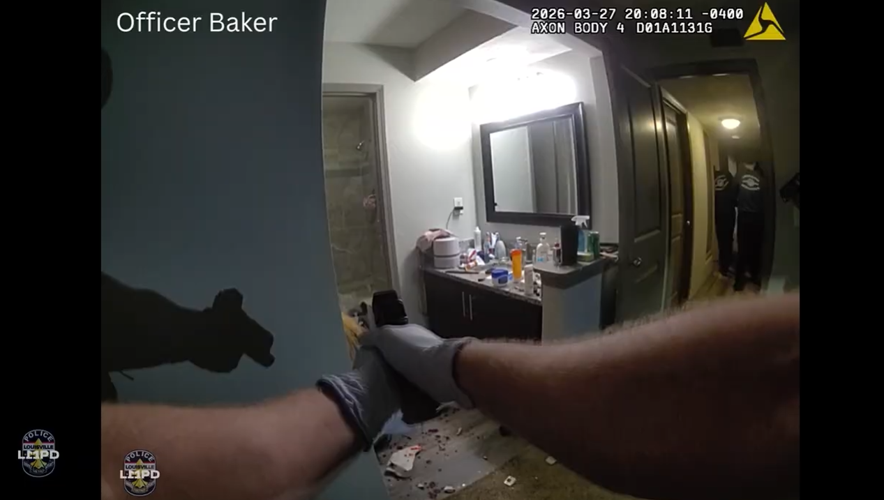
LMPD said the woman, identified as Katelyn Hall, 28, had self-inflicted cuts and was armed with a sharp object. According to police, when authorities forced entry into the bathroom where she was barricaded, she charged at them with it. Two officers — Robert Baker and Robert Gabbard — opened fire, killing her.
During a news conference the night of the shooting, LMPD said because there was a weapon and other people present, the situation "did not meet the criteria for deflection or a mobile crisis response."
"She was armed, she was actively attempting to complete suicide, she was injured," LMPD Deputy Chief Emily McKinley previously said. "There were other people in the apartment with her that needed protection."
Hall's family said they felt "like she was murdered." Her death sparked renewed conversations about police response to mental health crises.
Right now, when someone calls 911 stating they or someone else are experiencing a mental health crisis, MetroSafe call-takers transfer that call to a diversion team — unless someone poses a potential danger to themselves or others. That's when police respond instead of mental health deflection teams.
Mental health professionals say having a clinician respond with police when a potentially dangerous mental health crisis call comes in could minimize fatalities.
"It's not a safe job," a mental health professional said. "It's not a career where you're never going to see some pretty harsh realities."
During a crisis, Hall's loved ones called for help. She was first met with compassion, with officers telling her they want her to live. In bodycam footage of the incident, police can be heard asking additional officers responding to the scene to bring "less lethal options."
Left searching for answers, Hall's family said her mental health had been deteriorating in recent years and believes the situation could have been handled differently.
Cities like Lexington have correspondence teams where mental health clinicians respond to dangerous mental health incidents alongside police. Health professionals said knowing how to respond to someone in active psychosis takes years of training.
"When it's a mental health crisis, you really need to understand what that is stemming from, what questions to ask and in what order," a mental health professional said.
LMPD responded to 3,200 crisis intervention calls last year. One percent of those calls resulted in injury to either the subject or the officer.
"It's not for lack of training at the police academy, and it's not for a lack of mental health services to come out to the call," said Nancy Brooks, executive director of the National Alliance on Mental Illness (NAMI). "This tragedy occurred long before the crisis call in that individuals are not receiving the wraparound services they need."
Representatives from NAMI said without a continuum of care set in place for an individual, you're going to see higher relapses, more frequent hospitalizations and higher suicide risk.
At a news conference several days after the shooting, LMPD Chief Paul Humphrey said incidents like this are difficult for everyone involved, and they're using it to work on improving how the department handles situations like Hall's.
“No one goes into these situations hoping or expecting these outcomes — not the families, not the officers and certainly not the community,” Humphrey said. “I am asking for your patience as we attempt to learn and understand everything that happened.”
Last week, Mayor Craig Greenberg told WDRB the city is now exploring whether a co-responder model could help with encounters like this.
"In certain situations like this, you have both a mental health professional and the police who respond together and can respond better," Greenberg said. "So that's something we're looking at right now."
Copyright 2026 WDRB Media. All Rights Reserved.


