

LOUISVILLE, Ky. (WDRB) -- Indiana is among more than a dozen states being invaded by spotted lanternflies.
The insect is on the federally regulated invasive species list.
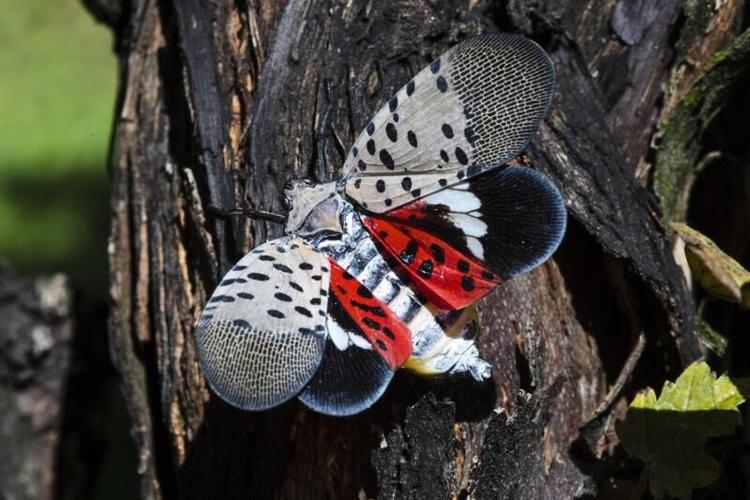
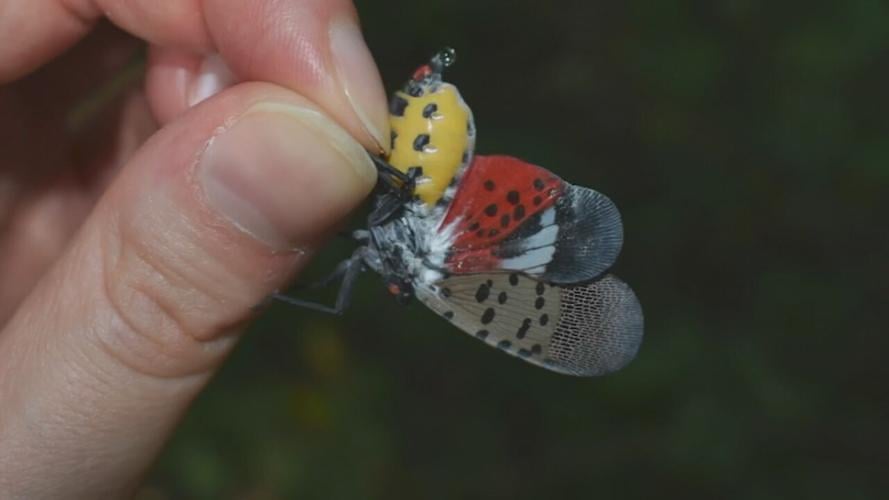
It resembles a moth, but has colorful spots on the top half of its wings. It was first discovered in 2014 in Pennsylvania. Lanternflies feed on a wide range of crops, including apples, hops, walnuts and grapes.
"They don't necessarily attack the fruits directly, they're actually feeding on the woody parts of the plant," said Elizabeth Long with Purdue University. "They can actually basically suck all of the life-force out through that sap and weaken the tree, even kill it."
A man in Vevay, Indiana, first spotted the insect in 2021 and reported it to authorities, according to previous reporting from the Associated Press. It was the farthest west the Asian insect had been found at the time.
Officials from the state’s Division of Entomology and Plant Pathology and the U.S. Department of Agriculture visited the site in Switzerland County to determine the extent of the infestation. A number of the insects were found in nearby woodlot, and they were all destroyed.
Efforts to figure out how the spotted lanternflies found their way to the Indiana woodlot continue, according to Megan Abraham, director of the Division of Entomology and Plant Pathology.
"We suspect someone brought it in accidentally," she said. "They typically swarm this time of year and lay their eggs."
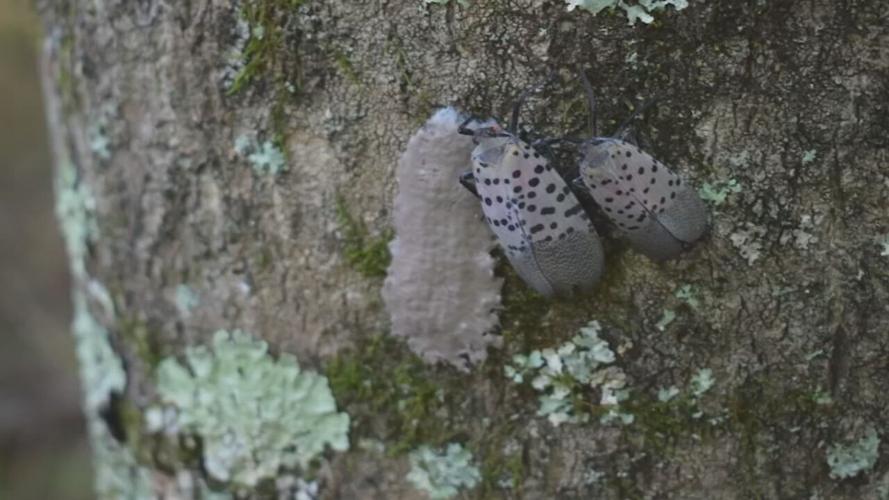
The eggs look like a patch of mud smeared on a tree or post or metal part of a railroad car, which is one of the ways the insect has spread in the United States since it was first discovered in Pennsylvania in 2014.
The Indiana location wasn’t anywhere near a railroad line. Oftentimes adult spotted lanternflies will feed on trees that overhang railroad yards, and when they’re full, they will drop out of the leaves to land on the nearest vertical surface. If they land on railroad cars, that’s where they lay their eggs, which are then transported across the country, spreading an insect that’s known for killing grapevines, fruit trees and other agricultural crops and trees.
"It’s following the train line," Abraham said of the insect. "They are heading out this way."
The spotted lanternfly prefers tree of heaven, which is an invasive tree species from Asia that’s found in Indiana and most other states. But the insects don’t do much damage to those trees, so they survive and the lanternflies move on to native trees and other plants that they do kill.
When lanternflies congregate on grapevines, it changes the pH of the grapes so they are no longer viable for making wine, Abraham said. The insects often congregate to feed on the sap of plants. While feeding they excrete a sticky substance called honeydew, which falls to the ground and is a breeding ground for sooty mold. That mold can kill trees and other plants, Abraham said.
A Sept. 19, 2019, photo, shows a spotted lanternfly at a vineyard in Kutztown, Pa. Pennsylvania has started using insecticide on spotted lanternflies, a new strategy that state officials are using in an attempt to slow the spread of the invasive pest. Crews using backpack sprayers and truck-mounted spray equipment have been spraying the bugs along railways, interstates and other transportation rights-of-way, the state agriculture department said earlier this year.
The spotted lanternfly has also been found on the eastern edge of Ohio near West Virginia, Abraham said.
The Indiana Department of Natural Resources is asking anyone who sees a spotted lanternfly to kill it, then contact them at 866-NO EXOTIC (866-663-9684) or send an email to DEPP@dnr.in.gov.
Copyright 2023 WDRB Media and the Associated Press. All rights reserved.