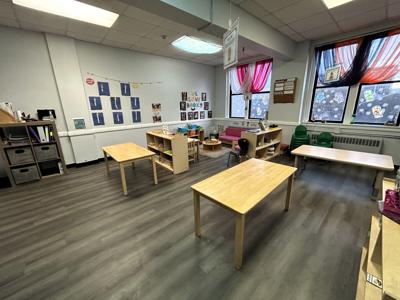
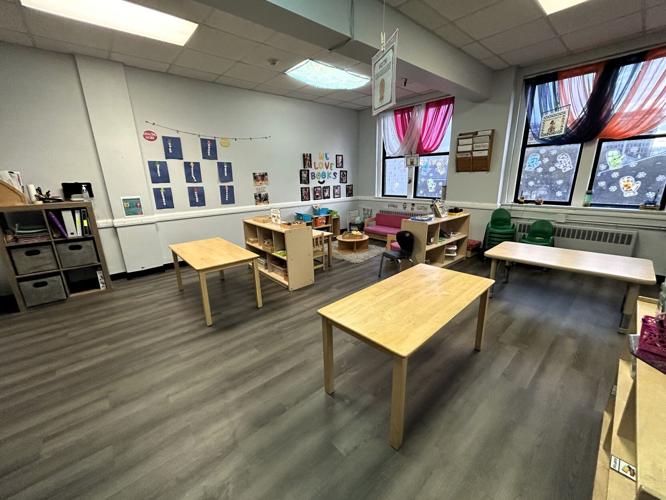
LOUISVILLE, Ky. (WDRB) -- Shany Loewy knows what can happen when young kids get the on the right track in school. As director of the Keneseth Israel Preschool on Taylorsville Road in Louisville, Loewy said a quality preschool education is incredible.
But it comes at a cost — about $1,200 per month at KIP — which limits the options for some families.
"Just the social skills and the emotional growth that they get during those preschool years, you can't get that no matter what you do at home," Loewy said Monday.
That's much of the reason why, earlier this year, Metro Government unveiled a new nonprofit called "Thrive by 5 Louisville," a five-year plan designed to create a pathway to universal pre-k in Louisville. The plan was developed by the Mayor's Early Learning Action Group, which is made up of 23 educators, business leaders and lawmakers from both sides of the aisle who will develop plans to help new pre-K and early learning options the community.
The group will follow guidelines and recommendations from the National Institute for Early Education Research, operating independently from Metro Government and Jefferson County Public Schools to use public and philanthropic funding to recruit and retain early learning teachers and staff, improve facilities and programs, and provide financial assistance for preschool.
The Louisville Metro budget for 2024-25 includes $5 million for Thrive by 5.
"I have been in child care for about 45 years, and the difference of children who get the preschool experience is incredible," Loewy said
Thrive by 5 Louisville plan calls for implementing three phases over the course of five years:
Phase one, years 1-2:
- Create and staff Thrive by 5 Louisville; recruit private and nonprofit preschools, child care centers and family child care homes for pilot participation; provide funding for workforce development grants to private and nonprofit preschools, child care centers and family child care homes for program improvements; implement facility assessment and improvement processes; establish an online resource hub; initiate marketing strategies; and fundraise.
Phase two, years 3-4:
- Initially launch financial assistance (paid directly to providers) for 4-year-olds from families making less than 300% of Federal Poverty Level (i.e., family income of $93,600 or less in 2024) to attend preschool.
Phase three, years 5+:
- Expand eligibility for financial assistance to more Louisville children, measure program impact, expand workforce benefits and support and continue facility assessments and quality improvement efforts.
Leanne French, director of early childhood for the mayor's office, said universal pre-k is more than just financial relief for parents.
"There's a lot of research now that says it's great to do universal pre-K, but if it's not really high-quality, if it's not doesn't have a focus on play and being outdoors and children learning how to get along with each other, then, in fact, children are not ready for school," French said.
Greenberg said there are at least 21 neighborhoods in Louisville with no or few childcare facilities or preschools available including:
- Audubon Park-Prestonia
- Bonnycastle
- Chamberlain-Ford
- Clifton-Irish Hill
- Deer Park
- Flat Rock-Long Run
- Germantown-Paristown Pointe
- Jefferson Forest
- McNeely Lake East-Heritage Creek
- Meriwether-Saint Joseph
- Minor Lane
- Old Louisville-Limerick
- Original Highlands
- Shelby Park
- Six Mile-Houston Acres
- Southside
- Southwest Dixie-Valley Village
- St. Matthews North-Beechwood Village
- St. Matthews Northwest-Chenoweth
- Valley Station South-Orell
- Wilder Park-Fairgrounds
The idea of universal pre-K has been introduced at the state level, too. Gov. Andy Beshear pressed late last year for his plan to provide state-funded pre-K for all 4-year-olds in Kentucky. The proposal so far has made no headway in the legislature.
Beshear framed his proposal as as a way to tackle student learning loss, which has been widely blamed on the COVID-19 pandemic. Statewide test scores released in December showed Kentucky students made some improvement, especially in elementary schools, but education officials said considerable work remains to get back to pre-pandemic levels. Those struggles reflect a nationwide problem of lagging academic achievement.
To learn more about Thrive for 5 Louisville, click here.
Related Stories:
Copyright 2024 WDRB Media. The Associated Press contributed to this report. All Rights Reserved.