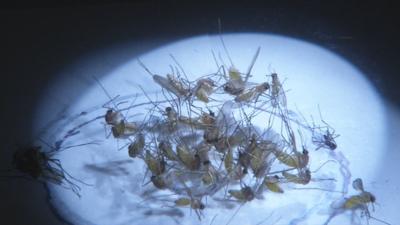


LOUISVILLE, Ky. (WDRB) -- Officials with Louisville's Department of Public Health and Wellness detected the West Nile virus in mosquitoes in several zip codes.
The mosquitoes were tested after being found in surveillance traps in the following zip codes in Jefferson County: 40203, 40206, 40208, 40211, 40212, 40214 and 40215.
In a news release Monday, health officials reminded residents to take precautions when enjoying the outdoors.
"Don't forget all of the preventative measures you can take to protect yourself, and your family, from mosquitoes," said Connie Mendel, senior deputy director for the city's health department.
Because the West Nile virus is endemic to Louisville, it's regularly found in mosquito populations in Jefferson County, and residents should assume it is present in all neighborhoods this time of year, even if an alert has not been issued.
"This is typically when we do see those, West Nile is endemic to our area, which means that it is always there at a very low level," Mendel said. "What we try to do is to reduce the overall mosquito population to make it less likely for those mosquitoes to transmit those humans and even our pets."
Here are some steps you can take to avoid being bitten by mosquitoes:
- Use insect repellents when you go outdoors. Repellents containing DEET, picaridin, IR3535, and some oil of lemon eucalyptus and para-menthane-diol products provide longer-lasting protection. To optimize safety and effectiveness, repellents should be used according to the label instructions.
- When weather permits, wear long sleeves, long pants and socks when outdoors. Mosquitos may bite through thin clothing, so spraying clothes with a repellent containing permethrin or another EPA-registered repellent will give extra protection. Don't apply repellents containing permethrin directly to your skin. Do not spray repellent on the skin under your clothing.
- Take extra care during peak mosquito biting hours of early morning and dusk. Take extra care to use repellent and protective clothing from dusk to dawn or consider avoiding outdoor activities during these times.
- Prevent mosquito breeding grounds:
- Install or repair screens on windows and doors to keep mosquitos outside.
- Help reduce the number of mosquitos around your home by emptying standing water from flowerpots, trash cans, gutters, buckets, pool covers, pet water dishes, discarded tires and drain birdbaths on a regular basis. Click here for more tips.
No human cases of West Nile have been reported in Louisville so far this year, according to the release.
Here is data from previous years:
- 2021: Three human cases, zero deaths
- 2020: Zero human cases, zero deaths
- 2019: Two human cases, one death
- 2018: Six human cases, zero deaths
- 2017: Two human cases, zero deaths
- 2016: Six human cases, one death
In most West Nile cases, people either show no symptoms or relatively mild symptoms. Less than 1% of infected people develop serious illness, such as encephalitis or meningitis, according to the release.
Louisville's health department has operated a mosquito control program for more than 60 years. In addition to West Nile, the department tests for Crosse, Eastern Equine and St. Louis Encephalitis.
In the spring, the department pre-treats potential mosquito breeding sites with larvicide to prevent hatch offs. In the summer, it treats catch basins, responds to complaints and performs fogging, when necessary, in response to West Nile virus and other mosquito-borne diseases.
Health officials now plan to conduct mosquito fogging this week near the areas of Churchill Downs, the University of Louisville, Iroquois, Portland, Park Duvalle, Old Louisville, Irish Hill and Crescent Hill.
Fogging occurs between dusk and dawn.
To check if your area has been fogged or will be fogged call the mosquito hotline, 502-574-6641, or visit the department's website.
To make a complaint about mosquitos in your neighborhood call Metro Call at 311 or 502-574-5000.
Copyright 2022 WDRB Media. All Rights Reserved.


