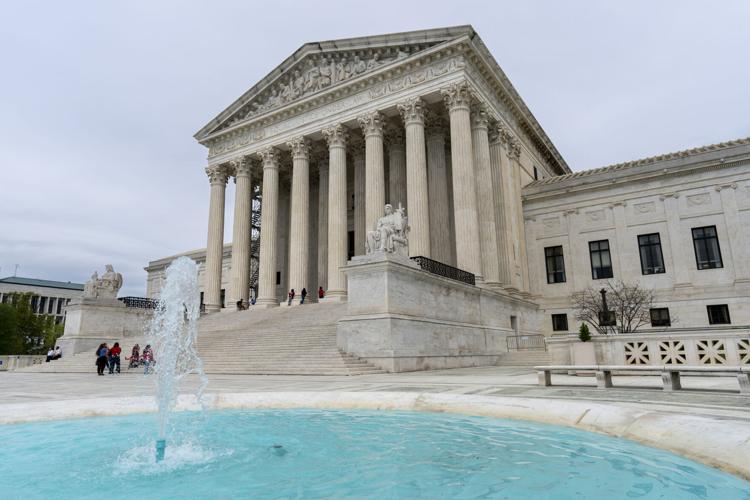



LOUISVILLE, Ky. (WDRB) -- A monumental decision on Thursday from the Supreme Court over college admissions, ruled colleges and universities can no longer factor race during its admissions process.
Local colleges and universities said it will review its processes following the decision.
"The student must be treated based on his or her experience as an individual-- not on the basis of race," Chief Justice John Roberts said in his opinion. "Many universities have for too long done just the opposite."

Jordan Cathey, rising senior at duPont Manual High School
Jordan Cathey, a rising senior at duPont Manual, is figuring out what the application process will look like, without universities knowing a key part about her identity.
"It shouldn't be the sole factor in your college admissions, of course, but it's such a big part of someone's identity. To strip colleges of that it's just like their first indicator of who you are," Cathey said.
Cathey hopes to one day attend Vanderbilt University in Nashville, Tennessee to study biomedical engineering and Spanish.
Cathey said attending a diverse school is important to her, and should be for others, but worries the decision will create less diverse schools.
"You get more voices, like more decisions are made in groups that you're really going to work with in your life because rarely is it you're gonna work in one place and it's all the same people," Cathey said.
An applicant for admission still can write about, and colleges can consider, “how race affected his or her life, be it through discrimination, inspiration or otherwise,” Roberts wrote. But the institutions “may not simply establish through application essays or other means the regime we hold unlawful today,” he wrote.
Cathey feels defaulting the opportunity to talk about race in essays, takes away opportunities to highlight other parts about herself.
“I’m not just a demographic, I’m not a checkbox. But give me that checkbox, but then give me a space to write about me, and not what I have faced as a black person as a black woman," she said.

Jemar Tisby, History Professor at Simmons College
Simmons College History Professor Jemar Tisby feels the decision is a step back in history, but offers an opportunity to highlight importance of historically black colleges and universities.
"It gives institutions cover, not to think about race, and have so called colorblind or race blind policies," Tisby said. "HBCUs only exists because black people historically were denied entrance and admission to historically and predominantly white colleges and universities. So if you want a place that values racial and ethnic diversity, look to HBCUs and organization started by people of color, which by the way, across the board, they're going to welcome people from any race or ethnicity."
Tisby encourages people who feel wronged by the decision to express their feelings by taking action.
University of Louisville and University of Kentucky both weighed in on the decision.
In a statement U of L said:
"Today, the United States Supreme Court declared that colleges and universities can no longer consider an applicant’s race when evaluating their application for admission.
As the most diverse non-HBCU among Kentucky’s public colleges and universities, UofL will continue to be committed to diversity among our students, faculty and staff.
Celebrating our differences and learning from one another only makes our university and our society stronger. Through legally permissible means, we will continue to foster and sustain an environment of inclusiveness that empowers all to achieve their highest potential."
UK released the following:
“Earlier today, the U.S. Supreme Court issued a long-awaited ruling in two cases regarding the use of race in admissions in undergraduate, graduate and professional programs at higher education universities. We are still reviewing the details of the ruling, but, based on our initial understanding, it appears that the Court has restricted the consideration of race with respect to admissions and scholarships. However, it appears we can consider an applicant’s discussion of how race has affected their life.
We will continue to review this decision as we prepare to fully comply with the law as described in today’s rulings.
At the same time, we will remain focused on our priority as an institution – to be a community of care, compassion and belonging for everyone, regardless of who they are and regardless of how someone defines their humanity and identity.
That is the right thing to do for our university. It is the right thing to do for Kentucky.”
Copyright 2023 WDRB Media. All Rights Reserved.


