

LOUISVILLE, Ky. (WDRB) — Indiana health officials said Tuesday that there have been more than 200 reported cases of the diarrhea-causing parasite in the state.
According to FOX59, the Indiana Department of Health announced approximately 206 cases of cyclosporiasis have been reported in the state. The department said it's difficult to trace back where the cases are being acquired but it's actively investigating.
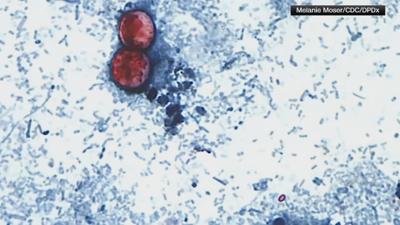
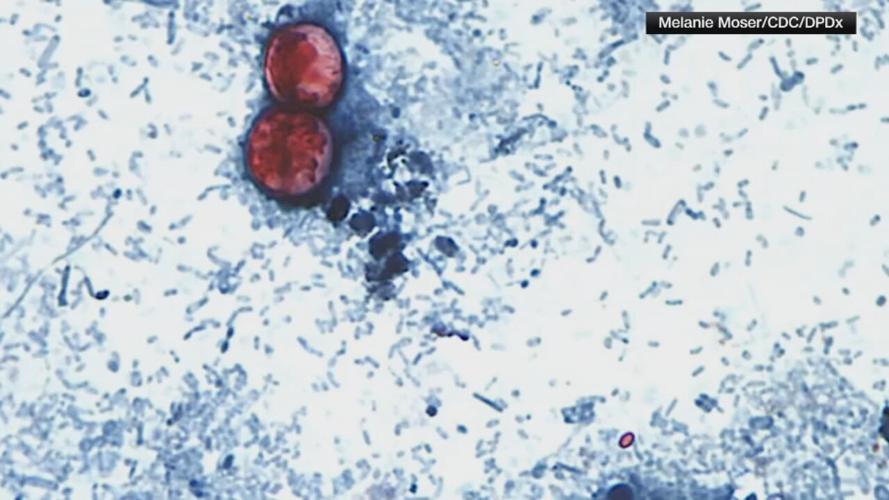
Cyclospora is a microscopic, spherical parasite that commonly causes watery diarrhea "with frequent and sometimes explosive bowel movements," according to the U.S. Centers for Disease Control and Prevention. The illness is not usually life-threatening and is typically treated with antibiotics. Outbreaks tend to occur most often in the late spring and summer.
As of Monday, approximately 1,645 confirmed cases of cyclosporiasis across 34 states have been reported to the CDC. However, the CDC warned there are more than 5,100 reported cases that require more testing to confirm the illness was local required. That means the true number of those infected could be even higher.
The parasitic disease hit central Indiana around July 8. The Marion County Public Health Department confirmed last week there were 15 reported cases in the Indianapolis area, and it spread throughout the state from there.
Kentucky has also been hit with cases. Since July 9, the Kentucky Department of Health said 100 cases of cyclosporiasis were reported, with 55 of those confirmed.
How does this outbreak compare to previous ones in the US?
Comprehensive data on cyclospora outbreaks is lacking. But available information shows only a small number of documented outbreaks in the last 20 years have surpassed 1,000 cases. That short list includes a 1997 outbreak tied to Guatemalan raspberries that sickened more than 1,000 in the U.S. and Canada, and a 2019 outbreak linked to Mexican basil than sickened more than 2,400.
There are several reasons it's challenging to know the exact toll, said Melanie Firestone, a University of Minnesota foodborne illness researcher. Some tests used to check for types of food poisoning are not geared to detect cyclospora, "so there is a lot of underreporting when it comes to this," she said.
Other challenges: Technicians aren't able to grow the parasite in labs, making it hard to draw evidence from contaminated produce. And it can be hard to figure out what food sick people had in common, because sometimes it’s a single ingredient that might be common in multiple recipes — like basil or cilantro.
Also, it's possible that food distributors may channel contaminated foods to both grocery stores and restaurants, making it hard to discern where tainted food came from. Investigations can take months and sometimes never find a clear source.
What's the current situation?
Cases seem to be surging in and around southeastern Michigan. But it's not considered a national health emergency.
There's no evidence that the parasite has evolved to become more infectious, said Dianna Blau, the CDC's acting parasitic diseases branch chief.
Thousands of cyclospora illnesses are reported in the U.S. each year and it's not yet clear how unusual this year will be, she added. That said, the case total so far is four times higher than at the same point last year, according to current CDC national data, which lags dramatically from what's being reported by the states.
Michigan appears to be suffering the worst of it, but the state's aggressiveness in investigating and reporting cases may be "part of the reason why this looks like a Michigan problem," Bagdasarian said.
How can you protect yourself from cyclospora?
People who have diarrhea that hasn’t gone away on its own within a few days should see a health provider and discuss the possibility of cyclospora, officials say.
The best way to prevent infection with a parasite is to avoid food or water that may have been contaminated.
Fresh produce should be thoroughly washed before being eaten. But be aware that cyclospora can really stick to some foods, so washing may not eliminate the risk of infection.
As Michigan officials investigate the potential source, they recommend consumers purchase whole heads of lettuce rather than prewashed, bagged lettuce or salad mixes, and to removed the outer two to three leaves before washing the remaining leaves under running water.
They also say to cook vegetables when possible.
Copyright 2026 WDRB Media. The Associated Press contributed to this report. All Rights Reserved.


