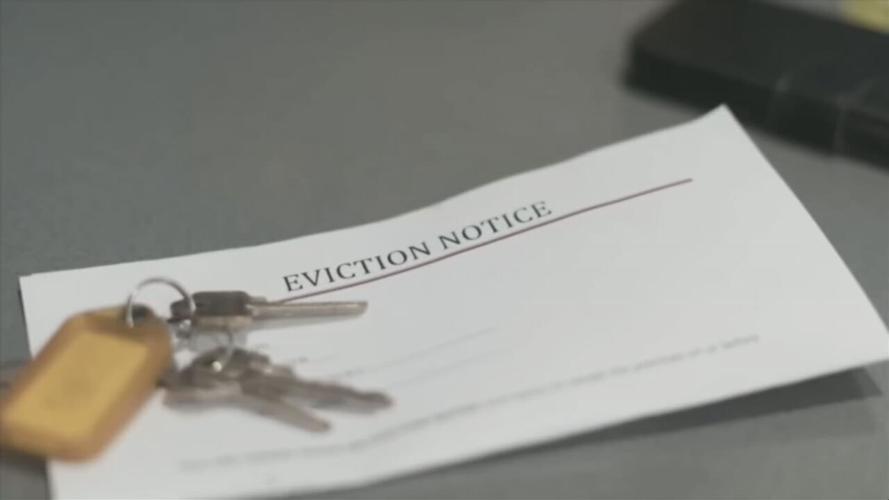
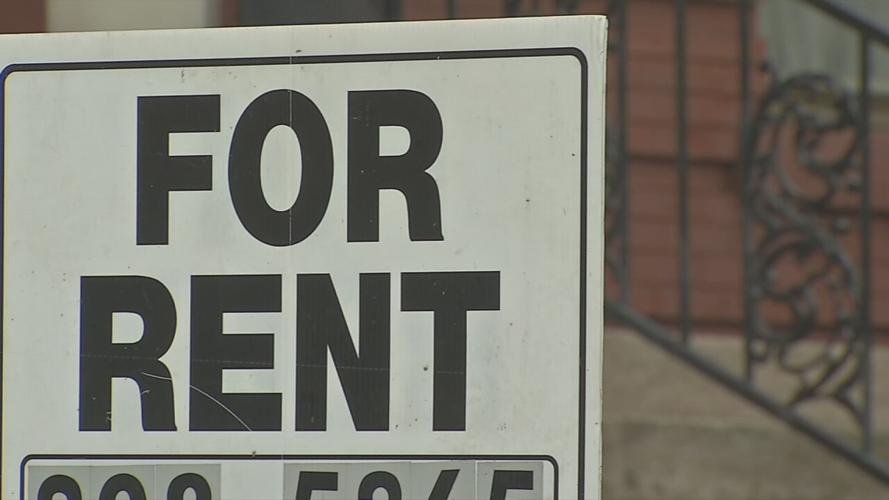


LOUISVILLE, Ky. (WDRB) -- A pilot program new to Louisville is trying to prevent evictions by bringing tenants and landlords together for mutual agreements.
Robin Bray owns several single family homes around the Louisville area. One of Bray's tenants, who has children, had fallen several months behind on rent as she dealt with cancer. Bray didn't want to displace a family, but also couldn't afford to cover their rent for a long period of time.
"I thought 'how are we going to solve her problem,'" Bray said. "I had enough money to hold onto a little bit longer. I don't know what a little bit longer would have been, but I was just hoping something would come along where she could catch up."
Bray learned about the eviction mediation program at a Kentucky Real Estate Investment Association meeting. The program provided a solution for the landlord and tenant.
"I told her that I think we found something that can help us," Bray said. "We both cried on the phone."
The program has been years in the making. Marilyn Harris, director of Develop Louisville, said the idea of eviction mediation started prior to the COVID-19 pandemic.
Develop Louisville entered into a contract with Resolve Restorative Practices LLC, a group that mediates with landlords and tenants. The City of Louisville set aside $2 million to help tenants who go through the mediation process.
Shannon Floyd, principal mediator for Resolve Restorative Practices, said the mediation process is about humanizing both sides.
"Mediation is really about understanding how conflict is really rooted in misunderstandings and emotion. If you address emotion, you address the conflict," Floyd said. "Until we address the emotional element of conflict, it's not really resolved. So many people and things fall in between the cracks."
The group has completed two mediations so far and launched a third in April. Floyd said they've received hundreds of inquiries from tenants and landlords for a program that's new to the state of Kentucky.
"The only places I know of with eviction prevention mediation that actually takes place is Pittsburgh and Philadelphia," Floyd said. "Anytime anything is new it takes time for people to try it. It is unfamiliar, it's unheard of."
The program is desperately needed in Louisville. Harris said Louisville is lacking about 31,000 units of affordable housing and the city has seen a 130% increase in homelessness and unhoused population.
"Keeping people housed is better for the health of our overall community," Harris said. "It's much better for children to be housed. Housing is the basic building block for good education, for good health, for good physical and mental health."
The process that brings two parties to a table starts with a landlord's request for an eviction prevention mediation. After the request is made, Resolve Restorative Practices responds within two business days. A mediator is assigned as the tenant and landlord complete a pre-mediation assessment form. Tenants are able to apply for rental assistant and see how much they qualify for.
"Before we even arrive at the table to discuss, the mediator knows both sides and both perspectives of what's going on," Floyd said. "It's an opportunity to address a systemic issue from a different perspective, as opposed to going directly to eviction court."
Floyd, who has a background in social work, sees success in the mediation program. She hopes that the eviction prevention mediation program can become a standard across the country.
"Every landlord is not a slumlord, and every tenant is not a horrible tenant," Floyd said. "There are so many layers to both sides. And when we come to the table, we peel back some of those layers so we can see the humanity in each other."
Bray hopes the program can continue long-term because of it can prevent families from being uprooted.
"It's been a lifeline for her," Bray said.
Landlords can request mediation by clicking here.
Copyright 2023 WDRB Media. All Rights Reserved.


