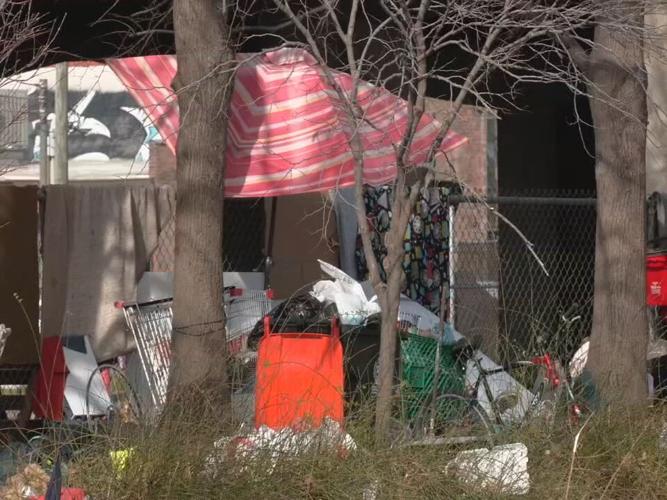
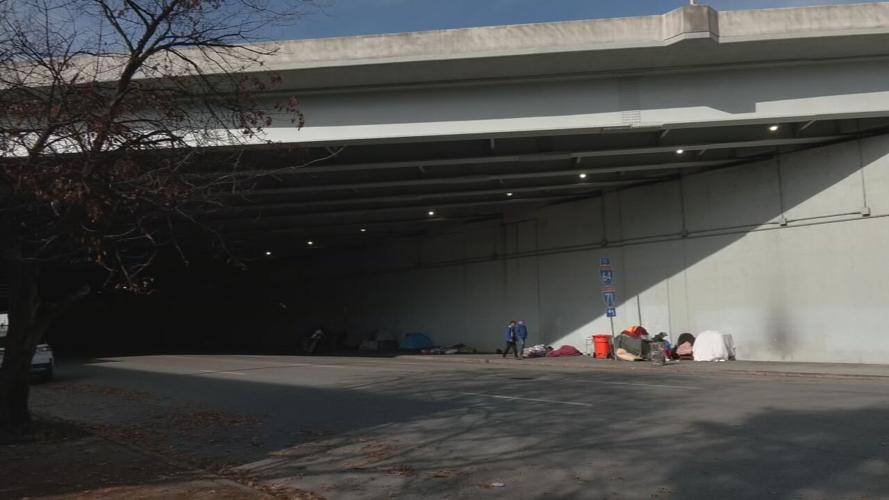


LOUISVILLE, Ky. (WDRB) -- Friday's U.S. Supreme Court decision has paved the way for cities to fine people who live on the streets and set up camp, likely prevents any challenges to the Commonwealth's Safer Kentucky Act, which in part addresses homelessness.
In a 6-3 decision along ideological lines, the high court found that outdoor sleeping bans don’t violate the Eighth Amendment, which protects against imposing excessive bail, excessive fines or cruel and unusual punishments.
Western cities had argued that the ruling made it harder to manage outdoor encampments in public spaces, but homeless advocates said punishing people who need a place to sleep would criminalize homelessness.
In a matter of months Jessica Wilson found herself in a position she never imagined. She was hit by someone in a stolen car and lost everything while trying to recover from a fractured sternum, surgery, and re-learning how to use her arm. For about two years she camped in Louisville until city officials left her with the choice to move or have her belongings be thrown away.
"I became homeless in 2021," Wilson said. "A lot of people are one paycheck away from being right where we're at."
In the Supreme Court's Opinion Justice Neil Gorsuch wrote, "homelessness is complex. Its' causes are many, so may be the public policy responses required to address it."
“Sleep is a biological necessity, not a crime,” said Justice Sonia Sotomayor, reading from the bench a dissent joined by her liberal colleagues. “Homelessness is a reality for so many Americans.”
“A lot of people think people are out here homeless because they want to be, but a lot of things happen to be people," Wilson said.
Kentucky State Representative Jason Nemes (R-District 33) said the decision will likely prevent any legal challenges to parts about homelessness in the Safer Kentucky Act.
The Safer Kentucky Act allows local governments to designate public areas for camping and otherwise threatens jail time if camping in spaces other than the designated areas.
"What we're doing now is neither effective nor loving so we need better way forward and better way forward is to say you can't just camp wherever you want to," Nemes said.
The US Supreme Court found that the cruel and unusual punishment clause of the Eighth Amendment does not prohibit cities from creating camping bans.
The ACLU of Kentucky disagrees.
“We fear it will lead to governments feeling more empowered to lock people up because they are experiencing homelessness," said Corey Shapiro, ACLU-Kentucky's legal director.
Wilson fears the decision now will make it even more difficult for homeless people to get out of tough situations if they face fines for camping.
"We're like on survival mode at all times," said Wilson. "To be like, well now we’re going to charge you more money to have a safe place to sleep, that’s not really the answer.”
The case came from the rural Oregon town of Grants Pass, which appealed a ruling striking down local ordinances that fined people $295 for sleeping outside after tents began crowding public parks. The 9th Circuit Court of Appeals, which has jurisdiction over the nine Western states, has held since 2018 that such bans violate the Eighth Amendment in areas where there aren’t enough shelter beds.
The Safer Kentucky Act will go into effect July 15.
Friday’s ruling comes after homelessness in the United States grew a dramatic 12% last year to its highest reported level, as soaring rents and a decline in coronavirus pandemic assistance combined to put housing out of reach for more people.
More than 650,000 people are estimated to be homeless, the most since the country began using a yearly point-in-time survey in 2007.
Related stories:
- US Supreme Court decision could affect how Louisville, other cities address homelessness
- State lawmakers send controversial ‘Safer Kentucky Act’ to Gov. Andy Beshear
- Sweeping Kentucky crime bill moves closer to law after advancing in Senate committee
- Safer Kentucky Act passes House with 3 strikes rule, charitable bail up for debate in Senate
- 'Safer Kentucky Act' looks to address loophole in 'Cane Madden' law
- Part of 'Safer Kentucky Act' would allow business owners to use 'reasonable force' against shoplifters
- Louisville advocates worry House bill aimed at tackling violent crime, homelessness could make things worse
- Lawmakers file 'Safer Kentucky Act,' aimed at tackling violent crime
- Kentucky lawmakers reconvene with focus on budget, public safety and school choice
- Lawmakers in Frankfort discuss proposal aimed at tackling 'epidemic of crime' in Kentucky
- Kentucky lawmakers eye street camping ban in crime plan as advocates push for homelessness solutions
Copyright 2024 WDRB Media. The Associated Press contributed to this report. All Rights Reserved.


