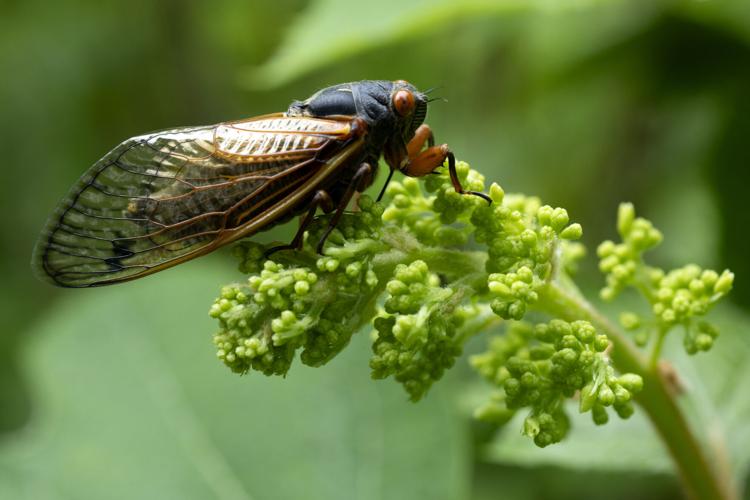
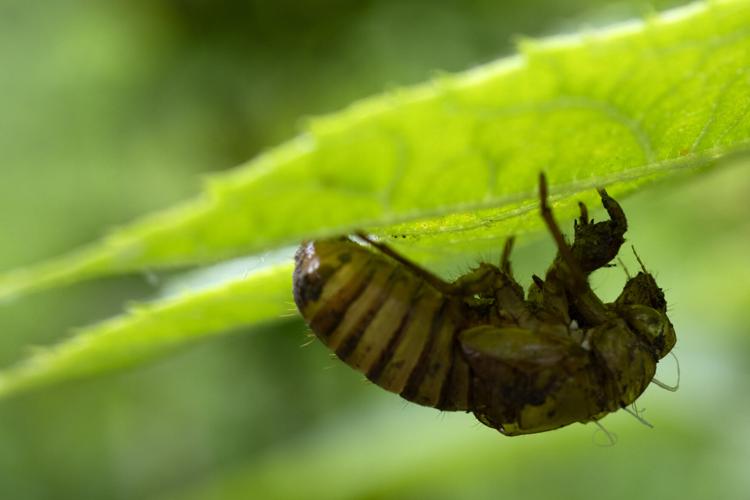
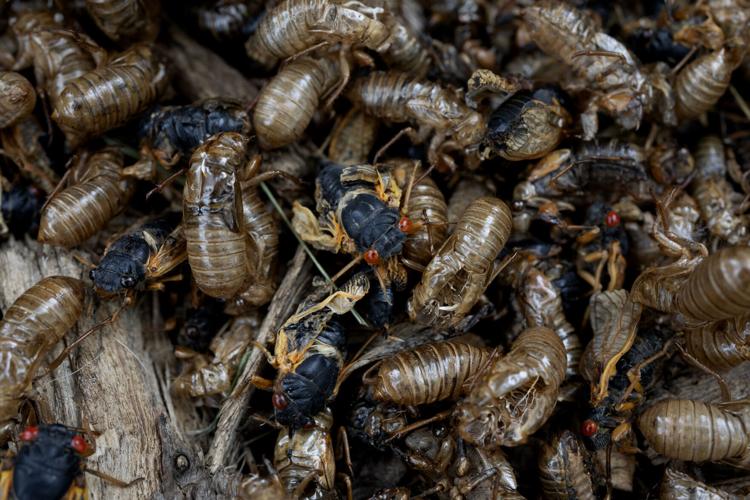
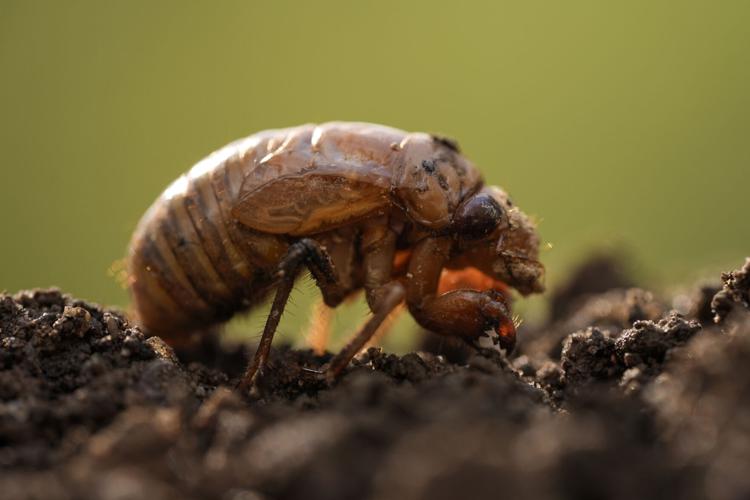


LOUISVILLE, Ky. (WDRB) -- Cicadas are emerging in some parts of the U.S., but most of Kentucky and Indiana aren't being impacted.
Two broods are coming from the ground this spring in numbers not seen in decades or perhaps centuries. This spring, the unusual cicada double dose is hitting some parts of the country.
"The publicity, the big hype that's happening this year is there are multiple broods emerging at the same time, or roughly the same time," said University of Louisville professor Steve Yanoviak.
Yanoviak is an insect researcher and teaches conservation biology and entomology, which he described as "bug class."
The broods emerging in some places this year have been underground 13 or 17 years, and they're creating quite the buzz with this double emergence.
"It's just an interesting novelty to have these -- what are called periodical cicadas -- that only emerge every 13 to 17 years to suddenly be coming out now. And to have, in particular, a 13 year brood and 17 year brood coming out at the same time, that's not common. It doesn't happen for maybe 200 year intervals that we see that," said Yanoviak.
While Yanoviak said Louisville won't be seeing an emergence of the periodical broods this year, he said to still expect annual cicadas to emerge around July and August.
"Certain places like Illinois might see seven different species over the course of a summer. Here in Kentucky, we're not going to be faced with that mass emergence, so to speak. It's probably going to be a fairly normal year for us in terms of cicadas," he explained.
The largest geographic brood in the nation -- called Brood XIX is marching through the southeast and into Georgia. They emerge when the ground warms to 64 degrees.
He said Brood XIX is emerging in western Kentucky and southern parts of the U.S.
"Even in western Kentucky it's not a mass emergence, necessarily," said Yanoviak.
The second invasion is cicada cousins that come out every 17 years. This time, the insects are inundating Illinois. They are Brood XIII.
Experts said these two broods may actually overlap — but probably not interbreed — in a small area near central Illinois.
The numbers that will come out this year – averaging around 1 million per acre over hundreds of millions of acres across 16 states – are mind-boggling. Easily hundreds of trillions, maybe quadrillions, according to experts.
While Louisvillians won't see that at home, Yanoviak said the typical, annual cicadas are still pretty incredible.
"I don't want to dismiss it as, oh, it's a normal year. It's still pretty amazing what these insects do," he said. "They live underground and feed on roots for a year and then they come out and fly away. It's pretty fantastic."
He said while cicadas eat on trees, it's very uncommon for a tree to become damaged from that. He said they also don't hurt humans. Instead, cicadas are in important food source for several animals.
"Everything from small mammals to birds feed on the cicadas when they emerge every year, which is one of the reasons why we think that they have a 17 year and a 13 year brood cycle. Those are prime numbers. And if you're a predator, it's hard for you to track your life cycle against that prey life cycle that's at a prime number," Yanoviak said.
For places with large emergences, it can be hard on the eardrums when all those cicadas get together in those trees and start chorusing. However, some say they find the sound soothing.
Related stories:
- Rare blue-eyed cicada spotted during 2024 emergence at suburban Chicago arboretum
- Cicada-geddon is coming this spring. It's the biggest bug emergence in centuries
- UofL engineering team building anti-bacterial material based on cicada wings
Copyright 2024 WDRB Media. The Associated Press contributed to this report. All Rights Reserved.


