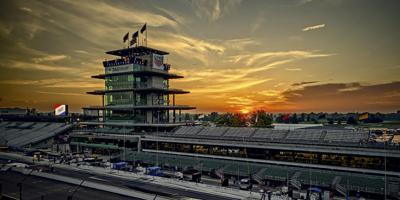

LOUISVILLE, Ky. (WDRB) — Once upon a time, the fastest drivers in the world gathered in Indiana.
Truthfully, many of them still do. The speeds at Indianapolis Motor Speedway are still terrifying.
But now, the glitziest people in racing gather in Monaco wearing linen, sipping champagne and pretending they came for the racing. And the sport's most famous drivers race over European streets, not off 16th Street.
That may be the Indianapolis 500's problem in one sentence.
Louisville | Kentucky | Indiana | Eric Crawford
The Kentucky Derby figured out something Indianapolis forgot somewhere along the way: People no longer attend sporting events merely to watch. They attend to arrive.
This is not to say the Indianapolis 500 is dying. Quite the opposite, actually. Last year's race drew more than 7 million television viewers — the largest audience for the event in 17 years — and a reported crowd of 350,000 at Indianapolis Motor Speedway. It outdrew the Daytona 500 for only the third time in 30 years.
That's not niche. That's America paying attention.
Now comes the fascinating part: Can the 500 do it again this Sunday?
The Kentucky Derby is no longer merely a horse race. It's an American social holiday with a starting gate. The Derby escaped the decline of horse racing by becoming larger than horse racing itself. This year's Derby averaged nearly 20 million television viewers and drew another 150,000-plus to Churchill Downs.
Most of them couldn't tell you who won the Breeders' Cup Classic last year. Many don't know what a furlong is. Some pick horses based on names, colors or astrology.
Churchill Downs doesn't care. The Derby sells atmosphere now.
It sells hats and bourbon and celebrities and influencers and the annual human experiment of seeing whether a 23-year-old in seersucker can survive six straight hours of mint juleps without collapsing into a hedge.
The race itself lasts two minutes. The event lasts all day. The social-media footprint lasts a month. The photographs last forever. (Check your Instagram feed.)
The Derby became content before sports understood content.
Meanwhile, the Indianapolis 500 spent much of the last quarter-century trapped in an identity crisis somewhere between NASCAR, Formula One and its own memories.
Once upon a time, Indianapolis was the center of motorsports gravity. Winning the 500 made you immortal. A.J. Foyt. Mario Andretti. Rick Mears. Al Unser. The names sounded like they should be stitched into leather jackets.
Then racing fractured. NASCAR became America's mainstream obsession. Formula One became global luxury entertainment. IndyCar split itself in half and spent years explaining itself to people who just wanted to watch cars go fast.
The Kentucky Derby never had that problem. There was never a rival horse race that stole Churchill Downs' identity. The Derby remained the Derby.
Indianapolis became one famous race searching for a series big enough to surround it.
And then Formula One arrived in America dressed like a Netflix algorithm. That may have been the biggest cultural shift of all. "Formula 1: Drive to Survive" didn't sell Americans on aerodynamics or tire compounds or fuel strategy. It sold them on young, articulate, good-looking drivers and their egos, rivalries, wealth and fame.
Suddenly, Formula One drivers were no longer anonymous men hidden beneath helmets. The series understood something sports television sometimes forgets: Human beings care about people first. The competition comes second.
Formula One figured out that modern audiences often care less about racing than they do access. To glamour, celebrity, wealth, exotic places like Monaco, Singapore, Madrid and Barcelona.
Half the people at those races look like they wandered in from fashion week carrying champagne they didn't pay for. Formula One doesn't just sell racing anymore. It sells aspiration.
Which, if we're being honest, is exactly what the Kentucky Derby sells, too.
And yet, for all of Formula One's glamour, the Indianapolis 500 still has something Monaco cannot manufacture.
Americans actually watch it. Last year's Indy 500 drew more than double what the most-watched Formula One race in the United States drew in domestic viewership.
Which suggests the Indianapolis 500 still occupies a deeper place in the American sporting bloodstream than people may realize. History and tradition matter.
And there may be no more valuable television window in motorsports than the Sunday afternoon on Memorial Day weekend, when half the country is already gathered around grills, coolers and televisions waiting for summer to begin.
The 500 was never irrelevant. It was just under-presented.
The Derby (and NBC producers) figured out long ago that people want to feel like they are inside something important, not merely watching it.
The Indianapolis 500, for years, still marketed itself mostly as competition. Pure, beautiful, dangerous competition, yes, but still competition.
FOX's first Indy 500 broadcast last year may have revealed the understanding that the event needs to become something larger.
A parade of celebs. Serious promotion. Enhanced graphics. Aggressive presentation. FOX treated Indianapolis like a national happening instead of a niche telecast, and the ratings exploded.
But there was another lesson hidden in the backlash. Fans complained about the endless commercials. About missed action. About the network cutting away from the actual finish of the race. About television treating the event like attention-deficit theater.
That frustration matters. But those are issues that can be fixed.
Because the Indianapolis 500 still means something deeper to people than just spectacle.
This is where the Derby has been smarter than almost everyone.
Churchill Downs modernized carefully. It added luxury suites and influencer culture and celebrity branding and social-media staging areas and premium experiences and enough bourbon activation to float the Ohio River.
But somehow, it still feels old. Still feels sacred. Still feels like your grandfather would recognize it — or at least some of it.
That balancing act is extraordinarily difficult. The Derby illustrates a timeless television tenet: Anticipation is part of the show.
The walkover matters. The call to post. The silence before the gates open.
Not every second needs to scream. Sometimes the crowd simply wants to feel the moment arriving.
Indianapolis still has that feeling too, by the way, despite recent modernization efforts.
At sunrise. With campers waking up. With coolers cracking open. With 350,000 people pouring into a giant Midwestern cathedral built for speed. That breathtaking sight of 33 cars getting up to speed waiting for the light to change and the green flag to drop.
The soul of the Indy 500 never disappeared.
America just stopped presenting it like the national ritual it once was.
Maybe last year was the beginning of remembering.
Now we find out whether it was a moment — or a revival.
Copyright 2026 WDRB Media. All Rights Reserved.


